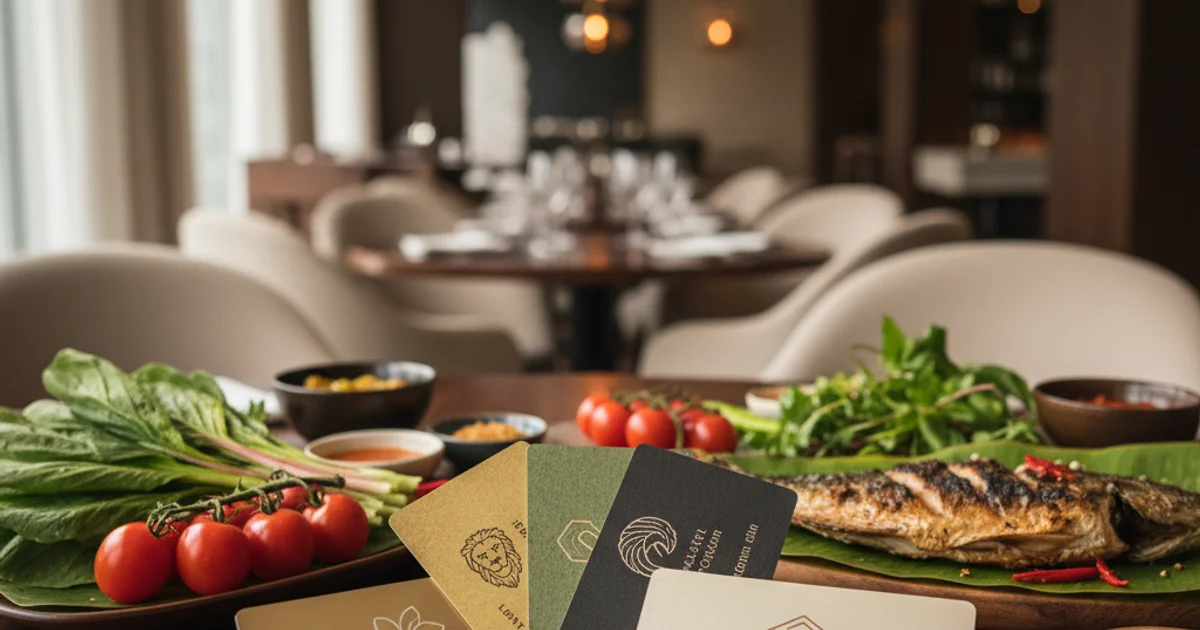
Last month, I watched a regular customer at a Tanjong Pagar hawker stall pull out four different loyalty cards from her wallet. Paper stamps from the chicken rice uncle. A plastic card from the Western food stall. Two more from nearby cafes. She spent 30 seconds shuffling through them, squinting at faded stamps, trying to remember which one was closest to a free meal.
The hawker uncle smiled and stamped her card. But I could see the missed opportunity. He had no idea this was her 15th visit this month. No way to thank her for bringing her colleague last week. No method to reach her when she hadn't been in for two weeks.
That's the state of restaurant loyalty in Singapore. Fragmented, forgettable, and fundamentally broken.
What makes a restaurant loyalty program work in 2026
The best restaurant loyalty programs in Singapore share five characteristics: zero friction signup, immediate value, automated engagement, referral mechanics, and data intelligence.
Traditional programs fail because they prioritize the restaurant's convenience over the customer's experience. Apps that nobody downloads. Email newsletters that land in spam. Point systems so complex you need a calculator to understand them.
Modern programs flip this. The customer experience comes first. The restaurant benefits follow naturally.
Singapore's competitive F&B landscape demands systematic customer relationship building, with thousands of licensed food establishments competing for customer attention. The restaurants winning in this crowded market aren't just serving good food. They're building systematic relationships with every customer who walks through their door.
Digital stamp cards: the foundation layer
Digital stamp cards solve the core problem of paper: they don't get lost, can't be faked, and create a customer database automatically.
The mechanism is simple. Customer scans a QR code with their phone camera. Enters their phone number once. Gets a digital stamp card that lives in their browser. No app download. No account creation. No email required.
Each visit, they scan again. Stamps accumulate. At milestone rewards (typically 8-10 stamps), they unlock a free item or discount. The system tracks everything: visit frequency, favorite items, referral behavior, redemption patterns.
The key insight: stamps are the data collection mechanism. Once you know who your customers are, you can build the relationship.
Referral systems: turning customers into marketers
The most underutilized feature in restaurant loyalty is referrals. Your best customers already recommend you to friends. A referral system rewards them for it while tracking the results.
Two-sided referrals work best. The referrer gets a reward (free appetizer, 20% off next visit). The referee gets a signup bonus (free drink, extra stamp). Both parties win. The restaurant gets a new customer at a known acquisition cost.
The sharing mechanism matters. WhatsApp and SMS work better than social media because they're personal. A customer shares their unique referral link via WhatsApp. Friend clicks, signs up, visits. Both rewards trigger automatically.
One bubble tea chain with multiple outlets imported their existing customer base into their referral system. The viral coefficient improved because existing customers could immediately start referring instead of rebuilding their stamp count from zero.
WhatsApp automation: the engagement layer
WhatsApp dominates messaging in Singapore with widespread adoption across all demographics. For restaurants, it's the most effective customer communication channel.
Automated WhatsApp campaigns work because they feel personal while running automatically. Birthday rewards arrive as WhatsApp messages with the customer's name and a personalized coupon. Milestone celebrations congratulate customers when they hit 5, 10, or 20 visits. Win-back campaigns reach customers who haven't visited in 30 days.
The timing matters more than the message. Send birthday rewards 3 days before the birthday, not on the day. Send milestone celebrations immediately after the qualifying stamp. Send win-back messages on Tuesday or Wednesday when restaurant traffic is typically lower.
Open rates for WhatsApp messages to restaurant customers consistently exceed 90%. Email campaigns typically see 20-25% open rates. SMS falls between 85-95% but costs more per message.
AI-powered insights: understanding your customers
The best restaurant loyalty programs in 2026 use AI to analyze customer behavior patterns. Weekly AI reports identify trends: which menu items drive the most loyalty stamps, which customer segments have the highest visit frequency, which referral campaigns perform best.
STAMPEDE's AI Weekly Reports analyze customer data to provide actionable insights for restaurant owners. The system identifies patterns in visit frequency, spending behavior, and redemption patterns to help optimize loyalty program performance.
The intelligence layer connects loyalty data with marketing insights. If your AI report shows that customers who visit during lunch hours become more likely to return, you can adjust your marketing timing accordingly.
Offline attribution: connecting ads to visits
Traditional restaurant marketing has a measurement problem. You spend $500 on Facebook ads. Restaurant gets busier. But you don't know if the ads drove the traffic or if it was the good weather.
Modern loyalty programs solve this with action-based attribution. Customer sees your Meta ad, clicks, signs up for loyalty program. When they visit and physically scan their QR code for stamps, the system connects that proven visit back to the original ad campaign within a 21-day window.
The metric becomes "cost per visit" instead of "cost per click." If 100 people click your ad, 30 sign up for loyalty, and 20 actually visit and scan within 21 days, your cost per visit is 5x your cost per click. But you're measuring real business impact through confirmed physical visits, not just website traffic.
This attribution works through physical proof-of-visit actions: the customer must present their QR code and have it scanned by staff to record a stamp. No passive location tracking or surveillance required.
The growth loop: how it all connects
The best restaurant loyalty programs create a compounding growth loop: retain existing customers → grow through referrals → engage with automated messaging.
New customer visits. Gets stamps. Receives WhatsApp milestone rewards. Refers friends. Friends become customers. The cycle repeats. Each component reinforces the others.
AI optimization improves every step. Better stamp milestone structures increase redemption rates. Better referral rewards improve viral coefficients. Better WhatsApp message timing increases engagement rates. Better ad targeting reduces acquisition costs.
The restaurants that win aren't just running loyalty programs. They're building systematic customer relationship engines that get stronger with every interaction.
Common mistakes to avoid
Most restaurant loyalty programs fail for predictable reasons. Complex point systems that customers can't understand. App requirements that create signup friction. Email-only communication that gets ignored. No referral mechanism to drive growth.
The biggest mistake is treating loyalty as a discount program instead of a relationship program. Discounts train customers to wait for deals. Relationships train customers to choose you regardless of price.
Another common error: launching loyalty without staff training. If your cashiers don't mention the program or explain how it works, adoption will be slow. The QR code scan should be part of the checkout process, not an afterthought.
Program comparison framework
When evaluating restaurant loyalty programs, consider these factors: signup friction (does it require an app?), reward structure (stamps vs points vs dollars), communication channels (email vs SMS vs WhatsApp), referral capabilities, analytics depth, and total cost including setup fees.
The best programs balance simplicity with sophistication. Simple enough for customers to understand immediately. Sophisticated enough to drive measurable business results.
Cost matters, but not in isolation. A program that increases customer lifetime value significantly pays for itself with just a few additional loyal customers. A cheap program that doesn't drive behavior change is expensive at any price.