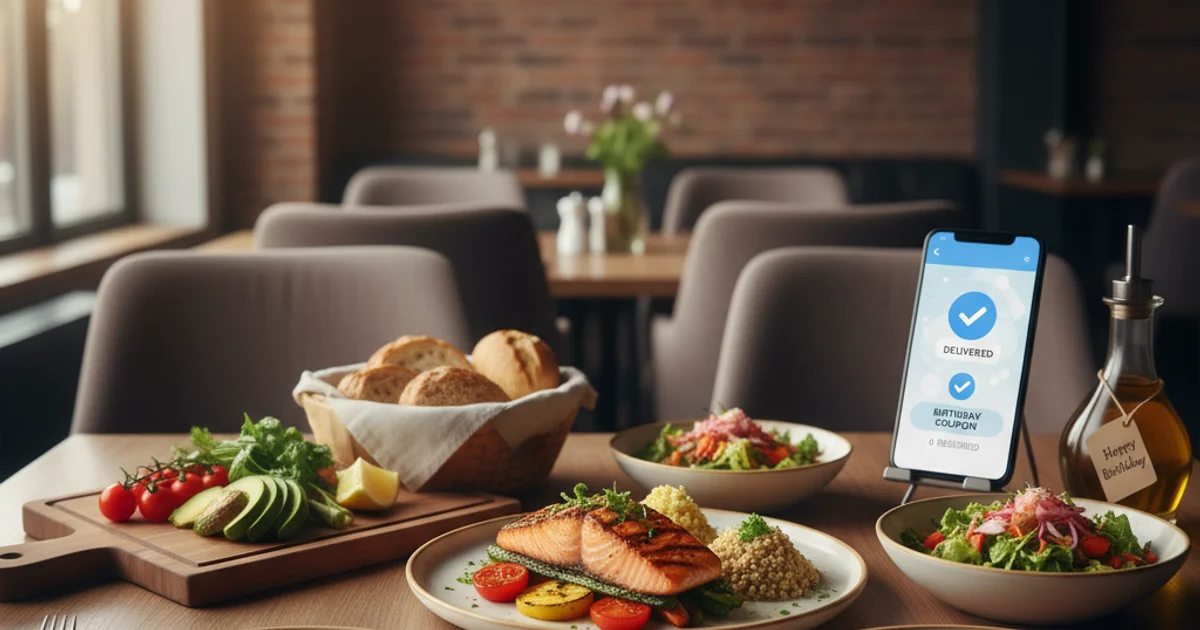
Your WhatsApp message says "delivered" but nobody showed up for the flash sale.
Your birthday coupon has two blue ticks but zero redemptions.
Your "we miss you" message to inactive customers shows as "read" but your foot traffic is still down.
Welcome to the confusing world of WhatsApp delivery stats where green checkmarks don't always mean what you think they mean. After sending thousands of WhatsApp messages to restaurant customers across Singapore, I've learned that understanding these little icons is the difference between effective marketing and shouting into the void.
Most restaurant owners treat WhatsApp like email: send it and hope for the best. But WhatsApp gives you granular delivery data that email never could. The problem? Nobody explains what it actually means for your business.
What WhatsApp delivery stats actually tell you
WhatsApp delivery stats work in four stages: sent, delivered, read, and failed. Each stage tells you something different about your message's journey to your customer's phone.
Sent means your message left WhatsApp's servers and is heading to the recipient. Think of it as your message being handed to the postal service. It's out of your control now, but it's on its way.
Delivered means the message reached the recipient's phone. Their phone was connected to the internet, WhatsApp was installed, and the message arrived in their chat list. This is like mail reaching their letterbox.
Read means they opened the conversation and saw your message. The blue ticks appear. This is like them opening the envelope and reading the letter.
Failed means something went wrong. The phone number is invalid, they've blocked your business account, or there's a technical issue preventing delivery.
For restaurant marketing, each status has different implications for your next move.
Why "delivered" doesn't mean "seen"
This is where most restaurant owners get confused. A "delivered" message sits in their WhatsApp chat list alongside 47 other conversations. Your birthday coupon might be buried under messages from their mother, their boss, and three group chats.
Singapore smartphone users receive dozens of notifications daily, competing for attention. Your restaurant's WhatsApp message is fighting for visibility among all of them.
"Delivered" means your message made it to their phone. It doesn't mean they saw it, read it, or will act on it.
Here's what affects whether a delivered message gets read:
Timing matters more than content. A lunch promo sent at 11:30 AM gets read. The same message sent at 11:30 PM gets buried under overnight notifications.
Sender name recognition. If your restaurant name is clear in their contacts, they're more likely to open it. If it shows up as a random number, it looks like spam.
Message preview. WhatsApp shows the first few words in the notification. "Happy birthday! Here's your free..." performs better than "Hi [Name], we hope you're having..."
Conversation history. Customers who've received and engaged with previous messages are more likely to open new ones. First-time messages to new customers have lower read rates.
The difference between read receipts and engagement
Blue ticks (read receipts) don't equal action. This is the biggest misconception in restaurant WhatsApp marketing.
A customer can read your "20% off today only" message, screenshot it, and never use it. The message shows as "read" but generates zero revenue. Conversely, they might glance at the message preview in their notification, not open the conversation, but still visit your restaurant because they remembered the offer.
Read receipts measure attention, not intention.
For restaurants, what matters more than read rates:
Coupon redemption rates. How many people who received the WhatsApp coupon actually claimed it at your counter. This is the metric that pays rent.
Visit attribution. Did foot traffic increase on the day you sent the promotion? If someone gets a WhatsApp message and visits within 24 hours, that's a successful campaign regardless of read receipts.
Response rates. How many people reply to your message? A simple "Thanks!" or "See you later" indicates genuine engagement, even if they don't redeem immediately.
Referral generation. The best WhatsApp messages get forwarded to friends. "Check out this new ramen place" shared to a group chat is worth more than 100 read receipts.
What failed messages mean for your restaurant
Failed WhatsApp messages fall into three categories, each requiring a different response from restaurant owners.
Invalid numbers happen when customers give you the wrong phone number during signup. Maybe they transposed two digits, or they're using an old number they no longer have. These failures are permanent: the message will never reach them.
Blocked accounts mean the customer has specifically blocked your business WhatsApp number. This usually happens when restaurants send too many messages too frequently. Once blocked, all future messages will fail until they unblock you.
Technical failures are temporary. The customer's phone was off, they had no internet connection, or WhatsApp's servers were experiencing issues. These messages might be delivered later when the technical issue resolves.
For restaurant owners, failed messages are actually valuable data. They tell you which phone numbers in your customer database are no longer valid. One local business discovered that nearly a quarter of their loyalty program members had invalid phone numbers: they'd signed up with fake numbers to get the welcome coupon.
Cleaning your customer database based on failed message data improves your overall delivery rates and reduces marketing costs.
How to read delivery stats for different campaign types
Different types of restaurant WhatsApp campaigns have different normal delivery stat patterns. Understanding these patterns helps you identify when something's wrong.
Birthday campaigns typically show strong delivery rates when your customer database is clean. Lower delivery rates suggest outdated phone numbers in your birthday database. Lower read rates might mean your birthday messages are getting lost in notification clutter.
Milestone rewards (when customers hit 5 stamps, 10 stamps, etc.) show the highest delivery rates because these customers recently visited your restaurant. Read rates are usually strong because customers are actively engaged with your loyalty program. These campaigns consistently outperform broadcast promotions.
Win-back campaigns to inactive customers show the most challenging stats across all categories. Delivery rates drop because some customers have changed numbers. Read rates decline because inactive customers aren't checking WhatsApp messages from restaurants. However, even modest success rates can generate significant revenue if your inactive database is large.
Flash sales and time-sensitive promotions need to be measured differently. Delivery and read rates matter less than speed. A flash sale message that takes 2 hours to deliver is useless even if it eventually gets read. For time-sensitive campaigns, focus on how quickly messages reach "delivered" status rather than final read rates.
Event announcements (new menu items, special dinners, holiday hours) typically show high delivery and read rates but low immediate action rates. Customers might read about your Chinese New Year menu in December but not book until January. Track these campaigns over longer time periods.
The connection to customer retention and growth
WhatsApp delivery stats connect directly to your restaurant's retain, grow, and engage cycle. Each delivery status tells you something about where customers sit in this journey.
High delivery, high read, low action suggests your retention messaging is reaching engaged customers who aren't motivated to visit. Maybe your offers aren't compelling enough, or you're messaging too frequently.
High delivery, low read, low action indicates your messages are reaching valid phone numbers but customers aren't paying attention. This often happens when restaurants don't segment their WhatsApp campaigns. Sending the same message to new customers and VIP regulars results in low overall engagement.
Low delivery rates across all campaigns signal database hygiene issues. You're paying to send messages to phone numbers that no longer exist. This wastes marketing budget and skews your campaign performance data.
The growth component comes from referral messaging. When customers share your WhatsApp promotions with friends, those referrals bypass the normal delivery stat challenges. Friend-to-friend sharing has near 100% read rates because it comes from a trusted contact, not a business account.
STAMPEDE works alongside your existing POS system to track this viral loop through WhatsApp sharing. Your POS handles transactions and operations. STAMPEDE handles the customer relationship and growth engine. When a customer receives a milestone reward, they can instantly share their referral code via WhatsApp. The delivery stats for these referral messages are consistently higher than direct restaurant-to-customer messaging.
Advanced delivery stat analysis for restaurant owners
Once you understand basic delivery stats, you can use them to optimize your restaurant's WhatsApp marketing at a granular level.
Time-based analysis reveals when your customers are most likely to read messages. One bubble tea shop discovered their highest read rates happened between 2 PM and 4 PM: the afternoon tea timing when customers were deciding what to drink. They shifted all promotional messages to this window and saw redemption rates increase significantly.
Segmentation by customer behavior shows different delivery patterns for different customer types. New customers (1-3 visits) typically have lower read rates because they haven't developed a relationship with your restaurant yet. Regular customers (10+ visits) show high read rates but may have lower action rates because they don't need promotions to visit: they're coming anyway.
Campaign frequency optimization uses delivery stats to find the sweet spot between staying top-of-mind and becoming spam. Testing different messaging frequencies reveals the optimal balance of high delivery rates (customers aren't blocking you) and high action rates (messages feel special, not routine).
Content type performance reveals which message formats drive the best delivery and engagement stats. Image messages (food photos with text overlay) typically show higher read rates than text-only messages. Video messages have the highest engagement but also higher failure rates due to file size and data connection issues.
Cross-channel correlation compares WhatsApp delivery stats with other marketing channels. One hawker stall owner noticed that customers who read WhatsApp messages were more likely to engage with the restaurant's Instagram posts. This insight led to coordinated campaigns across both channels, with WhatsApp driving immediate visits and Instagram building long-term brand awareness.
Technical considerations for restaurant WhatsApp marketing
Understanding the technical side of WhatsApp delivery helps restaurant owners troubleshoot problems and optimize performance.
Business Account vs Personal Account affects delivery stats significantly. WhatsApp Business accounts have higher delivery rates to customers who've opted in, but lower rates for cold outreach. Personal accounts can't send bulk messages but have higher read rates for individual conversations.
Message formatting impacts delivery success. Messages with multiple links, excessive emojis, or promotional language trigger WhatsApp's spam filters. Simple, conversational messages have higher delivery rates than heavily formatted promotional content.
Timing and rate limits affect delivery stats for bulk campaigns. WhatsApp limits how many messages business accounts can send per hour. Exceeding these limits results in delayed delivery or failed messages. Restaurant owners should spread large campaigns over several hours rather than sending everything at once.
Contact management directly impacts delivery rates. Customers who have your restaurant saved as a contact see higher delivery and read rates. Messages from unknown numbers are more likely to be ignored or marked as spam. Encouraging customers to save your restaurant's WhatsApp number during their first visit improves all future campaign performance.
Two-way conversation setup affects long-term delivery stats. WhatsApp's algorithm favors business accounts that engage in genuine conversations rather than just broadcasting promotions. Restaurants that respond to customer replies, answer questions, and maintain active conversations see better overall delivery rates across all campaigns.
Common mistakes restaurant owners make with WhatsApp stats
After analyzing thousands of restaurant WhatsApp campaigns, certain mistakes appear repeatedly. Avoiding these improves both delivery stats and business results.
Treating WhatsApp like email is the most common error. Restaurant owners send long, formal messages with multiple calls to action. WhatsApp works best with short, conversational messages that feel like they're from a friend, not a marketing department.
Ignoring failed message patterns wastes marketing budget. Restaurants continue sending messages to phone numbers that consistently fail, rather than cleaning their database and focusing on engaged customers.
Focusing on read rates over redemption rates optimizes for the wrong metric. A message with high read rates but low redemption rates is less valuable than a message with moderate read rates but strong redemption rates.
Sending the same message to all customers regardless of their relationship with the restaurant. New customers need different messaging than loyal regulars. VIP customers should get exclusive offers, not the same promotions you send to everyone.
Not testing message timing results in consistently poor delivery and read rates. The best time to send WhatsApp messages varies by restaurant type, location, and customer demographic. A breakfast cafe's optimal timing is different from a late-night supper spot.
Overcomplicating message content with too many details, terms and conditions, or multiple offers in one message. Simple messages perform better across all delivery stat categories.
Building a WhatsApp marketing system that works
Successful restaurant WhatsApp marketing requires a systematic approach to delivery stats, not just sending messages and hoping for the best.
Start with database hygiene. Clean phone numbers, remove duplicates, and segment customers by behavior before sending any campaigns. Good data foundation improves all subsequent delivery stats.
Establish baseline metrics for your restaurant type and location. Track delivery, read, and redemption rates for different campaign types over 30 days to understand your normal performance ranges.
Create message templates for different scenarios (birthday rewards, milestone celebrations, win-back offers, flash sales) and track which formats consistently perform best for your customer base.
Implement feedback loops where delivery stats inform future campaigns. If milestone rewards show high read rates but low redemption rates, test different reward types or redemption processes.
Integrate with your loyalty system so WhatsApp messaging becomes part of the customer journey rather than random promotional blasts. Messages triggered by customer behavior (new signup, milestone reached, long absence) consistently outperform broadcast promotions.
The goal isn't perfect delivery stats: it's profitable delivery stats that drive real restaurant visits and revenue growth.