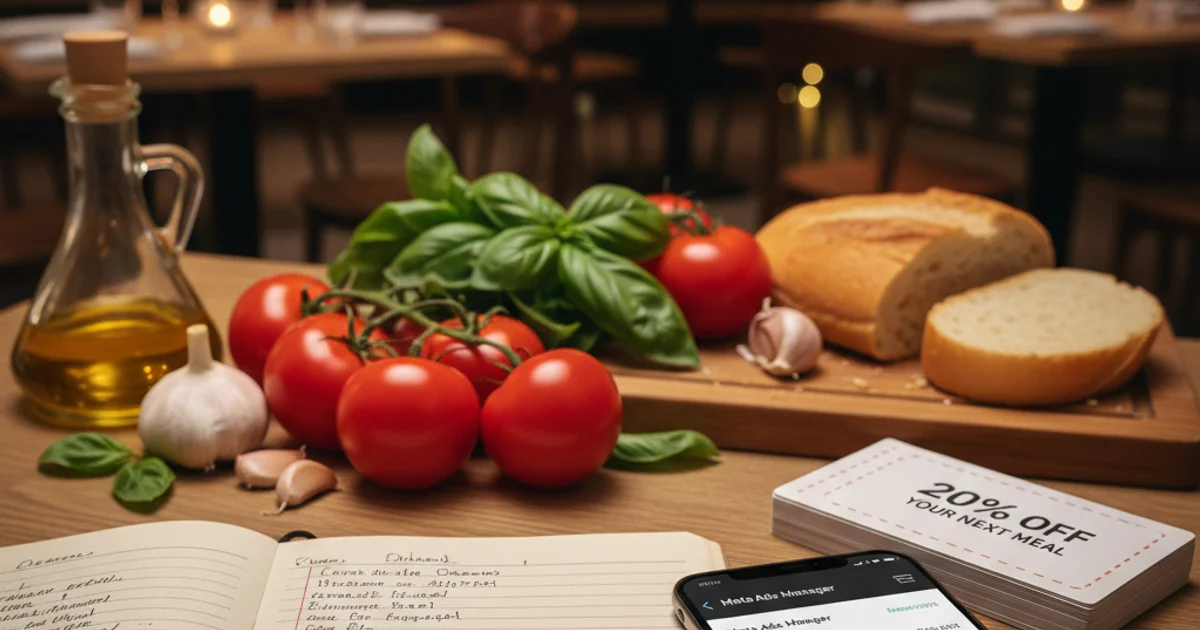
Last Tuesday, a hawker stall owner showed me his notebook. 300 customer names, written by hand. Next to it, his phone displaying a Meta ads dashboard: $127 spent this month, 1,847 people reached, 89 clicks.
"Did any of these people actually come to my stall?" he asked.
I opened STAMPEDE on his phone. His campaign showed 89 clicks, 12 signups, and 8 physical visits. He'd never seen that number before. No restaurant owner has.
The attribution black hole in restaurant marketing
Restaurant digital advertising has always had an attribution problem. You run a Meta ad. People click. Some sign up for your loyalty program. Then what? Did they actually walk through your door? Did they spend money? Did they come back?
Traditional digital marketing metrics stop at the click. Impressions, reach, click-through rate, cost per click, cost per signup. These numbers tell you how many people saw your ad and how many took the first step. They don't tell you if anyone actually became a customer.
For restaurants, this creates a massive blind spot. You might spend $200 on ads, get 50 signups, and assume it worked. But if only 3 of those 50 people actually visited your restaurant, your true customer acquisition cost is much higher than expected. That's the difference between profitable marketing and burning money.
The problem gets worse with attribution windows. A customer might see your ad on Monday, sign up on Tuesday, visit on Thursday, and redeem a coupon the following week. Traditional analytics can't connect these dots across multiple touchpoints and offline actions.
How offline attribution actually works for restaurants
Food and dining content performs unusually well on Facebook in Singapore — F&B posts see 2.5-3.5% engagement rates, among the highest-performing organic content categories, with ad CPCs ranging from SGD 0.80 to 2.50 (Hashmeta).
Real restaurant marketing ROI requires tracking the complete customer journey from digital ad to physical visit to actual purchase. This connects voluntary customer actions across digital and physical touchpoints through proof-of-visit confirmation.
Here's how STAMPEDE tracks the complete funnel. A customer sees your Meta ad and clicks through to your restaurant's signup page. The URL includes a UTM parameter that identifies which campaign brought them: utm_campaign=campaign_47. When they sign up for your loyalty program, their customer record is tagged with that campaign ID.
The crucial moment happens at your counter. The customer presents their loyalty QR code. Your cashier scans it. A stamp is recorded. This stamp scan is proof of a physical visit through an action the customer voluntarily takes at your restaurant.
When the customer hits a milestone and claims a reward, that's logged as a redemption. When they refer a friend who also visits, that's tracked too. Every action is connected back to the original campaign that brought them in.
The 21-day attribution window captures delayed visits. Someone might sign up from your ad on Monday but not visit until the weekend. As long as their first stamp happens within 21 days of signup, that visit is attributed to your campaign.
The complete restaurant marketing funnel
The Singapore Food Agency tracked 23,589 licensed food shops and 14,134 food stalls in 2024 — the largest concentration of F&B outlets per capita in the region, and a reminder that discovery is a real problem for any single brand.
Traditional restaurant marketing metrics focus on the top of the funnel: impressions, reach, clicks, signups. But the real value happens in the bottom half: visits, purchases, repeat visits, referrals.
STAMPEDE tracks five conversion points. Reached: how many people saw your ad (Meta provides this). Clicked: how many people clicked through to your signup page (Meta provides this). Signed Up: how many people completed your loyalty program signup (STAMPEDE tracks this). Visited: how many signups actually came to your restaurant and got a stamp (STAMPEDE tracks this via QR code scans). Redeemed: how many visitors claimed and used a coupon (STAMPEDE tracks this via coupon redemptions).
Each step reveals different insights. A high click-through rate but low signup rate suggests your ad targeting is good but your signup process needs work. High signups but low visits means your offer isn't compelling enough to drive foot traffic. High visits but low redemptions indicates customers are coming but not engaging with your loyalty program.
The most important metric is cost per visit: total ad spend divided by confirmed physical visits. This is your true customer acquisition cost for advertising. Everything else is just a step toward this number.
For restaurants, cost per visit varies significantly based on location, cuisine type, and campaign quality. Understanding this metric helps restaurant owners make informed decisions about their advertising budget allocation.
Real numbers from Singapore restaurants
Enterprise Singapore's Food Services industry programme funds productivity upgrades, manpower training, and digital transformation for local F&B operators — a backdrop worth knowing when you're weighing where to spend on your own marketing stack.
OMMA Chicken Soup provides a clear example of complete funnel tracking. As a hawker stall serving samgyetang (Korean ginseng chicken soup), they've built a loyalty program with 309+ members and achieved a 59.3% redemption rate. Their milestone structure rewards customers at 3, 6, and 10 stamps, creating clear incentives for repeat visits.
The key insight from their data is the conversion rate from digital signup to physical visit. This metric helps predict future campaign performance and set realistic budgets for customer acquisition.
CHA MULAN demonstrates how attribution works at scale. With 7 outlets and 810+ loyalty members, they can track which locations generate the best visit conversion rates from ads and which customer segments show the highest engagement with their loyalty program.
Beyond first visit: measuring lifetime value
The customer journey doesn't end at the first visit. Restaurant marketing ROI compounds through repeat visits and referrals. A customer who visits once might be worth $25. The same customer who visits monthly for a year and refers two friends is worth significantly more.
STAMPEDE tracks this complete lifecycle. After the first stamp, the system monitors repeat visit frequency, average stamps per customer, milestone achievement rates, and referral generation. These metrics reveal the true return on your advertising investment.
Consider a typical scenario: you spend $300 on ads and acquire 20 new customers. In month one, they visit multiple times and generate immediate revenue. But the compound effect happens over time as these customers establish regular visit patterns and begin referring friends.
The total value of that $300 ad spend grows significantly when you include repeat visits and referrals over a 6-month period. This is why restaurants with proper attribution tracking can afford higher customer acquisition costs than those operating without clear visibility into customer behavior.
The growth loop connection
Restaurant marketing ROI multiplies when you connect advertising to your complete growth engine. The STAMPEDE growth loop works like this: visit → stamps → WhatsApp → reward → referral → new customer → repeat.
Your ads drive the initial visit. The loyalty program captures customer data and encourages repeat visits through stamp milestones. WhatsApp automation keeps customers engaged between visits with personalized offers and milestone celebrations. When customers hit rewards, they're prompted to refer friends. Those referrals become new customers who enter the same loop.
This creates compound growth. Your advertising doesn't just acquire customers it feeds a system that turns those customers into advocates who bring more customers. The referral program effectively doubles your marketing reach without doubling your ad spend.
AI business intelligence amplifies this by identifying which campaigns produce the highest lifetime value customers, which referral incentives work best, and when to re-engage customers who haven't visited recently. WhatsApp automation ensures no customer falls through the cracks between visits.
Common measurement mistakes restaurants make
Most restaurant owners make three critical mistakes when measuring marketing ROI. First, they stop tracking at signup or click. Without visit confirmation, they're optimizing for vanity metrics instead of real customers. A campaign with 100 signups and 5 visits is worse than a campaign with 20 signups and 15 visits.
Second, they don't account for attribution windows. A customer might see your ad on Monday, sign up on Wednesday, and visit on Saturday. If you only look at same-day conversions, you'll miss a significant portion of your actual results.
Third, they ignore lifetime value and focus only on first purchase. Restaurant customers aren't one-time transactions. A loyal customer might visit dozens of times over two years. Your marketing ROI calculation should reflect this reality.
The solution is offline attribution that tracks the complete customer journey from ad impression to repeat purchase. This requires connecting your advertising platforms, loyalty system, and customer engagement data into a unified view.
Setting up proper campaign tracking
Effective restaurant marketing ROI measurement requires four components. First, UTM parameter tracking on all advertising campaigns. Every ad should include campaign-specific parameters that identify the source when customers sign up.
Second, a digital loyalty system that captures customer data and tracks visit behavior. Paper stamp cards can't provide the data you need for proper attribution. Digital loyalty creates a customer database you can analyze.
Third, milestone and redemption tracking. You need to know not just who visits, but who engages with your loyalty program and claims rewards. High visit rates with low engagement suggest your rewards aren't compelling.
Fourth, referral attribution. When existing customers bring friends, that additional revenue should be credited back to the original acquisition campaign. A customer who refers three friends effectively reduces their acquisition cost significantly.
STAMPEDE provides all four components in a single platform. Campaigns automatically include UTM tracking. The loyalty system captures every visit via QR code scans. Milestone celebrations and coupon redemptions are logged in real-time. Referrals are tracked back to the original referrer.
Advanced attribution strategies
Sophisticated restaurant marketers go beyond basic visit tracking to measure campaign quality, not just quantity. They track metrics like time to first visit (how quickly do ad-driven signups convert to visits?), visit frequency (do ad customers become regulars?), and customer engagement patterns (do ad customers participate more actively in the loyalty program?).
Geographic attribution reveals which locations benefit most from advertising. A chain restaurant might find that ads work better for suburban locations than city center ones, or that certain neighborhoods have higher conversion rates from specific ad creative.
Seasonal attribution helps optimize campaign timing. Restaurants often see different conversion patterns during Chinese New Year, school holidays, or monsoon season. Historical attribution data helps predict these patterns and adjust ad spend accordingly.
Cross-channel attribution becomes important as you add more marketing channels. If you're running Meta ads, Google ads, and influencer partnerships simultaneously, you need to know which channels drive the highest quality customers and deserve more budget.
The future of restaurant marketing measurement
Restaurant marketing attribution is evolving beyond simple visit tracking toward predictive customer lifetime value. AI systems can now predict which newly acquired customers are most likely to become high-value regulars based on their early visit patterns and engagement behavior.
Real-time optimization is becoming standard. Instead of waiting weeks to analyze campaign performance, restaurants can adjust targeting and creative based on same-day visit conversion data. If Monday's ad spend isn't driving visits by Wednesday, the campaign can be paused and budget reallocated.
Integration with business intelligence systems will provide complete profit attribution. Instead of just tracking visits, restaurants will know the exact value generated by each marketing channel after accounting for operational costs and customer lifetime patterns.
Privacy-first attribution will replace cookie-based tracking as regulations tighten. Restaurant loyalty programs provide a privacy-compliant way to track customer behavior because customers voluntarily share their data in exchange for rewards.