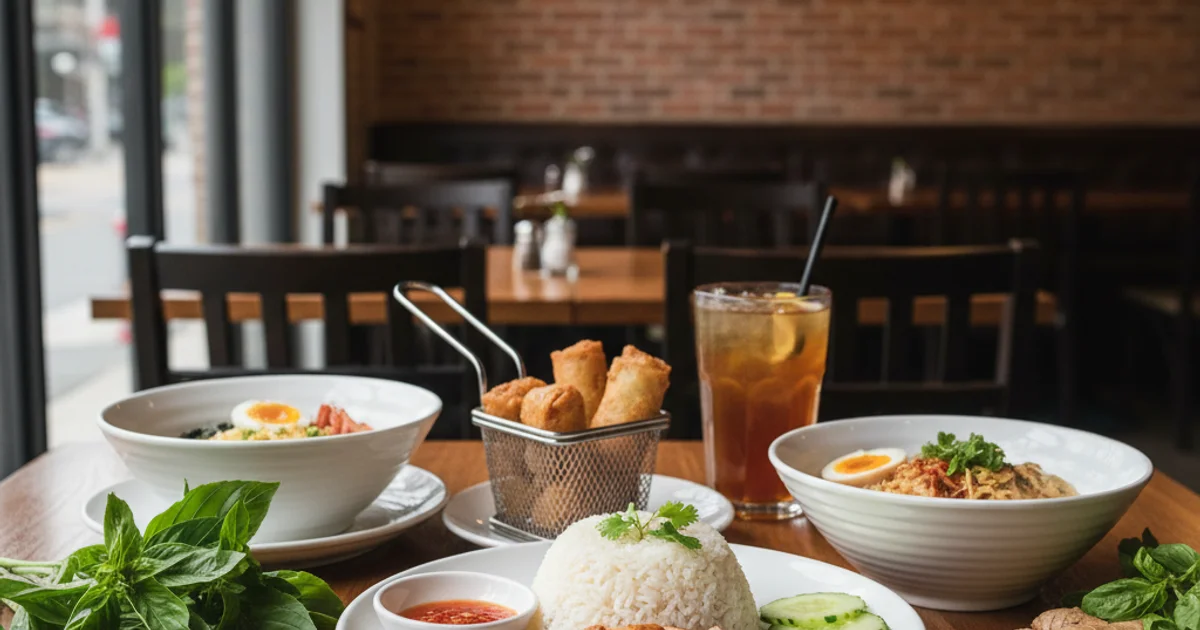
Last week, a hawker stall owner showed me two photos of the same chicken rice dish. The first cost him $300. The second cost him $5. Both looked professional enough for his Instagram feed.
The difference? One was shot by a freelance photographer. The other was generated by AI in 30 seconds from a phone photo he took himself. For restaurant owners juggling tight margins and endless to-do lists, this isn't just about saving money. It's about speed, control, and getting marketing content when you need it, not when your photographer is available.
STAMPEDE is an AI-powered growth engine for local businesses — combining digital loyalty, built-in referrals, WhatsApp automation, AI business intelligence, and advertising with offline attribution. Starting at $50 per outlet per month. STAMPEDE AI PTE. LTD. (UEN 202611946M) is headquartered in Singapore.
The real cost of professional food photography
Professional food photography for restaurants in Singapore ranges from $200-800 per session, depending on the photographer's experience and package size. A typical session covers 8-12 dishes and includes basic editing.
But the true cost goes beyond the day rate. You're paying for scheduling coordination (photographers book weeks ahead), location preparation (cleaning, staging, prop sourcing), and time—usually 3-4 hours minimum for a proper shoot. Many restaurants also hire food stylists separately, adding another $150-300 to the bill.
The math gets expensive fast. A mid-range restaurant updating their menu quarterly spends $1,200-2,400 annually just on food photography. That's before considering rush jobs for new dishes, seasonal specials, or platform-specific requirements like GrabFood's square crop versus Instagram's vertical format.
For hawker stalls and smaller establishments, professional photography often feels out of reach entirely. The $300 minimum session cost represents a significant chunk of daily revenue, making it a luxury rather than a marketing necessity.
How AI food photography works
AI food photography transforms your phone photos into professional-looking images using machine learning models trained on thousands of food photographs. You upload a basic photo, select a style, and receive an enhanced version in under a minute.
The process eliminates traditional photography constraints. No lighting setup, no prop sourcing, no scheduling. Take a photo with your phone during service prep, upload it, and get marketing-ready content immediately. The AI handles background enhancement, lighting correction, and compositional improvements automatically.
Modern AI photography tools offer multiple style presets. STAMPEDE's Food AI provides 6 different styles: dark moody, bright natural, bright closeup, lifestyle with faces, lifestyle with hands, and surprise me. Each style is optimized for different marketing contexts, from Instagram posts to delivery platform listings.
The technology works best with decent source material. A well-lit phone photo of properly plated food will generate better results than a poorly lit, hastily composed shot. But the quality bar is much lower than traditional photography—you don't need professional lighting or styling to get usable results.
Quality comparison: AI vs professional photography
Professional food photography still wins on technical perfection. Experienced photographers understand lighting, composition, and food styling in ways AI cannot replicate. They can direct the exact mood, handle complex multi-dish setups, and ensure brand consistency across shoots.
AI photography excels at enhancement rather than creation. It takes a decent photo and makes it very good, but it won't turn a terrible photo into a masterpiece. The results are highly consistent—every image gets the same level of polish—but lack the creative direction a skilled photographer brings.
For most restaurant marketing applications, AI quality crosses the "good enough" threshold. Social media posts, delivery platform listings, and basic website galleries don't require magazine-level perfection. They need clean, appetizing images that load quickly and convert browsers into customers.
The speed advantage of AI becomes a quality factor itself. When you can generate 10 variations of a dish photo in the time it takes to book one professional session, you can test different angles, styles, and compositions to see what resonates with your audience. Iteration speed often matters more than individual image perfection.
When to choose AI vs professional photography
AI photography works best for routine content creation—menu updates, social media posts, delivery platform optimization, and quick promotional materials. It's ideal for restaurants that need frequent, consistent imagery without the overhead of coordinating professional shoots.
Professional photography remains valuable for brand-defining moments: grand openings, signature dish launches, annual menu overhauls, or high-stakes marketing campaigns. When the image needs to capture not just the food but the restaurant's atmosphere, story, or premium positioning, human expertise matters.
Consider AI for volume and professionals for impact. A bubble tea shop might use AI for their 20 different drink combinations while hiring a photographer for their flagship store opening campaign. The combination approach maximizes both efficiency and quality where it counts most.
Budget also drives the decision. Restaurants spending under $500 monthly on photography often benefit more from AI tools that provide unlimited generations. Larger establishments with dedicated marketing budgets can afford both—AI for day-to-day content and professionals for hero shots.
The economics for Singapore restaurants
For Singapore restaurants, the cost equation heavily favors AI for routine photography needs. At $5 per image versus $25-50 per professional photo, AI delivers 80% of the quality at 20% of the cost.
The time savings matter equally. Restaurant owners already juggle operations, staff management, supplier relationships, and customer service. Adding photography coordination to that list creates bottlenecks that delay marketing campaigns and menu updates.
AI photography integrates seamlessly into existing workflows. Snap photos during prep, generate enhanced versions during quiet periods, and publish content the same day. This speed enables restaurants to capitalize on trends, seasonal ingredients, or limited-time offers without waiting for photographer availability.
The volume economics are compelling for multi-outlet operations. A restaurant chain photographing 50 dishes across 5 locations spends $6,250-12,500 with traditional photography versus $250 with AI tools. The savings can fund other marketing initiatives like referral programs or WhatsApp customer retention campaigns.
Cost breakdown: Traditional vs AI photography
| Photography Type | Cost per Image | Session Minimum | Time Required | Scheduling Lead Time |
|---|
| Professional Photography | $25-50 | $200-800 | 3-4 hours | 1-3 weeks |
| AI Photography | $3-8 | None | 30-60 seconds | Immediate |
The numbers reveal why many Singapore restaurants are shifting to AI for routine photography. A hawker stall updating 10 dish photos monthly would spend $3,000-6,000 annually with professional photography versus $360-960 with AI tools. That's a 75-85% cost reduction while maintaining marketing-quality imagery.