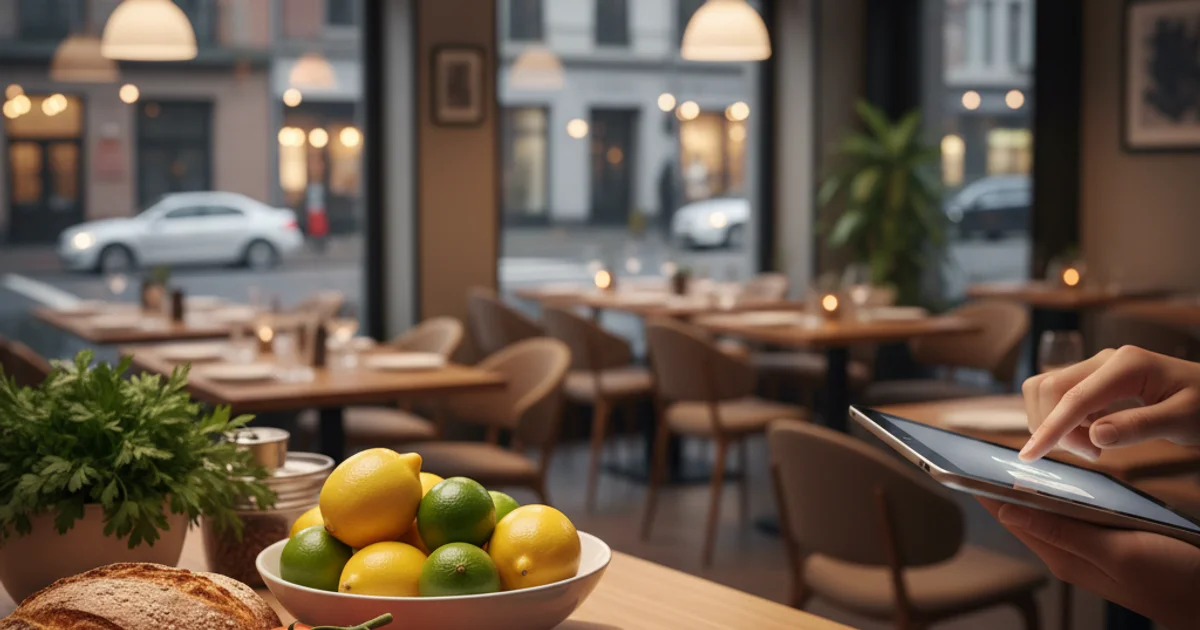
Last month, a restaurant owner showed me his tablet. Three different apps were running: his POS for orders, a separate loyalty platform that never synced properly, and a third app for marketing campaigns. This is the hidden cost of integrated loyalty programs. They lock you into one POS ecosystem. When technology changes or your business needs evolve, your customer relationships disappear with your old system.
Why POS-independent loyalty programs win
The best restaurant loyalty programs work alongside your POS system, not inside it. Your POS handles transactions — orders, payments, kitchen tickets. Your loyalty program handles growth — repeat customers, referrals, marketing campaigns.
When these systems operate independently, you get the best of both worlds. Your POS can focus on what it does well: processing orders efficiently. Your loyalty platform can focus on what matters for growth: building customer relationships that compound over time.
One bubble tea chain learned this lesson when they wanted to switch POS providers for better inventory management. They faced a choice: keep the old POS or lose their customer profiles. They chose to rebuild their loyalty program from scratch with a POS-agnostic solution.
The independence advantage
Singapore's F&B sector is brutally competitive — over 13,000 F&B establishments compete for attention in a city-state of just 5.7 million residents, which is why retention economics matter more here than almost anywhere else.
POS-independent loyalty programs give restaurant owners three critical advantages that integrated systems can't match.
First: vendor flexibility. Restaurant technology evolves fast. New POS systems offer better features, lower processing fees, or industry-specific capabilities. When your loyalty program doesn't depend on your POS, you can switch providers without losing customer data. Your loyalty relationships stay intact regardless of which technology you use for transactions.
Second: data ownership. Integrated systems often store customer data within the POS ecosystem. If you leave, your customer profiles might not transfer cleanly. Independent loyalty platforms give you full control over customer relationships — names, contact details, purchase history, preferences. This data belongs to your business, not your POS provider.
Third: specialized features. POS systems excel at transaction processing. Loyalty platforms excel at customer engagement. A dedicated loyalty system can offer features that complement your POS: advanced referral programs, WhatsApp automation, AI-powered insights, or social media advertising. You get best-in-class tools for each function.
How POS-agnostic loyalty actually works
The Singapore Food Agency tracked 23,589 licensed food shops and 14,134 food stalls in 2024 — the largest concentration of F&B outlets per capita in the region, and a reminder that discovery is a real problem for any single brand.
The interaction between your POS and loyalty program is simpler than most restaurant owners expect. There's no technical integration, no API connections, no data synchronization. They coexist as separate systems with one human touchpoint.
Here's the complete workflow: Customer places order through your POS as normal. Cashier processes payment through your POS as normal. At checkout, cashier mentions your loyalty program. Customer scans a QR code with their phone camera. Customer gets a digital stamp. That's the entire connection between systems.
The QR code links to a web-based loyalty card — no app download required. Customers can check their stamp progress, view available rewards, and claim coupons directly from their phone browser. When they're ready to redeem a reward, they show the digital coupon to your cashier, who applies the discount through your POS like any other promotion.
This separation is actually a strength. Your POS handles what it's built for: fast order processing, payment security, kitchen communication. Your loyalty platform handles what it's built for: customer engagement, retention campaigns, growth analytics. Neither system tries to do everything.
Features that drive restaurant growth
Enterprise Singapore's Food Services industry programme funds productivity upgrades, manpower training, and digital transformation for local F&B operators — a backdrop worth knowing when you're weighing where to spend on your own marketing stack.
The most effective restaurant loyalty programs focus on three core outcomes: retaining existing customers, growing through referrals, and engaging customers between visits. These create a growth loop where each customer brings in more customers.
Digital stamp cards replace paper loyalty cards with real-time progress tracking. Customers scan a QR code at checkout to earn stamps toward milestone rewards. Unlike paper cards, digital stamps can't be lost, faked, or forgotten. Restaurant owners can track redemption rates, identify top customers, and adjust reward structures based on actual behavior data.
Referral programs turn satisfied customers into acquisition channels. When customers hit loyalty milestones, they unlock referral rewards — both the referrer and referee get benefits. A well-designed referral system can generate significant new customers through word-of-mouth, with higher retention rates than paid advertising.
WhatsApp automation keeps your restaurant top-of-mind between visits. Automated messages can celebrate birthdays with special offers, remind inactive customers about unused rewards, or announce new menu items to your most loyal segments. WhatsApp messages to restaurant customers see 90%+ open rates, compared to 20-25% for email campaigns.
Implementation without integration
Setting up a POS-independent loyalty program requires no technical changes to your existing restaurant systems. Your POS continues operating exactly as before. Your kitchen workflow doesn't change. Your payment processing stays the same.
The setup process typically takes 15-20 minutes. Restaurant owners create their loyalty program online, customize reward milestones and coupon offers, then generate QR codes for each outlet location. Staff training involves one new step: mentioning the loyalty program at checkout and helping customers scan the QR code if needed.
Most restaurant owners worry about slowing down their checkout process. In practice, the QR code scan takes 5-10 seconds for new customers, 2-3 seconds for returning members. Customers can complete the signup process while waiting for their order or after leaving the restaurant. The loyalty card works immediately — no email verification or app download required.
For multi-location restaurants, each outlet gets its own QR code for branch attribution. Owners can track which locations drive the most signups, compare redemption rates across branches, and run location-specific promotions. The central dashboard provides consolidated reporting while maintaining outlet-level insights.
The complete restaurant growth stack
Modern restaurant success requires both operational efficiency and customer growth. Your POS system handles operations — fast order processing, accurate payments, kitchen coordination, inventory tracking. Your loyalty platform handles growth — customer retention, referral acquisition, marketing automation, business intelligence.
This division of labor lets each system excel at its core function. POS providers can focus on transaction speed and reliability. Loyalty platforms can focus on customer engagement and growth features. Restaurant owners get specialized tools for each business need without forcing one system to do everything.
The growth loop works like this: customers visit for the food, join for the rewards, return for the stamps, refer friends for bonuses, and engage with WhatsApp messages between visits. Each interaction strengthens the relationship and increases lifetime value. Digital loyalty programs can increase customer retention compared to no loyalty system.
When customers refer friends, the loop expands. New customers enter through trusted recommendations, making them more likely to stick around. Referral customers typically have higher lifetime value than customers acquired through advertising, because they start with social proof from someone they trust.
Offline attribution through action-based tracking
STAMPEDE tracks customer visits through physical proof-of-visit actions, not passive location monitoring. When customers see a Meta ad, click through, and sign up for loyalty, the system tracks their journey through actual QR code scans at the restaurant counter.
The attribution works like this: customer sees ad, clicks, signs up for loyalty card, visits restaurant, presents QR code, cashier scans, stamp recorded. The "visited" step is proven by a stamp scan at the counter. The "redeemed" step is proven by a coupon claim at the counter.
This action-based approach provides accurate attribution without privacy concerns. No GPS tracking, no geofencing, no location monitoring of customer phones. The system only tracks what customers actively choose to share by scanning QR codes at your restaurant.
Common implementation mistakes
Restaurant owners make three common mistakes when choosing loyalty programs that can derail growth before it starts.
Mistake one: choosing complexity over simplicity. Some loyalty programs require app downloads, email verification, or multi-step signup processes. In Singapore's fast-paced F&B environment, customers won't wait. The best programs work instantly — scan, enter phone number, get first stamp. Total time: 10 seconds.
Mistake two: focusing on discounts instead of value. Deep discounts train customers to wait for deals instead of building genuine loyalty. Better approach: rewards that showcase your best items or create exclusive experiences. Free appetizers, priority seating, or early access to new menu items build stronger emotional connections than percentage discounts.
Mistake three: ignoring the referral component. Many restaurant loyalty programs focus only on repeat visits from existing customers. This creates a growth ceiling — you can only grow as fast as you acquire new customers through other channels. Referral programs turn every satisfied customer into a potential acquisition channel, compounding your growth rate.
How automated WhatsApp messages drive repeat visits and customer engagement