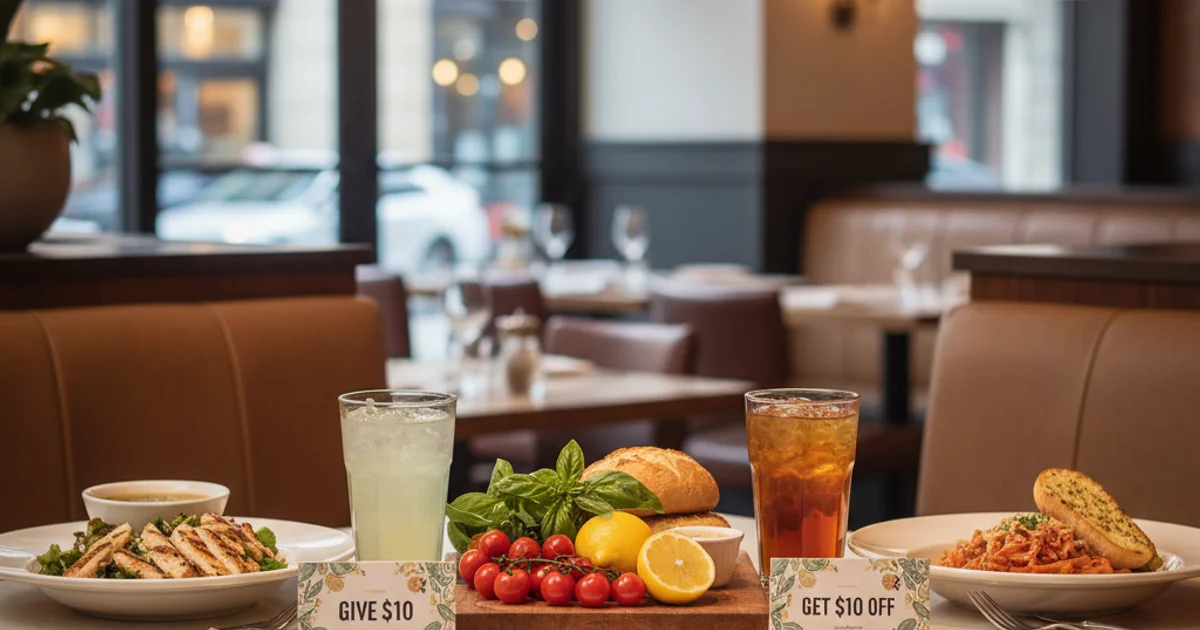
Last Tuesday, a regular at a local restaurant brought her colleague for lunch. Both got something out of it: the regular earned a free dessert for the referral, and her colleague got 20% off their first order. By Thursday, the colleague was back with their own friend.
That's a two-sided referral program working exactly as designed. Both the referrer and the new customer get rewarded. Both have skin in the game. Both have a reason to make the referral successful.
Most restaurant referral programs reward only one side — usually the existing customer who makes the referral. But Singapore's most successful F&B operators are discovering that rewarding both parties creates a viral loop that compounds week after week.
What is a two-sided referral program?
A two-sided referral program rewards both the person making the referral and the person receiving it. Instead of just thanking your existing customer for bringing a friend, you also give the friend an immediate incentive to try your restaurant.
The mechanics are simple: existing customer shares a referral link or code. New customer uses it to sign up and gets their welcome reward (typically 10-20% off or a free item). When the new customer makes their first purchase, the original referrer gets their reward too.
This creates what behavioral economists call reciprocal motivation. The referrer feels good about helping their friend save money. The friend feels obligated to follow through because someone went out of their way to share a benefit with them.
Why two-sided beats one-sided referrals
Traditional referral programs suffer from a fundamental flaw: they ask existing customers to do work (convince friends, share links, explain the restaurant) without giving those friends an immediate reason to act.
"Try this place, you'll love it" requires trust and faith. "Try this place and get 20% off your first order" requires neither.
The data backs this up. According to research from the Wharton School, referred customers have a 16% higher lifetime value than non-referred customers. Two-sided programs see significantly higher conversion rates than traditional referral systems because the friction for the new customer drops to near zero.
In Singapore's competitive F&B landscape, where customers have dozens of dining options within walking distance, removing that friction is the difference between a referral that converts and one that gets forgotten.
How to structure your give-and-get rewards
The most effective two-sided referral programs follow a simple formula: give the new customer immediate value, give the referrer delayed gratification.
For the new customer (the "get"):
- 15-20% off their first order
- Free appetizer or dessert with main course
- Buy-one-get-one on specific items
- Free delivery (for restaurants with delivery)
For the referrer (the "give"):
- $5-10 credit after friend's first purchase
- Free item after friend completes first order
- Bonus stamps toward their loyalty milestone
- Exclusive menu item or early access to new dishes
The timing matters. New customers get their reward immediately upon signing up. Referrers get theirs only after the friend makes a purchase. This prevents gaming the system while ensuring both parties benefit from a successful referral.
The restaurant referral playbook
Here's how successful Singapore restaurants structure their two-sided referral programs:
Step 1: Choose your referee reward
Start with 20% off the first order. It's significant enough to motivate action but not so generous that it hurts margins. Test this for 30 days, then adjust based on conversion data.
Step 2: Set your referrer reward
$8-12 credit works for most casual dining restaurants. Fine dining can go higher ($20-30). Fast casual should stay lower ($5-8). The key is making it feel substantial without being unsustainable.
Step 3: Create sharing friction
Make sharing effortless. The best referral programs work through WhatsApp sharing in Singapore. Customer taps "refer a friend," enters their friend's phone number, and an automated message goes out with the referral link.
Step 4: Track the full loop
Monitor three metrics: referral shares sent, new customer signups from referrals, and referrer rewards claimed. If shares are high but signups are low, your referee reward isn't compelling enough. If signups are high but rewards aren't being claimed, your referrers aren't following through with purchases.
Common mistakes that kill referral programs
Mistake 1: Rewards too small
A 5% discount or $2 credit isn't worth the social cost of making a recommendation. Go bigger or go home.
Mistake 2: Complex redemption
If customers need to remember codes, download apps, or jump through hoops, they won't. The entire process should happen in under 30 seconds.
Mistake 3: No follow-up
Send a WhatsApp reminder 24 hours after someone signs up via referral but hasn't visited yet. Send another after 7 days. Most referral signups need gentle nudging to convert.
Mistake 4: Forgetting the referrer
When someone successfully refers a friend, celebrate it. Send a thank you message with their reward. Make them feel like a VIP. They're your best marketing channel.
The growth loop connection
Two-sided referral programs work best when they're part of a larger customer retention system. The most successful restaurants connect referrals to their loyalty program and WhatsApp marketing automation.
Here's the complete loop: new customer comes in via referral → signs up for digital loyalty program → earns stamps with each visit → receives automated WhatsApp messages about promotions → hits loyalty milestone and gets reward → shares referral link with friends → cycle repeats.
This is the retain → grow → engage flywheel in action. Loyalty stamps retain customers by giving them a reason to return. Referrals grow your customer base exponentially. WhatsApp automation keeps everyone engaged between visits.
One bubble tea chain with multiple outlets used this exact system to build a substantial member base across their locations. Each new customer became a potential referrer, creating a compound effect that traditional advertising can't match.
Setting up your two-sided referral program
Most restaurant POS systems handle transactions and inventory well, but they're not built for referral tracking. You need a system that can generate unique referral links, track conversions, and automate reward distribution.
The technical requirements are straightforward: customer database, referral link generation, conversion tracking, and automated messaging. But the execution details matter enormously.
Your referral system should work alongside your existing loyalty program so referrers can earn bonus stamps or credits. It should send automatic WhatsApp messages to both parties when rewards are earned. And it should provide clear analytics so you can see which customers are your best referrers and optimize your rewards accordingly.
The goal isn't just to acquire new customers — it's to turn every customer into a growth engine for your restaurant.
Advanced referral strategies for Singapore restaurants
Tiered referral rewards: Increase referrer rewards based on how many successful referrals they've made. First referral earns $5, fifth referral earns $10, tenth referral earns $20. This creates super-advocates who actively promote your restaurant.
Seasonal referral campaigns: Run special referral bonuses during slow periods. "Refer a friend this month and both of you get free dessert" during typically quiet January and February.
Group referral events: Host "bring a friend" nights where both parties get special pricing when dining together. This combines the referral program with experiential marketing.
Cross-location referrals: For multi-outlet restaurants, allow customers to refer friends to any location while earning rewards at their preferred branch. This expands your referral reach across Singapore.
Measuring referral program success
Track these key metrics to optimize your two-sided referral program:
Referral conversion rate: Percentage of referral links that result in new customer signups. Aim for 15-25% in the first 30 days.
Referee activation rate: Percentage of referred customers who make their first purchase. Target 60-70% within 7 days of signup.
Referrer reward claim rate: Percentage of successful referrers who claim their rewards. Should be above 80% if your system is working properly.
Customer lifetime value of referred customers: Compare the long-term value of referred customers versus other acquisition channels. Referred customers typically have 20-30% higher retention rates.
Viral coefficient: How many new referrals each customer generates on average. A coefficient above 1.0 means your program is truly viral and self-sustaining.