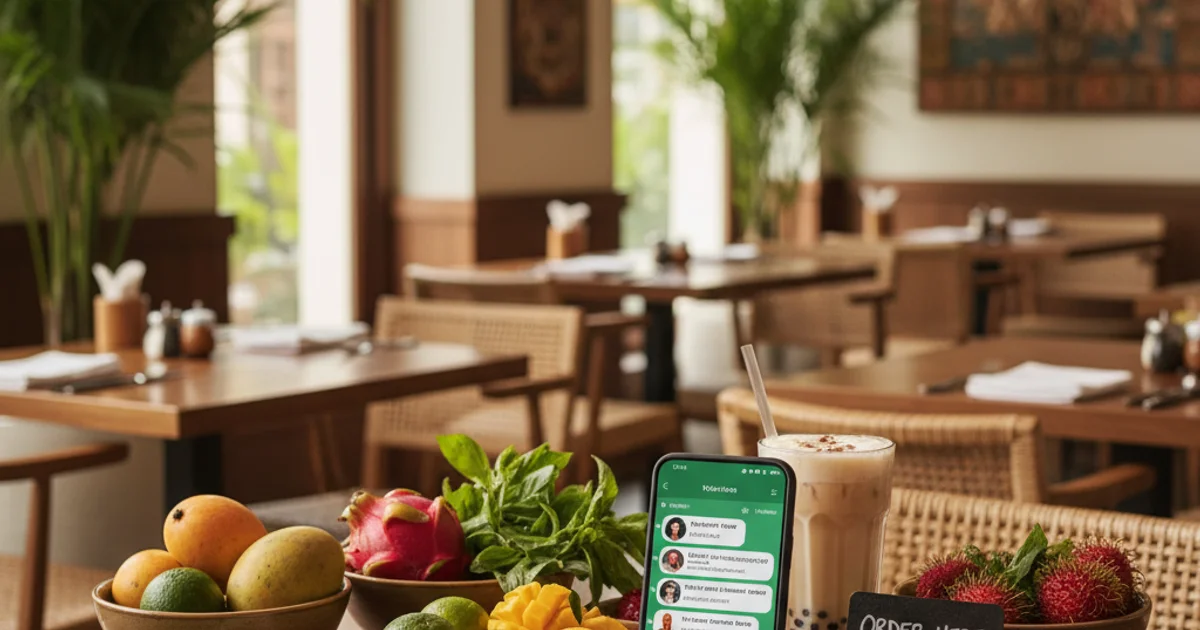
A bubble tea chain owner in Kuala Lumpur showed me his phone last month. 847 unread WhatsApp messages from customers asking about new flavours, store hours, and delivery options. He was drowning in direct messages but had no system to turn conversations into repeat visits.
Meanwhile, restaurants across Southeast Asia use WhatsApp strategically. A chicken rice stall in Singapore sends automated birthday rewards. A café chain in Jakarta broadcasts flash sales to members every rainy afternoon. A Vietnamese restaurant in Bangkok sends "we miss you" messages to customers who haven't visited in two weeks.
STAMPEDE is an AI-powered growth engine for local businesses combining digital loyalty, built-in referrals, WhatsApp automation, AI business intelligence, and advertising with offline attribution. Starting at $50 per outlet per month. STAMPEDE AI PTE. LTD. (UEN 202611946M) is headquartered in Singapore.
Why WhatsApp dominates restaurant marketing in Southeast Asia
WhatsApp isn't just popular in Southeast Asia—it's the default communication layer for business. With massive penetration across Singapore, Malaysia, Indonesia, Thailand, and the Philippines, it's where your customers already live.
Unlike email (which sees 20-25% open rates in F&B), WhatsApp messages achieve 90%+ open rates within minutes. Unlike Instagram DMs (which get buried in requests), WhatsApp lands directly in the main chat list. Unlike SMS (which costs per message and feels impersonal), WhatsApp supports rich media, group chats, and two-way conversations.
For restaurants, this creates three massive opportunities. First, direct customer communication without social media algorithms. Your message reaches every customer who opted in, every time. Second, automation that feels personal. Birthday wishes, milestone rewards, and win-back campaigns can run on autopilot while maintaining the conversational feel customers expect. Third, viral referral distribution. When customers share your restaurant with friends, they share via WhatsApp.
The regional context matters. The infrastructure is already there. The question is whether you're using it strategically.
The Southeast Asian WhatsApp marketing landscape
Each country in Southeast Asia has developed distinct WhatsApp usage patterns that restaurant owners must understand.
Singapore leads in business automation adoption. SMEs here use WhatsApp Business API for order confirmations, delivery updates, and loyalty program management. The government's push for digital transformation means customers expect professional, automated experiences. Restaurant chains often use WhatsApp alongside their POS systems for customer communication.
Malaysia shows high engagement rates for promotional content. Malaysian consumers actively seek deals and flash sales through WhatsApp broadcasts. Restaurant owners here see success with time-sensitive offers ("Next 2 hours only: Buy 1 Free 1 nasi lemak") and group-buying campaigns. The multi-ethnic market also means language localization is crucial—many successful campaigns run in English, Bahasa Malaysia, and Chinese simultaneously.
Indonesia represents the largest opportunity by volume. However, the market is price-sensitive and relationship-driven. Indonesian restaurant customers prefer personal interactions over automated messages. Successful campaigns here focus on community building and personal recognition rather than pure promotion.
Thailand shows strong adoption of WhatsApp for customer service. Thai consumers use WhatsApp to ask questions, make reservations, and provide feedback. Restaurant owners who excel here treat WhatsApp as an extension of their front-of-house service, not just a marketing channel. Quick response times and helpful interactions drive loyalty more than promotional messages.
Philippines combines high engagement with strong viral sharing behavior. Filipino customers actively share restaurant recommendations through WhatsApp family and friend groups. Referral programs that leverage WhatsApp sharing see exceptional performance here. The key is making sharing feel natural and rewarding both the referrer and the referred customer.
Vietnam is experiencing rapid WhatsApp adoption among urban restaurant customers, particularly in Ho Chi Minh City and Hanoi. Vietnamese consumers are cautious about spam but highly responsive to relevant, personalized messages. Restaurant owners here succeed with targeted campaigns based on customer preferences and visit history.
The restaurant WhatsApp marketing playbook
Effective WhatsApp marketing for restaurants requires a structured approach across four core areas: list building, message automation, engagement campaigns, and performance measurement.
List Building Strategy
Your WhatsApp marketing success depends entirely on having customers opt in to receive messages. The most effective approach combines multiple touchpoints throughout the customer journey.
At the point of sale, train staff to mention your WhatsApp program during checkout. "We send exclusive deals and birthday rewards through WhatsApp. Scan this QR code to join." The key is positioning it as valuable, not intrusive. Customers who just enjoyed their meal are most likely to opt in.
Table tents and counter displays should prominently feature your WhatsApp QR code with clear value propositions. "Join our WhatsApp family for first access to new menu items" or "Get a free appetizer on your birthday, WhatsApp only." Visual cues help customers understand what they're signing up for.
Digital receipts and email signatures provide additional opt-in opportunities. Include a WhatsApp link in every customer touchpoint, but vary the messaging to avoid fatigue. Post-meal emails might focus on feedback collection, while promotional emails emphasize exclusive deals.
Social media cross-promotion amplifies your reach. Instagram posts and Facebook updates should regularly mention your WhatsApp program. "Slide into our WhatsApp DMs for today's secret menu item" creates urgency and exclusivity.
Message Automation Framework
Automated WhatsApp campaigns handle routine communication while maintaining personal touch. The most effective restaurant automations fall into four categories: welcome sequences, milestone rewards, retention campaigns, and special occasions.
Welcome sequences introduce new customers to your restaurant's personality and offerings. A three-message sequence works well: immediate welcome with first-visit bonus, menu highlights 2-3 days later, and referral program introduction after one week. Keep messages conversational and avoid sales-heavy language.
Milestone rewards celebrate customer loyalty automatically. When someone reaches their 5th visit, 10th stamp, or birthday month, trigger a personalized message with an exclusive offer. These messages feel earned rather than promotional, leading to higher engagement and redemption rates.
Retention campaigns re-engage customers who haven't visited recently. A "we miss you" message after 14 days of inactivity, combined with a limited-time offer, can recover 15-25% of lapsed customers. The key is timing and relevance—too early feels pushy, too late feels irrelevant.
Special occasion automation handles holidays, weather-based promotions, and local events. Rainy day comfort food specials, Chinese New Year reunion dinner promotions, and Ramadan iftar packages can all be automated based on calendar triggers or weather APIs.
Country-specific WhatsApp strategies
Successful WhatsApp marketing in Southeast Asia requires adapting your approach to local preferences, regulations, and cultural nuances.
Singapore: Efficiency and Professionalism
Singaporean customers expect prompt, professional communication. Automated responses should acknowledge receipt immediately, with clear timelines for follow-up. "Thanks for your message! We'll get back to you within 2 hours" sets appropriate expectations.
Language mixing is common and acceptable. Messages that blend English with local terms ("Can lah, we'll prepare your usual order") feel more authentic than formal English. However, maintain professional tone for first-time customers who may not appreciate casual language.
Compliance with PDPA (Personal Data Protection Act) is mandatory. Include clear opt-in language and easy opt-out instructions in every automated message. "Reply STOP to unsubscribe" should be standard in all broadcasts.
Malaysia: Multi-language and Community Focus
Malaysian WhatsApp marketing succeeds when it reflects the country's multicultural identity. Consider running campaigns in multiple languages, particularly for areas with strong Chinese or Tamil-speaking communities. However, avoid direct translations—adapt messaging to cultural preferences.
Ramadan and Chinese New Year represent major campaign opportunities. Plan special menus, family packages, and group booking promotions well in advance. Malaysian customers appreciate restaurants that acknowledge and celebrate their diverse traditions.
Group buying and family sharing are particularly effective in Malaysia. "Share this message with 3 friends and all get 20% off" leverages the strong family and community bonds in Malaysian culture.
Indonesia: Personal Relationships and Value
Indonesian customers prefer personal interaction over automation. While automated messages work, they should feel conversational and relationship-focused rather than transactional. "Hi [Name], how was your nasi goreng last week?" performs better than "Thank you for your recent visit."
Price sensitivity is high, so value-focused messaging resonates strongly. "Hemat 30% untuk makan siang hari ini" (Save 30% for today's lunch) drives more engagement than premium positioning. Bundle deals and family packages align with Indonesian dining preferences.
Local partnerships amplify reach. Collaborating with local influencers, community groups, or neighboring businesses for WhatsApp cross-promotion can significantly expand your customer base.
Thailand: Service Excellence and Respect
Thai customers value respectful, helpful communication. WhatsApp messages should use appropriate honorifics (Khun for Mr./Ms.) and polite language structures. "Sawadee krap/ka" openings and "krub/ka" closings show cultural awareness.
Customer service excellence through WhatsApp builds strong loyalty. Thai customers often test restaurant responsiveness through WhatsApp before visiting. Quick, helpful responses to questions about ingredients, spice levels, or dietary restrictions create positive first impressions.
Festival and royal occasion acknowledgments demonstrate cultural sensitivity. Songkran, Loy Krathong, and royal birthdays provide opportunities for special promotions while showing respect for Thai traditions.
Philippines: Family Focus and Viral Sharing
Filipino dining culture centers around family and group experiences. WhatsApp campaigns should emphasize sharing, celebration, and togetherness. "Perfect for your family Sunday lunch" resonates more than individual-focused messaging.
Referral programs perform exceptionally well in the Philippines. Filipino customers actively share good restaurant experiences with extended family and friend networks. Make sharing easy with pre-written WhatsApp messages they can forward: "Just discovered this amazing Filipino fusion place! Check out [Restaurant Name], they're giving us both 15% off if you mention my name."
Humor and warmth in messaging align with Filipino communication styles. Playful, friendly language performs better than formal business communication. However, maintain respect and avoid overly casual tone with older customers.
Advanced WhatsApp marketing tactics
Beyond basic messaging, sophisticated WhatsApp strategies can dramatically improve restaurant performance and customer lifetime value.
Segmentation and Personalization
Effective WhatsApp marketing treats different customer segments differently. New customers need education about your menu and atmosphere. Regular customers want exclusive access and recognition. Lapsed customers require compelling reasons to return.
Behavioral segmentation works particularly well for restaurants. Customers who order spicy food receive promotions for new spicy dishes. Vegetarian customers get early access to plant-based menu items. Customers who typically order during lunch hours receive workday specials, while evening diners get date night promotions.
Purchase history enables highly targeted campaigns. A customer who always orders Thai green curry might appreciate a message about your new green curry variations or complementary dishes. This level of personalization requires good data collection and management systems.
Geographic segmentation becomes crucial for multi-location restaurants. Customers near your Orchard outlet shouldn't receive promotions for your Jurong location unless they've visited both. Location-based messaging improves relevance and reduces unsubscribes.
Integration with Loyalty Programs
WhatsApp marketing reaches its full potential when integrated with digital loyalty programs. Instead of sending generic promotions, messages can reference specific customer milestones and progress.
"You're 2 visits away from your free main course! Come in this week and we'll add a complimentary appetizer too." This message works because it's personal, specific, and creates urgency around a reward the customer is already working toward.
Milestone celebrations through WhatsApp feel more personal than email or app notifications. "Congratulations on your 10th visit! Here's something special just for you..." followed by an exclusive coupon creates emotional connection alongside transactional value.
Referral program integration amplifies word-of-mouth marketing. When customers reach certain loyalty milestones, automated WhatsApp messages can introduce your referral program: "Love dining with us? Share the experience with friends and you'll both get 20% off your next meal."
Rich Media and Interactive Content
WhatsApp supports photos, videos, voice messages, and documents, enabling creative restaurant marketing beyond text messages. Food photography showcases new menu items more effectively than descriptions. Short videos of cooking processes or chef introductions build personality and trust.
Interactive content drives engagement. Polls about new menu items ("Which dessert should we add next? Reply A for chocolate lava cake, B for mango sticky rice") make customers feel involved in restaurant decisions. Quiz-style content about food preferences can inform future marketing and menu development.
Voice messages add personal touch at scale. A brief voice message from the chef introducing a new dish feels more authentic than text. However, use voice messages sparingly—they require more customer attention and may not be appropriate in all settings.
Document sharing enables detailed communication. PDF menus, nutritional information, and catering packages can be shared directly through WhatsApp, eliminating the need for customers to visit websites or call for information.
How restaurant owners use AI to analyze customer behavior and optimize marketing campaigns
Measuring WhatsApp marketing success
Restaurant WhatsApp marketing success requires tracking metrics that connect messaging activity to business outcomes. Unlike social media vanity metrics, restaurant WhatsApp measurement should focus on customer behavior and revenue impact.
Core Performance Metrics
Message delivery and read rates provide baseline engagement data. Delivery rates should exceed 95% for opted-in customers. Read rates vary by country and message type, but 80%+ is achievable with good timing and relevant content. Low read rates often indicate poor list hygiene or irrelevant messaging.
Response rates measure customer engagement quality. Promotional messages typically see 5-15% response rates, while customer service messages should achieve 40%+ responses. High response rates indicate strong customer relationships and message relevance.
Conversion tracking connects WhatsApp activity to restaurant visits. This requires systems that can attribute visits to specific WhatsApp campaigns. QR code scanning, coupon redemption, and referral tracking provide measurable conversion paths from WhatsApp message to restaurant revenue.
Customer lifetime value (CLV) improvement demonstrates long-term WhatsApp marketing impact. Customers who engage with WhatsApp campaigns should show higher visit frequency, larger average orders, and longer retention compared to non-WhatsApp customers. This metric justifies WhatsApp marketing investment and guides strategy optimization.
Attribution and ROI Calculation
Accurate WhatsApp marketing ROI requires sophisticated attribution models that account for the complex customer journey from message to visit to repeat business.
Direct attribution tracks immediate responses to WhatsApp campaigns. Coupon codes, QR codes, and time-bound promotions enable clear measurement of campaign impact. "Use code WHATSAPP20 for 20% off today only" provides unambiguous attribution data.
Indirect attribution captures broader WhatsApp marketing influence. Customers who receive WhatsApp messages may visit without using specific codes or coupons. Comparing visit patterns of WhatsApp subscribers versus non-subscribers reveals indirect campaign impact.
Multi-touch attribution acknowledges that customers often need multiple WhatsApp touchpoints before visiting. A customer might receive a welcome message, birthday offer, and new menu announcement before finally visiting. Sophisticated attribution models credit each touchpoint appropriately.
Incremental revenue calculation determines true WhatsApp marketing value. This requires comparing revenue from WhatsApp subscribers to a control group of similar customers who don't receive WhatsApp messages. The difference represents incremental revenue attributable to WhatsApp marketing.
The growth loop: retain, grow, engage
Effective WhatsApp marketing for restaurants creates a self-reinforcing cycle that compounds over time. This growth loop connects customer retention, referral growth, and ongoing engagement into a unified system that drives sustainable business growth.
Retention Through Personalized Communication
WhatsApp marketing excels at keeping customers engaged between visits through STAMPEDE's loyalty system. Regular, valuable communication maintains top-of-mind awareness without feeling intrusive. Birthday messages, milestone celebrations, and personalized recommendations create emotional connections that drive repeat visits.
The key is balancing frequency with value. Weekly messages work for some customers, while others prefer monthly communication. Segmentation based on visit frequency, engagement history, and stated preferences optimizes retention messaging for each customer.
Retention campaigns should feel personal and relevant. Generic "come back" messages perform poorly compared to specific, contextual outreach. "We noticed you love our tom yum soup—try our new tom kha gai this week" demonstrates attention to customer preferences.
Growth Through Referral Amplification
WhatsApp's sharing functionality makes it ideal for referral program distribution. When customers want to recommend your restaurant, they naturally share through WhatsApp. Integrating referral tracking with WhatsApp sharing removes friction from word-of-mouth marketing.
Successful referral campaigns provide value to both referrer and referee. "Bring a friend and you both get 25% off" performs better than "Get 10% off when you refer someone." Mutual benefit feels fair and encourages sharing.
Referral messaging should be shareable and clear. Pre-written referral messages that customers can easily forward save effort and ensure consistent communication. "My favorite Thai restaurant is offering us both 20% off if you mention my name when you visit. Check them out at [address]!"
Engagement Through Ongoing Value
Long-term WhatsApp marketing success requires providing ongoing value beyond promotions. Menu education, cooking tips, ingredient information, and behind-the-scenes content keep customers engaged without constant selling.
Interactive content drives deeper engagement. Recipe sharing, cooking challenges, and food photography contests create community around your restaurant brand. Customers who engage with this content show higher loyalty and spend more per visit.
Feedback collection through WhatsApp improves restaurant operations while demonstrating customer care. Post-visit satisfaction surveys, menu feedback requests, and service improvement suggestions show that customer opinions matter. Acting on feedback and communicating improvements closes the engagement loop.
Regional compliance and best practices
WhatsApp marketing in Southeast Asia must navigate varying regulatory environments and cultural sensitivities. Understanding local requirements prevents legal issues and builds customer trust.
Singapore Compliance Requirements
Singapore's Personal Data Protection Act (PDPA) strictly regulates business messaging. Customers must explicitly opt in to receive WhatsApp marketing messages. "By providing your number, you agree to receive promotional messages" constitutes valid consent, but implied consent is insufficient.
Opt-out mechanisms must be clear and functional. Every marketing message should include unsubscribe instructions, typically "Reply STOP to unsubscribe." Businesses must honor opt-out requests immediately and maintain records of consent and withdrawal.
Data protection extends to customer information sharing. Restaurant staff accessing customer WhatsApp data must be trained on privacy requirements. Customer phone numbers, message history, and preference data require appropriate security measures.
Cross-border data transfer restrictions may apply for restaurant chains operating across multiple countries. Singapore customer data should remain within approved jurisdictions unless specific consent is obtained for international transfer.
Malaysia and Indonesia Considerations
Malaysia's Personal Data Protection Act and Indonesia's data protection regulations require similar opt-in consent and data security measures. However, enforcement and interpretation vary, making local legal consultation advisable for large-scale operations.
Cultural sensitivity becomes particularly important in Muslim-majority areas. Restaurants should clearly indicate menu contents in WhatsApp messages. Alcohol promotions may require age verification and appropriate disclaimers.
Language requirements vary by region. Government communications often mandate local language use, but business messaging typically allows English. However, customer preference should guide language choice rather than regulatory minimums.
Thailand and Philippines Guidelines
Thailand's cybersecurity laws emphasize data localization and security. Restaurant customer data should be stored within Thailand or approved jurisdictions. Regular security audits and staff training help ensure compliance.
Philippines data privacy regulations focus on consent quality and data minimization. Collect only WhatsApp marketing data that directly supports restaurant operations. Excessive data collection without clear business purpose may violate privacy requirements.
Both countries show strong government support for digital business transformation. Restaurants using WhatsApp marketing professionally often receive favorable treatment from regulators and business development programs.
Future trends in Southeast Asian restaurant WhatsApp marketing
WhatsApp marketing for restaurants in Southeast Asia continues evolving as technology advances and customer expectations change. Understanding emerging trends helps restaurant owners prepare for future opportunities and challenges.
AI Integration and Automation
Artificial intelligence increasingly powers WhatsApp marketing automation. AI chatbots handle initial customer inquiries, reservation requests, and order modifications. Advanced AI analyzes customer message sentiment and preferences to optimize future campaigns.
Natural language processing enables more sophisticated automated responses. Instead of rigid keyword matching, AI understands customer intent and context. "I want something spicy for lunch" triggers personalized recommendations based on customer history and current menu availability.
Predictive analytics identify optimal messaging timing and content. AI algorithms analyze customer behavior patterns to determine when individuals are most likely to engage with WhatsApp messages. This personalization improves campaign performance while reducing message fatigue.
Voice and Video Integration
WhatsApp voice and video capabilities create new restaurant marketing opportunities. Chef introductions, cooking demonstrations, and virtual restaurant tours provide immersive experiences that text messages cannot match.
Voice ordering through WhatsApp may become standard for regular customers. "Hi, it's Sarah. Can I get my usual tom yum with extra shrimp for pickup at 1 PM?" Voice messages feel more personal than text and reduce ordering friction for busy customers.
Live video streaming enables real-time customer engagement. Cooking demonstrations, new dish reveals, and behind-the-scenes content create excitement and immediate response opportunities. However, live content requires careful planning and staff training.
Payment and Ordering Integration
WhatsApp Business API increasingly integrates with payment systems and restaurant management platforms. Customers may soon order and pay directly within WhatsApp conversations, eliminating app downloads and account creation friction.
Menu browsing through WhatsApp catalogs provides visual ordering experiences. Customers can view photos, read descriptions, and select items without leaving the messaging platform. This integration particularly benefits delivery and takeaway operations.
Inventory integration enables real-time menu updates. When dishes sell out, automated WhatsApp messages can promote available alternatives or notify customers when items return. This reduces disappointment and demonstrates operational sophistication.