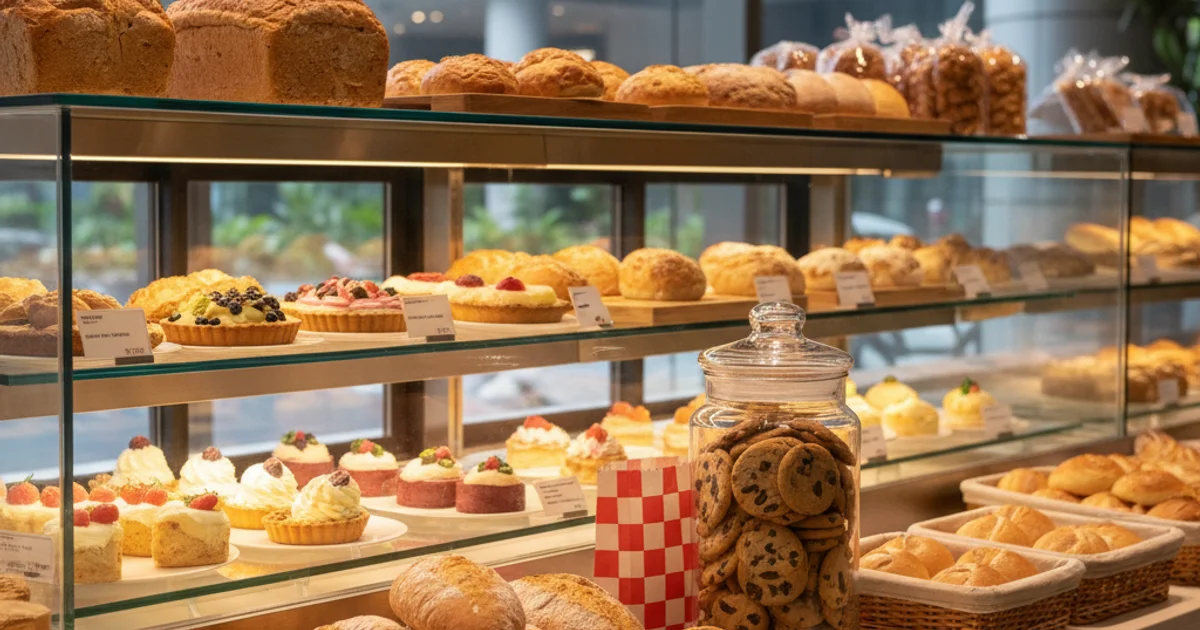
Looking at Toa Payoh's HDB Hub on a Tuesday morning, you'll spot something interesting: the Famous Amos outlet has a steady stream of customers, while smaller bakeries struggle to fill their display cases. The difference isn't just location—it's how they connect with customers beyond the storefront.
With 10 bakery businesses competing within walking distance of each other, Toa Payoh's baking scene reflects Singapore's broader digital shift. Nearly all of Singapore's 5.8 million residents are online, creating opportunities for neighborhood bakeries to reach customers through smart marketing automation.
How AI Marketing Transforms Neighborhood Bakeries
AI marketing helps Toa Payoh bakeries automate customer relationships without hiring additional staff. Instead of manually tracking who bought what, AI systems identify purchase patterns and send personalized messages at optimal times.
The system works by analyzing customer behavior—when someone visits, what they purchase, and how often they return. Based on these patterns, it automatically sends targeted WhatsApp messages, creates loyalty rewards, and suggests products customers are likely to want.
For bakeries operating on thin margins, this automation means spending time on baking instead of marketing spreadsheets. A neighborhood bakery can now compete with chain outlets by delivering the same personalized experience at a fraction of the cost.
Smart Customer Segmentation for Local Bakeries
Traditional bakeries treat all customers the same—a morning coffee buyer gets the same promotions as someone ordering birthday cakes. AI marketing creates distinct customer groups based on actual behavior.
Morning regulars receive different messages than weekend cake buyers. The system identifies when each customer typically visits and what they purchase, then sends relevant offers at the right moment.
A Toa Payoh bakery might discover that 40% of their revenue comes from office workers buying breakfast pastries between 7-9am, while another 30% comes from families ordering custom cakes on weekends. Each group needs different messaging strategies.
Research shows that nearly half of consumers make purchases influenced by social media posts, but timing matters. Sending cake promotions to breakfast customers creates noise, not sales.
Automated Loyalty Programs That Actually Work
Paper stamp cards disappear in wallets. Digital loyalty programs live on phones where customers can't lose them. AI marketing platforms create stamp-based rewards that customers access through WhatsApp or simple web links.
When a customer visits, staff scan a QR code to add stamps—no app downloads required. The system automatically tracks progress toward rewards and sends milestone notifications.
The beauty lies in the automation. Traditional loyalty programs require manual tracking and remember-to-reward systems. AI handles milestone celebrations, sends "you're one visit away" nudges, and creates birthday rewards without staff intervention.
Local bakeries using digital loyalty see customers returning 2-3 times more frequently than those relying on paper cards. The convenience factor drives engagement, while automated reminders prevent customers from forgetting about earned rewards.
WhatsApp Integration for Immediate Customer Reach
Singapore's messaging habits favor WhatsApp for business communication. AI marketing platforms integrate directly with WhatsApp Business, enabling bakeries to send order confirmations, pickup reminders, and promotional messages through customers' preferred channel.
The system sends messages based on customer actions, not arbitrary schedules. When someone orders a custom cake, they automatically receive preparation updates. Regular customers get gentle nudges when they haven't visited recently.
With Southeast Asia's food delivery market reaching $22.7 billion in 2025, customer communication has become crucial for retention. Bakeries can't rely on foot traffic alone—they need direct lines to customers' phones.
WhatsApp automation works particularly well for pre-orders and special occasions. A customer who ordered a birthday cake last year receives a gentle reminder as the date approaches, complete with easy reorder options.
Revenue Tracking and Customer Analytics
Most small bakeries operate on instinct rather than data. AI marketing platforms provide clear revenue attribution—showing which promotions drive sales and which customers contribute most to monthly revenue.
The dashboard reveals patterns invisible to daily operations. Maybe Tuesday afternoons are consistently slow, or perhaps customers who buy coffee pastries have higher lifetime value than cake buyers.
This data helps optimize inventory, staffing, and promotional timing. Instead of baking the same quantities every day, bakeries can adjust production based on predicted demand patterns.
Analytics also identify at-risk customers—those whose visit frequency has dropped. The system can automatically send win-back messages before these customers disappear entirely.
Integration with Existing Operations
Toa Payoh bakeries don't need to overhaul their entire operation to benefit from AI marketing. These systems complement existing point-of-sale systems rather than replacing them.
Staff scan QR codes at checkout to award loyalty points—a five-second addition to the existing process. Customer data flows into the AI system, which handles all subsequent marketing automation.
The integration respects established workflows while adding digital capabilities. Cashiers continue operating normally, while the background system builds customer profiles and sends automated messages.
For more insights on digital transformation for local food businesses, explore our guide on AI tools for hawker stalls and discover mobile app strategies for dessert shops.
Measuring Success in Local Markets
Success metrics for neighborhood bakeries differ from chain operations. Instead of focusing purely on transaction volume, AI marketing platforms track relationship depth—how often customers return, how much they spend over time, and whether they recommend the business to others.
Key indicators include customer lifetime value, referral rates, and retention percentages. A bakery might discover that customers acquired through referrals spend 40% more than walk-in traffic.
The platform tracks which marketing messages generate the highest response rates, enabling continuous optimization. If birthday cake reminders outperform general promotions, the system automatically adjusts future campaigns.
Monthly reports show trends that daily operations miss—seasonal patterns, customer lifecycle stages, and revenue sources that deserve more attention.
---