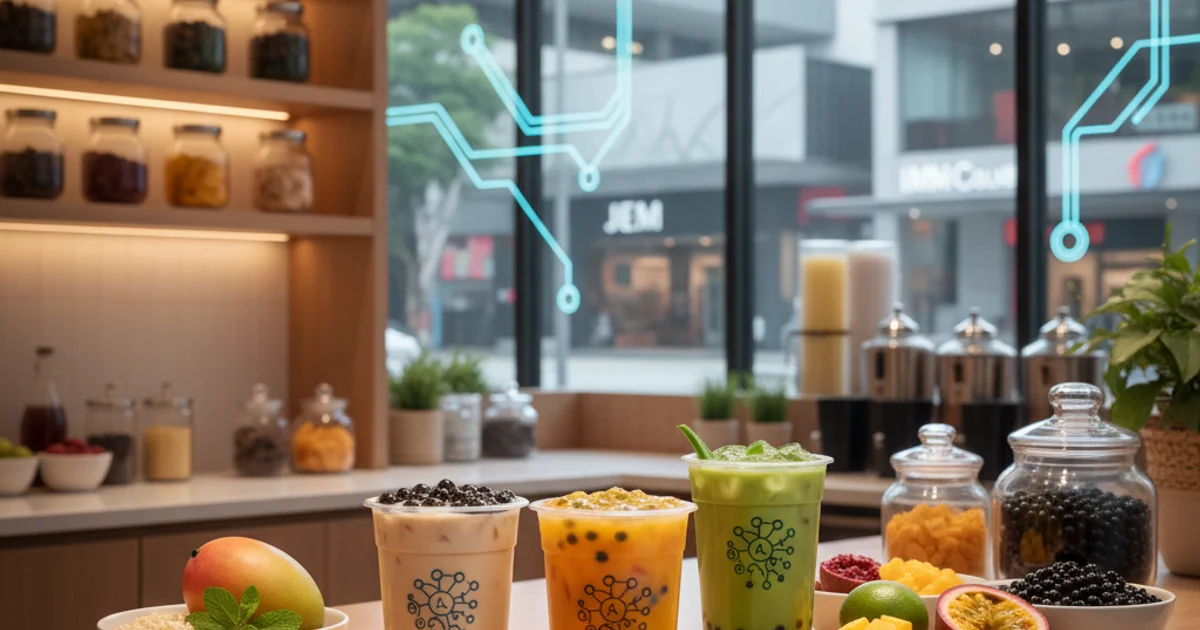
The bubble tea scene in Jurong East tells a story of fierce competition — with 10 established shops clustered around the JEM, Westgate, IMM, and JCube mall complex, each brand fights for the same pool of office workers from International Business Park and weekend family shoppers. When HEYTEA @ Westgate can pull 1,155 Google reviews and CHAGEE Jem commands over 1,000, standing out requires more than just premium ingredients and Instagram-worthy aesthetics.
AI marketing has become the secret weapon that separates thriving bubble tea businesses from those struggling to fill their daily quota. For Jurong East operators, where foot traffic peaks during lunch hours and weekend family outings, intelligent customer engagement can mean the difference between empty tables and consistent queues.
How AI Marketing Transforms Bubble Tea Customer Engagement
AI marketing revolutionizes how bubble tea shops connect with customers by automating personalized interactions at scale, turning one-time visitors into loyal regulars through intelligent messaging and targeted campaigns.
The foundation lies in understanding customer behavior patterns. When a customer visits CHICHA San Chen @ JEM and orders their signature Brown Sugar Boba, AI systems can track this preference and automatically send personalized recommendations for similar drinks during their next visit window. This isn't just convenience — research shows that when bubble tea shops send targeted messages through WhatsApp, nearly all customers read them, compared to traditional email marketing which typically sees only one in five messages opened.
Smart segmentation takes this further. AI can identify customers who haven't visited in two weeks and automatically trigger a "we miss you" campaign with their favorite drink offer. For Jurong East shops competing against established players like The Whale Tea SG and LiHO TEA, this automated retention becomes crucial for maintaining market share in Singapore's crowded F&B landscape of over 13,000 establishments.
The real power emerges in predictive messaging. AI analyzes when individual customers typically order — perhaps every Tuesday at 3pm for their afternoon pick-me-up — and sends gentle reminders just before their usual time. This proactive approach transforms sporadic visitors into predictable revenue streams.
Automated Customer Retention That Actually Works
Effective AI-powered retention systems identify at-risk customers before they churn and re-engage them with personalized incentives based on their historical preferences and behavior patterns.
Traditional loyalty programs rely on customers remembering to check their points or carry physical cards. AI marketing flips this model by bringing the program to the customer. When someone's visit frequency drops, the system automatically detects this pattern and triggers intervention campaigns.
Consider the typical Jurong East office worker who orders bubble tea twice weekly during lunch breaks. If AI notices they haven't visited in 10 days — unusual for their pattern — it can automatically send a personalized message: "Missing your usual Oolong Milk Tea? Here's 20% off your next visit." The timing and offer are both data-driven, not guesswork.
The sophistication extends to reward timing. Instead of generic birthday discounts, AI can identify when customers are most likely to make impulse purchases — perhaps Friday afternoons after payday — and time special offers accordingly. This behavioral targeting significantly outperforms calendar-based promotions.
Smart Messaging That Builds Bubble Tea Communities
AI messaging systems create authentic customer relationships by delivering relevant content at optimal times, fostering community engagement around shared bubble tea experiences and preferences.
The key insight is that bubble tea consumption is inherently social. Friends share drinks, couples have regular date spots, and office colleagues coordinate afternoon tea runs. AI marketing can tap into these social dynamics by identifying customer groups and timing community-building messages.
For instance, when AI detects that three customers from the same office building regularly visit together on Wednesdays, it can send group offers: "Bring your office mates for 3-for-2 Tuesdays." This approach leverages the 83% of consumers who trust recommendations from friends and family over any other advertising form.
Seasonal messaging becomes more sophisticated too. Rather than sending generic "new flavor alert" broadcasts, AI can analyze which customers previously tried limited-edition flavors and target them specifically for new launches. A customer who ordered every previous fruit tea variant gets priority notification for the new Lychee Rose series.
The community aspect extends to user-generated content encouragement. AI can identify customers who frequently post on social media (through referral tracking and engagement patterns) and automatically send them early access to new products in exchange for social sharing.
Referral Programs That Actually Generate New Customers
AI-optimized referral systems identify your most influential customers and provide them with personalized sharing tools and incentives that maximize word-of-mouth acquisition.
Traditional referral programs often fail because they treat all customers equally. AI marketing recognizes that some customers are natural advocates while others rarely share recommendations. By analyzing sharing behavior, social media engagement, and successful referral history, AI can identify which customers to prioritize for referral campaigns.
The system can automatically adjust referral rewards based on customer value. A regular who visits daily and typically orders premium drinks might receive a "refer a friend, both get $5 off" offer, while occasional customers get "refer a friend, both get a free topping" — matching the incentive to their spending pattern.
Timing becomes crucial for referral success. AI can identify when customers are most satisfied — perhaps right after trying a new flavor they loved — and immediately prompt them to share with friends. This emotional timing significantly increases sharing rates compared to random referral requests.
For Jurong East shops, where office networks and family groups drive significant traffic, AI can identify these social clusters and create targeted group referral campaigns. When one member of a regular lunch group refers colleagues, the system can automatically extend special group rates to encourage collective adoption.
Measuring AI Marketing Success in Competitive Markets
Success measurement focuses on customer lifetime value increases, retention rate improvements, and cost-per-acquisition reductions rather than vanity metrics like message open rates.
The most important metric for bubble tea shops is repeat visit frequency. AI marketing should demonstrably increase how often customers return and how much they spend per visit. In Jurong East's competitive environment, a 15% increase in visit frequency can mean the difference between profitability and struggle.
Customer lifetime value provides the clearest success indicator. When AI marketing works, the average customer spends more over their relationship with the brand. This might manifest as customers trying more premium options, visiting more frequently, or staying loyal longer before churning to competitors.
Acquisition cost reduction matters equally. If AI-driven referral programs reduce the cost of acquiring new customers from $15 to $8, that efficiency gain compounds across hundreds of new customers annually. For shops competing against established brands with marketing budgets, this efficiency becomes a competitive advantage.