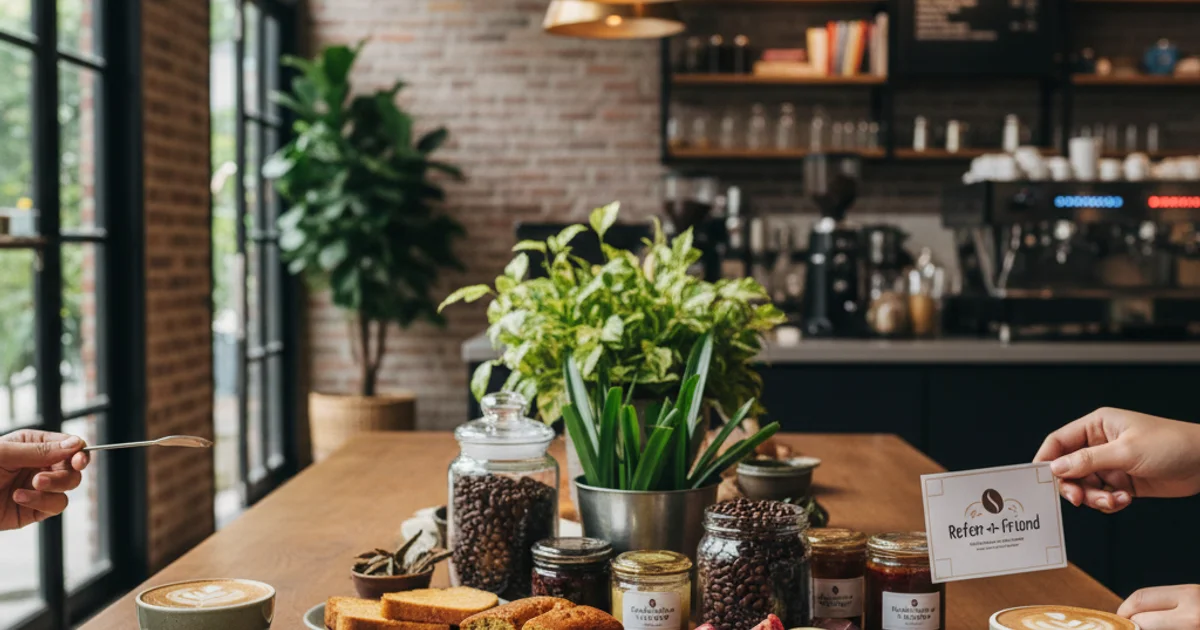
Running a coffee shop in Singapore means competing with thousands of other cafes for the same customers. When a regular customer brings their friend for the first time, that's not just a social visit — it's your most valuable marketing moment.
Yet most coffee shops treat referrals like accidents instead of systems. They hope word-of-mouth happens naturally, missing the chance to turn every satisfied customer into an active promoter. The difference between hoping and systematically encouraging referrals can mean the difference between struggling for visibility and building a community that grows itself.
Why Coffee Shop Referrals Matter in Singapore's Crowded Market
Singapore's coffee culture runs deep, but the competition runs deeper.
With a population of only 5.7 million residents, Singapore's F&B sector sees intense competition among over 13,000 establishments, highlighting the critical importance of retention economics in this market.
In this landscape, referrals aren't just nice-to-have growth tactics. They're survival tools. When a customer refers their colleague, they're vouching for your coffee with their own reputation. That social proof carries weight no Instagram ad can match.
Coffee shops with structured referral programs typically see 25-40% of new customers arrive through existing customer recommendations. These referred customers also tend to visit more frequently and spend more per visit, creating a compounding effect that transforms your customer base from a collection of individuals into an interconnected community.
A structured referral program turns every satisfied customer into a growth engine, creating sustainable expansion without constantly increasing your marketing spend.
Types of Coffee Shop Referral Programs That Work
The most effective coffee shop referral programs reward both the referrer and the new customer. This two-sided approach ensures the person making the recommendation feels appreciated while giving their friend an immediate reason to visit.
Stamp-based referrals work particularly well for coffee shops. When a customer refers someone who makes their first purchase, both parties receive bonus stamps toward their loyalty cards. A typical structure might be three bonus stamps for the referrer and two for the new customer, equivalent to getting closer to a free coffee.
Discount-based programs offer immediate gratification. The referrer might receive a $3 credit when their friend makes their first $10 purchase, while the new customer gets 20% off their first order. This creates instant value for both parties without complicated point systems.
Tiered referral rewards work well for coffee shops with diverse customer bases. The first successful referral might earn a free pastry, the third might unlock a free specialty drink, and the fifth could provide a bag of coffee beans to take home. This progression keeps regular customers engaged in the referral process long-term.
Some coffee shops implement group referral challenges during slower periods. Customers who bring three new friends during a specific month might receive exclusive access to limited-edition drinks or coffee cupping sessions, creating community events that strengthen customer relationships beyond individual transactions.
Setting Up Your Coffee Shop Referral Program
Start with clear program rules that customers can understand immediately. Complexity kills participation. Your referral program should be explainable in one sentence: "Refer a friend, you both get rewards."
Choose rewards that feel valuable but maintain your profit margins. Free coffee might seem obvious, but consider alternatives like exclusive access to new blends, discounts on retail coffee bags, or invitations to coffee education sessions. These options can feel more special while costing less than giving away your highest-margin items.
Digital tracking makes referral programs manageable. Modern systems can generate unique referral codes for each customer, track when those codes are used, and automatically distribute rewards without manual intervention. This removes the administrative burden that causes many coffee shop referral programs to fail.
Set up simple sharing mechanisms. Customers should be able to share their referral code via WhatsApp, email, or social media with minimal friction.
Restaurants focused on customer retention are shifting crucial reminders to WhatsApp, as WhatsApp Business messages boast a 98% open rate, significantly surpassing email's usual 20% (Hashmeta).
Create visual reminders throughout your coffee shop. Table tents, receipt messages, and counter displays should mention your referral program without being pushy. The goal is awareness, not aggressive promotion that might alienate customers who prefer a quiet coffee experience.
Track your program's performance from day one. Monitor how many referrals each customer generates, which reward types drive the most participation, and whether referred customers become regular visitors. This data helps you optimize the program over time and justify its costs through measurable growth.
Promoting Your Referral Program Without Being Pushy
The best referral program promotion happens naturally within existing customer interactions. When a customer compliments your coffee or mentions they enjoyed their visit, that's the perfect moment to mention that they can share that experience with friends through your referral program.
Train your baristas to recognize referral opportunities. A customer taking photos of their latte art might be willing to share on social media with their referral code. Someone asking about your coffee beans might appreciate knowing they can get a discount on retail bags when they refer friends.
Seasonal promotions can boost referral activity. During Chinese New Year, position referrals as sharing good fortune with friends. Around exam periods, frame it as helping friends find a good study spot. These contextual approaches feel more natural than generic "refer a friend" messaging.
Use your existing digital channels strategically. Email newsletters can include referral reminders alongside menu updates or coffee education content. Social media posts can showcase customers enjoying coffee together, naturally mentioning that friends can join the loyalty program through referrals.
Consider partnership opportunities with nearby businesses. Office buildings, co-working spaces, or complementary retailers might be willing to share your referral program with their communities in exchange for reciprocal promotion or bulk order discounts.
Success stories work better than statistics. Share brief customer testimonials about how they discovered your coffee shop through a friend's recommendation, focusing on the personal connection rather than the discount they received. This social proof encourages others to make similar recommendations.
Measuring and Optimizing Referral Program Success
Track both immediate and long-term metrics to understand your referral program's true impact. Immediate metrics include referral code usage, new customer acquisition through referrals, and initial reward redemption rates. These show whether your program mechanics are working.
Long-term metrics reveal the program's real value. How often do referred customers return after their first visit? What's their average spending compared to customers acquired through other channels? Do they eventually become referrers themselves, creating a multiplier effect?
Calculate your referral program's return on investment carefully. Include the cost of rewards given to both referrers and new customers, plus any administrative time or technology costs. Compare this against the lifetime value of customers acquired through referrals, accounting for their typically higher retention rates.
Monitor which reward types generate the most sustainable referral activity. Free coffee might drive initial participation, but exclusive experiences or retail discounts might create more engaged long-term referrers.
The Singapore Food Agency tracked 23,589 licensed food shops and 14,134 food stalls in 2024 — the largest concentration of F&B outlets per capita in the region, and a reminder that discovery is a real problem for any single brand.
Test different referral program variations with small customer groups before rolling out changes broadly. You might experiment with different reward values, referral requirements, or sharing mechanisms to see what resonates most with your specific customer base.
Regular program audits help prevent fraud and optimize performance. Look for patterns that might indicate gaming of the system, such as customers repeatedly referring the same people or unusual spikes in referral activity. Most referral fraud is opportunistic rather than sophisticated, making it relatively easy to detect and prevent.
Common Coffee Shop Referral Program Mistakes to Avoid
The biggest mistake is making referral rewards too complicated to understand or redeem. Customers shouldn't need to remember complex point calculations or navigate multiple steps to share their referral code. Simplicity drives participation.
Avoid rewards that feel cheap or insignificant. A 5% discount might not motivate someone to actively promote your coffee shop, especially if they're risking their reputation by making a recommendation. The reward should feel meaningful enough to justify the social effort of referring friends.
Don't neglect the new customer experience after they use a referral code. If someone arrives expecting the promised reward but your staff doesn't know how to apply it, you've created a negative first impression that undermines the entire referral process.
Failing to follow up with referrers is another common oversight. When someone successfully refers a friend, acknowledge their contribution beyond just giving them the promised reward. A simple thank-you message or recognition can encourage them to make additional referrals.
Setting unrealistic referral requirements kills program participation. Requiring new customers to spend a minimum amount or visit multiple times before the referrer gets rewarded creates friction that reduces referral activity. The best programs reward referrers as soon as their friend makes any qualifying purchase.
Inconsistent program promotion confuses customers. If your referral program exists but customers rarely hear about it, participation will remain low. Regular, gentle reminders through multiple channels keep the program visible without being annoying.