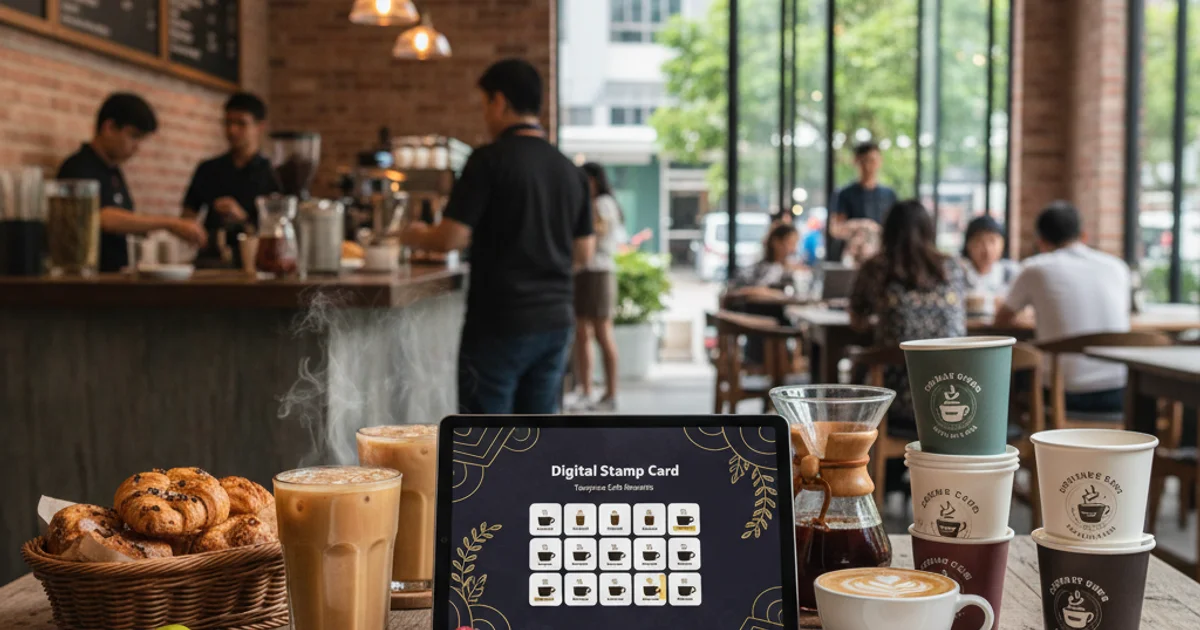
Running a cafe in Tampines means competing with dozens of other coffee shops within walking distance of Century Square and Tampines Mall. With 10 established cafes already serving the area's 260,000 residents, customer retention isn't just important — it's survival.
Digital stamp cards have become the quiet differentiator for cafes that consistently fill seats while others struggle with one-time visitors. Unlike paper punch cards that customers forget at home or lose in their bags, digital loyalty programs live on smartphones where customers actually look dozens of times per day.
Why Tampines Cafes Are Moving Beyond Paper Stamps
Traditional paper stamp cards create friction at exactly the wrong moment — when customers are ready to pay and leave. Staff fumble for stamps, customers dig through wallets, and the entire process feels like an afterthought rather than a reward.
Singapore's F&B sector is brutally competitive — over 13,000 F&B establishments compete for attention in a city-state of just 5.7 million residents, which is why retention economics matter more here than almost anywhere else.
A digital stamp card eliminates the physical bottleneck entirely. Customers show their phone screen, staff scan a QR code in under three seconds, and the reward appears instantly in their digital wallet. No lost cards, no forgotten stamps at home, no excuses to skip the loyalty program.
The data tells the real story. Cafes using digital systems see stamp completion rates 40-60% higher than paper equivalents because customers always have their phones but don't always carry loyalty cards.
Digital stamp cards record every interaction, creating customer data that paper never could. You learn who visits Tuesday mornings versus weekend afternoons, which drinks drive repeat visits, and when customers are most likely to bring friends.
How Digital Stamp Cards Work in Practice
Modern digital loyalty systems center around a simple customer experience: scan a QR code, collect stamps automatically, claim rewards when milestones are reached.
The customer downloads nothing. They visit your cafe's loyalty page on their phone browser, sign up with their phone number, and immediately see their digital stamp card. The page works like an app but lives in their browser — no App Store downloads, no forgotten passwords, no storage space concerns.
When they order, they show the QR code on their phone. Your cashier scans it with any smartphone camera, selects how many stamps to add (usually one per visit, but you control the rules), and confirms. The customer's card updates instantly, showing progress toward their next reward.
Milestone rewards trigger automatically. When someone hits their 10th stamp, the system creates a coupon in their account and can send a WhatsApp message letting them know their free drink is ready to claim.
The entire process takes under 10 seconds and works the same way whether you're a single-stall operation or managing multiple outlets across Singapore.
Setting Up Stamp Card Rules That Drive Repeat Visits
The most successful cafes don't just copy standard "10 stamps = 1 free drink" formulas. They design milestone structures that match their average customer spending patterns and visit frequency.
A typical Tampines office worker might visit twice per week during lunch breaks. For this customer, a 6-stamp reward (3 weeks to complete) feels achievable, while a 15-stamp card (nearly 2 months) feels distant and unmotivating.
Start with your current customer data if you have it, or observe patterns for two weeks. Track how often regulars visit, what they typically order, and when they're most likely to bring colleagues or friends.
WhatsApp Business messages achieve a 98% open rate, vastly exceeding email's typical 20% — which is why restaurants serious about retention are moving critical reminders to WhatsApp.
Design your first milestone around your 70th percentile customer — the person who visits more than casual drop-ins but isn't your daily regular. If 70% of repeat customers visit at least 8 times per month, an 8-stamp reward creates a achievable monthly goal.
Consider progressive rewards rather than single tiers. A cafe might offer a free pastry at 5 stamps, a free drink at 10 stamps, and a lunch combo at 20 stamps. This creates multiple motivation points and gives customers reasons to stay engaged past the first reward.
Seasonal adjustments work particularly well in Singapore's climate. During rainy season, you might add bonus stamps for afternoon visits when foot traffic typically drops. During school holidays, family-sized rewards encourage parents to bring children.
WhatsApp Integration for Customer Communication
Singapore has one of the world's highest WhatsApp adoption rates, making it the natural channel for loyalty program communications. Unlike email newsletters that customers ignore or SMS messages that feel impersonal, WhatsApp notifications appear alongside messages from friends and family.
Singapore has one of the highest WhatsApp penetration rates in the world — 87% of Singaporeans use WhatsApp, and the average user spends 2 hours 17 minutes on social platforms daily (Hashmeta).
The key is using WhatsApp for transactional messages, not marketing spam. When someone earns their 10th stamp, they get a WhatsApp message saying "Your free kopi is ready to claim at The Tree Cafe!" This feels like useful information, not advertising.
Timing matters enormously. Send milestone notifications immediately when stamps are added — the excitement is highest right after earning the reward. Send gentle reminders for unused coupons 2-3 days before expiry, not the day they expire when it's too late to act.
Birthday rewards work exceptionally well through WhatsApp because they feel personal and timely. A message saying "Happy birthday from GIG Cafe! Your birthday drink is waiting for you this week" drives both immediate visits and positive emotional association with your brand.
Advanced cafes use WhatsApp to share new menu items with loyal customers first, creating a VIP feeling that strengthens the relationship beyond just transactional rewards.
Measuring Success Beyond Just Repeat Visits
Traditional loyalty programs focus on visit frequency, but digital systems reveal much richer success metrics. The goal isn't just more visits — it's more profitable customer relationships.
Track your completion rate first. What percentage of customers who earn their first stamp go on to complete a full card? Healthy programs see 35-45% completion rates. If yours is lower, your milestone might be too high or your rewards might not match customer preferences.
Monitor average order value changes. Loyal customers typically spend 15-25% more per visit than new customers because they're comfortable trying new items and adding extras. If your AOV isn't rising among loyalty members, your program might be attracting price-sensitive customers rather than building genuine preference.
The Singapore Food Agency tracked 23,589 licensed food shops and 14,134 food stalls in 2024 — the largest concentration of F&B outlets per capita in the region, and a reminder that discovery is a real problem for any single brand.
Look at referral behavior among loyalty members. Customers who feel genuinely rewarded by your program become natural advocates, bringing friends and colleagues. Track how many new customers mention existing loyalty members or arrive in groups with program participants.
Revenue per customer over 90 days is often the most telling metric. A customer who visits twice monthly and spends $12 per visit generates $72 quarterly revenue. If your loyalty program increases visit frequency to 2.5 times monthly and AOV to $14, the same customer now generates $105 — a 46% increase that justifies significant investment in retention.
Common Implementation Mistakes to Avoid
The biggest mistake Tampines cafes make is treating digital loyalty like a direct replacement for paper stamps. The technology enables much more sophisticated customer relationships, but only if you design beyond the basic punch-card mentality.
Don't set your first reward too high. A 20-stamp requirement might work for a neighborhood kopi tiam with daily regulars, but Tampines' transient office crowd needs faster gratification. Start conservative — you can always increase requirements later, but reducing them makes existing customers feel cheated.
Avoid complicated multi-tier systems at launch. Customers should understand your program in under 30 seconds. "Collect 8 stamps, get a free drink" is clear. "Collect stamps to unlock Bronze status, then Silver status, with different rewards at each level" creates confusion and delays adoption.
Staff training is critical and often overlooked. Your cashiers need to actively promote the program, not just respond when customers ask about it. "Would you like to join our loyalty program?" should be as automatic as "For here or takeaway?" The difference between active and passive promotion is often 3x the signup rate.
Don't neglect program maintenance. Digital systems generate data that paper never could, but that data is only valuable if someone analyzes it monthly. Track which rewards customers actually claim, when they're most likely to visit, and what menu items drive loyalty program signups.