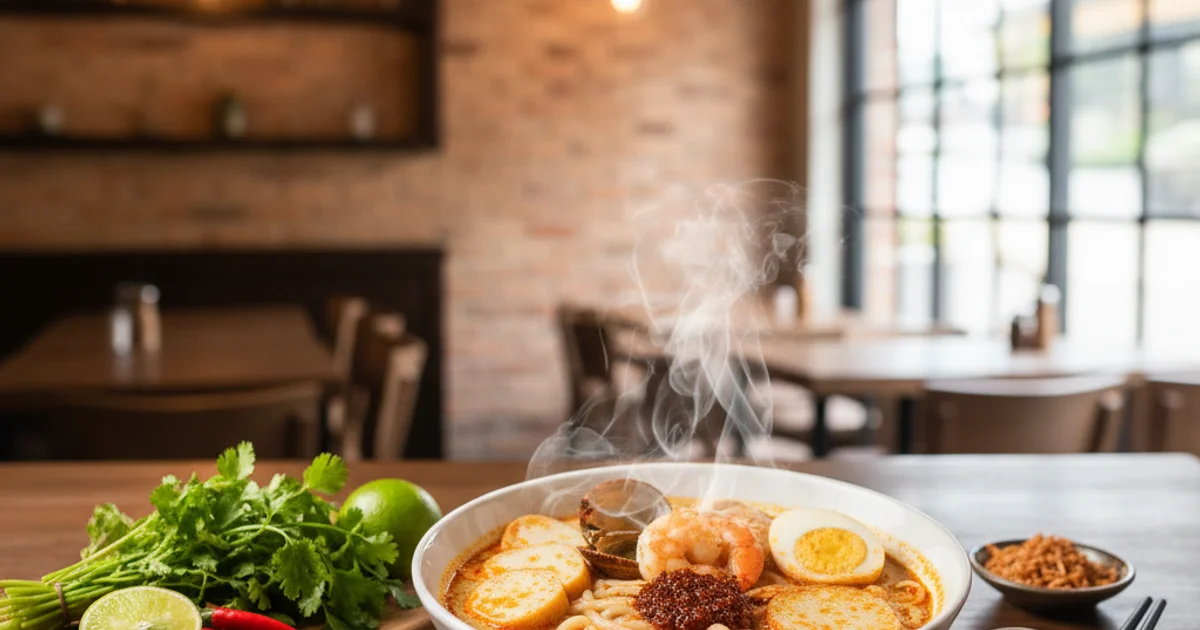
Last week, a hawker stall owner showed me two photos of the same bowl of laksa. Same ingredients. Same lighting. Same angle. One got 12 likes on Instagram. The other got 847 likes and drove walk-ins that day.
The difference? The photography style. One looked like documentation. The other looked like desire.
Our Food AI feature turns phone photos into 6 professional photography styles that make customers stop scrolling and start ordering.
Why food photography style determines purchase intent
Food photography triggers appetite responses before customers even taste your dish. Your photo isn't just showing what you sell. It's creating the craving to buy it.
But not every style works for every brand. A minimalist flat lay that works for a premium Japanese omakase looks out of place for a zi char stall. A rustic, ingredient-focused shot that fits a farm-to-table cafe feels wrong for a bubble tea shop.
The style you choose signals your brand positioning, price point, and target customer. Get it right, and your photos become sales tools. Get it wrong, and you're invisible in a feed of food content.
Singapore's F&B market has over 13,400 licensed hawker stalls plus thousands of restaurants, cafes, and food courts. Every day, your potential customers see hundreds of food photos. The ones that convert aren't necessarily the most expensive to produce. They're the ones that match what the customer expects from your brand.
🛠️ Free tool
Turn any phone photo into 6 professional food photography styles instantly. Try Food AI free →
Style 1: Dark & Moody — The premium positioning play
Dark and moody photography uses dramatic shadows, rich textures, and warm accent lighting to create an upscale, intimate atmosphere. Think charcoal backgrounds, golden highlights on glistening surfaces, and ingredients that seem to emerge from darkness.
This style works for restaurants positioning themselves as premium experiences. Fine dining establishments, craft cocktail bars, artisanal bakeries, and specialty coffee roasters use dark and moody to signal quality and craftsmanship. The shadows hide imperfections while the selective lighting draws attention to the hero elements — the perfectly seared protein, the intricate garnish, the steam rising from a fresh cup.
OMMA Chicken Soup uses this style for their samgyetang photos. The Korean ginseng chicken soup emerges from a dark background with warm light highlighting the herbs floating in the golden broth. It positions their hawker stall dish as a premium comfort food experience.
The psychology works because darkness implies scarcity and exclusivity. When customers see a dark and moody food photo, they unconsciously associate it with restaurant-quality preparation. It's the difference between "I'm grabbing lunch" and "I'm treating myself."
Use dark and moody when you want to charge more, attract food enthusiasts, or differentiate from casual competitors. Avoid it if you're positioning as fast, convenient, or family-friendly — the drama can feel intimidating rather than inviting.
Style 2: Bright & Natural — The Instagram-ready approach
Bright and natural photography captures food in abundant natural light with minimal shadows and vibrant colors. Picture light wood tables, window-lit setups, fresh herbs scattered around the plate, and colors that pop without looking oversaturated.
This style dominates Instagram and appeals to health-conscious customers who associate bright lighting with freshness and quality ingredients. Cafes, salad bars, smoothie shops, and brunch spots use bright and natural to communicate wholesomeness and Instagram-worthiness.
The technical approach involves shooting near windows during golden hour or using softbox lighting that mimics natural daylight. Props include light wood, white ceramics, linen napkins, and fresh ingredients as styling elements. The goal is to make viewers feel like they're looking at a beautiful, naturally-lit moment.
CHA MULAN's bubble tea photos use bright and natural styling for their fruit-based drinks. The lighting makes the fresh fruit toppings look crisp and the drink colors appear vibrant and refreshing.
Customers share bright and natural photos more frequently because they look good on social media without heavy editing. This style generates organic word-of-mouth marketing as customers post their own photos that match your brand aesthetic.
Choose bright and natural when your target customers are active on Instagram, value health and freshness, or when you want to encourage user-generated content. It works especially well for breakfast, lunch, and lighter fare.
Style 3: Bright Close-Up — The texture and detail showcase
Bright close-up photography fills the frame with the dish, using shallow depth of field to highlight textures and details while keeping the background softly blurred. Every sauce drip, herb garnish, and surface texture becomes visible and appetizing.
This style works for dishes where texture drives appeal — crispy fried chicken skin, melted cheese pulls, flaky pastry layers, or the glossy surface of a perfectly reduced sauce. The close crop eliminates distractions and forces viewers to focus on the food itself.
Technical execution requires macro lens capabilities or close focusing, with bright, even lighting that doesn't create harsh shadows on the food surface. The depth of field should be shallow enough to blur the background but deep enough to keep the entire dish in focus.
Restaurants use bright close-up for signature dishes they want customers to crave. A zi char stall might use this style for their wok hei fried rice, showing individual grains glistening with oil and soy sauce. A dessert shop might showcase the layers in their mille-feuille or the chocolate ganache dripping down a cake.
The psychological trigger is immediate hunger. When customers see every appetizing detail magnified, their brain starts preparing for the eating experience. It's the visual equivalent of describing how something tastes — it makes the mouth water.
Use bright close-up for dishes with interesting textures, signature items you want to highlight, or when the visual appeal is in the details rather than the overall presentation. Avoid it for dishes that don't photograph well up close or when context matters more than texture.
Style 4: Lifestyle Faces — The emotional connection builder
Lifestyle faces photography shows people enjoying your food, capturing genuine expressions of satisfaction and social connection. This style focuses on the emotional experience of eating rather than just the food itself.
The challenge in Singapore's multicultural market is cultural sensitivity. You can't randomly assign ethnicities to dishes. A Malay person holding pork creates offense. An Indian person eating beef shows cultural insensitivity. The solution is intentional casting that respects cultural contexts while showing diverse representation.
STAMPEDE's Food AI handles this by letting restaurant owners specify the demographic for lifestyle shots — Chinese, Malay, Indian, or mixed groups, with options for age ranges and group sizes. This ensures cultural appropriateness while creating emotional connection.
Lifestyle faces work for restaurants that want to emphasize the social aspect of dining. Family restaurants, celebration venues, group dining concepts, and comfort food establishments use this style to show the joy and connection that happens around their food.
The psychology taps into social proof and emotional mirroring. When potential customers see others enjoying a meal, they imagine themselves in that scenario. It's particularly effective for dishes that are meant to be shared or for restaurants targeting families and groups.
Choose lifestyle faces when the dining experience is as important as the food, when you're targeting families or social groups, or when you want to show the emotional satisfaction your food provides. Ensure cultural sensitivity by matching the people in photos to your actual customer demographics.
Style 5: Lifestyle Hands — The action and anticipation focus
Lifestyle hands photography captures the moment of interaction with food — hands reaching for a slice of pizza, chopsticks picking up noodles, or fingers about to dip into sauce. It creates anticipation and shows food in the context of eating.
This style works for casual dining, street food, and interactive eating experiences. It's particularly effective for dishes that are eaten with hands — burgers, tacos, finger foods, or Asian dishes eaten with chopsticks. The hands suggest immediate consumption and create urgency.
The technical approach focuses on timing and natural hand positioning. The hands should look relaxed and natural, not posed. The food should be the primary focus with hands providing context and scale. Lighting should be bright enough to show both the food and hand details clearly.
Food courts, casual restaurants, and takeaway concepts use lifestyle hands to emphasize convenience and immediate satisfaction. A chicken rice stall might show chopsticks lifting a piece of tender chicken. A burger joint might capture hands holding their signature sandwich just before the first bite.
The psychological trigger is behavioral modeling. When customers see hands interacting with food, they unconsciously imagine their own hands doing the same action. It bridges the gap between seeing and eating, making the purchase feel more immediate and inevitable.
Use lifestyle hands for casual dining concepts, finger foods, or when you want to emphasize the eating experience over the presentation. It works well for social media content that encourages immediate action rather than long consideration.
Style 6: Surprise Me — The scroll-stopping creative approach
Surprise Me is the wild card style that breaks conventional food photography rules to create scroll-stopping, memorable images. Think bold monochrome backgrounds, ingredients suspended in mid-air, sauce splashes frozen in time, or unexpected color combinations that create visual tension.
This style works for brands that want to stand out in crowded feeds and appeal to younger, social media-native customers. It's particularly effective for limited-time offers, new product launches, or brands that position themselves as innovative and trendy.
The technical execution requires more advanced photography skills — high-speed photography for action shots, creative lighting for dramatic effects, or post-processing for surreal elements. The goal is to create images that make viewers stop scrolling and pay attention.
Bubble tea shops use Surprise Me style for seasonal flavors or Instagram-worthy presentations. A dessert shop might show ingredients floating around their signature cake. A fusion restaurant might use unexpected color palettes to highlight their creative approach to traditional dishes.
The psychology relies on pattern interruption. In a feed of similar-looking food photos, an unexpected image creates cognitive pause. Customers stop to process what they're seeing, giving your brand more mental attention than conventional photos receive.
Choose Surprise Me when you want to build brand awareness over immediate sales, when targeting social media-active younger customers, or when launching something new that needs to break through market noise. Use sparingly — too many creative shots can confuse your brand message.
📊 Real results
OMMA Chicken Soup reached 309+ members with 59.3% coupon redemption using AI-generated food photos in their WhatsApp campaigns. Read the full case study →
How photography style connects to your growth strategy
The right photography style doesn't just make your food look good — it drives your entire customer acquisition and retention loop. Here's how it connects to the three outcomes every restaurant needs: retain existing customers, grow through referrals, and engage through automated marketing.
Retain: Consistent photography style builds brand recognition. When customers see your photos in their WhatsApp messages or social feeds, they immediately recognize your brand. This visual consistency reinforces their loyalty and makes your rewards and milestone notifications more memorable.
Grow: Shareable photos drive referrals. Customers are more likely to share photos that match their personal aesthetic and social media presence. A health-conscious customer shares bright and natural photos. A foodie shares dark and moody shots. Match your style to your customer's sharing behavior.
Engage: Professional photography increases WhatsApp campaign performance. When you send automated birthday rewards or milestone congratulations with high-quality food photos, customers are more likely to click through and redeem. The visual quality signals that the offer is valuable and worth their time.
This is where AI food photography becomes essential for restaurant marketing. Instead of hiring photographers for every dish, menu update, or seasonal campaign, you can maintain consistent visual quality across all customer touchpoints. One phone photo becomes six professional styles, each optimized for different platforms and customer segments.
The photography style you choose should support your broader growth strategy. If you're running referral programs to drive new customers, choose styles that your existing customers want to share. If you're using WhatsApp automation to retain customers, choose styles that look professional in messaging apps.
Matching style to restaurant type: the decision framework
Your restaurant type, target customer, and price point determine which photography style will drive the most orders. Here's the framework for choosing:
Fine dining and premium casual: Dark and moody positions you as an experience worth paying more for. The dramatic lighting suggests careful preparation and justifies higher prices. Use for signature dishes, wine pairings, and special occasion marketing.
Cafes and brunch spots: Bright and natural aligns with the Instagram aesthetic your customers expect. It suggests freshness, quality ingredients, and shareability. Use for all-day menus, healthy options, and user-generated content campaigns.
Specialty and signature dishes: Bright close-up showcases what makes your food unique. Use for hero items, limited-time offers, and dishes where texture and detail drive appeal. Perfect for highlighting craftsmanship and quality.
Family restaurants and comfort food: Lifestyle faces shows the emotional satisfaction and social connection your food provides. Use for sharing platters, family meals, and celebration dining. Emphasizes experience over just nutrition.
Casual dining and street food: Lifestyle hands creates urgency and emphasizes immediate satisfaction. Use for grab-and-go items, finger foods, and casual dining experiences. Shows food in the context of eating.
Trendy and innovative concepts: Surprise Me breaks through social media noise and builds brand awareness. Use for new launches, seasonal specials, and when targeting younger demographics. Creates memorable brand moments.
Most successful restaurants use 2-3 styles strategically. A casual dining restaurant might use bright and natural for their healthy options, lifestyle hands for their signature burgers, and surprise me for limited-time offers. The key is consistency within each use case.
Technical execution: from phone photo to professional result
The gap between amateur and professional food photography isn't just equipment — it's understanding how light, composition, and styling work together to trigger appetite. Here's what separates photos that sell from photos that scroll.
Lighting is everything: Natural light from a large window provides the most flattering illumination for food. If shooting indoors, position dishes perpendicular to the window to avoid harsh shadows. For artificial lighting, use softboxes or diffusers to mimic natural light quality.
Composition follows the rule of thirds: Place the hero element of your dish at the intersection of imaginary grid lines. This creates visual interest and guides the viewer's eye to the most appetizing part of the photo. Leave negative space for text overlay if using for social media.
Styling sells the story: Every element in frame should support your brand narrative. Props, backgrounds, and garnishes should feel intentional, not cluttered. A single herb sprig can suggest freshness. A worn wooden table can imply authenticity.
Color theory drives appetite: Warm colors (reds, oranges, yellows) stimulate appetite and create urgency. Cool colors (blues, greens) suggest freshness and health. Use color temperature to reinforce your brand positioning and desired customer response.
Depth of field controls focus: Shallow depth of field (blurred background) isolates your dish and eliminates distractions. Deeper focus keeps more elements sharp but requires cleaner composition. Match depth of field to your style choice.
Timing captures peak appeal: Photograph hot food immediately while steam is visible. Capture sauce pours and cheese pulls in motion. Fresh garnishes and crisp vegetables photograph better than wilted ones. Timing often matters more than equipment.
The challenge for restaurant owners is executing this consistently while running a business. You can't hire a photographer for every dish, menu update, or social media post. This is where AI food photography bridges the gap between professional quality and practical execution.
The AI advantage: consistent quality without the photographer
Traditional food photography requires scheduling, setup time, equipment, and expertise most restaurant owners don't have. A single photoshoot might cost $500-2000 and only covers current menu items. When you update dishes or launch seasonal specials, you need another shoot.
AI food photography solves the consistency and cost problems. Take a photo with your phone. Upload it to STAMPEDE's Food AI. Get six professional styles in 30 seconds. No scheduling. No equipment. No expertise required.
The Food AI understands food photography principles — lighting, composition, color theory — and applies them consistently. A phone photo of char kway teow becomes a dark and moody hero shot, a bright and natural Instagram post, and a lifestyle hands action shot. Same dish, different psychological triggers.
This consistency matters for brand building. When customers see your photos across WhatsApp messages, social media, and printed materials, they should immediately recognize your brand. AI ensures every photo matches your chosen aesthetic, regardless of who takes the original photo or when.
The speed advantage drives real business results. When you launch a new dish or seasonal special, you can have professional marketing photos within minutes instead of weeks. This speed lets you respond to trends, test new offerings, and maintain fresh content across all customer touchpoints.
Restaurant owners using STAMPEDE's Food AI report higher engagement rates on social media, better performance in WhatsApp campaigns, and more effective advertising creative. The consistent quality signals professionalism and care, which builds customer trust and higher perceived value.
Common photography mistakes that kill appetite appeal
Even with the right style choice, execution mistakes can turn appetizing food into unappetizing photos. Here are the most common errors Singapore restaurant owners make and how to avoid them.
Mistake 1: Poor lighting creates unappetizing shadows. Overhead fluorescent lighting makes food look flat and institutional. Side lighting from windows or lamps creates dimension and warmth. If you must use artificial light, diffuse it through white fabric or bounce it off a white wall.
Mistake 2: Cluttered backgrounds distract from the food. Busy tablecloths, multiple dishes, and random objects in frame compete for attention. Use neutral backgrounds and remove everything that doesn't support your story. The food should be the clear hero of every shot.
Mistake 3: Wrong angles hide the food's best features. Shooting straight down works for flat dishes like pizza but hides the height of burgers or the layers in cakes. Shoot at 45 degrees for most dishes, straight on for tall items, and overhead only for flat presentations.
Mistake 4: Over-styling makes food look artificial. Too much garnish, perfectly arranged elements, and obviously posed setups trigger skepticism instead of appetite. Food should look delicious and attainable, not like a museum display.
Mistake 5: Inconsistent editing creates brand confusion. Switching between heavily filtered and natural photos, different color temperatures, and varying contrast levels makes your brand look unprofessional. Develop a consistent editing style and apply it to all photos.
Mistake 6: Wrong timing captures food at its worst. Photographing hot food after it cools, fresh ingredients after they wilt, or sauces after they congeal kills appetite appeal. Prepare everything first, then photograph quickly while food looks its best.
These mistakes are why many restaurant owners avoid food photography altogether or rely on stock photos that don't represent their actual dishes. AI food photography eliminates these execution risks by applying professional standards automatically.
Measuring photography ROI: what success looks like
The best photography style is the one that drives measurable business results. Here's how to track whether your food photography is actually increasing orders and customer engagement.
Social media engagement: Track likes, comments, shares, and saves on posts with different photography styles. Higher engagement indicates stronger appetite appeal and brand resonance. Instagram insights show which posts drive profile visits and website clicks.
WhatsApp campaign performance: Monitor click-through rates on messages that include food photos versus text-only messages. Professional food photography typically increases click-through rates compared to amateur photos or no photos.
Advertising effectiveness: Compare cost per click and conversion rates for ads using different photography styles. Dark and moody photos might drive higher perceived value but lower click volume. Bright and natural might generate more clicks but lower conversion rates.
User-generated content volume: Count how often customers share photos of your food on social media. Brands with consistent, shareable photography styles see more user-generated content than brands with inconsistent visual identity.
Referral program performance: Track whether customers share referral links more frequently when accompanied by professional food photos versus amateur shots. Visual quality affects sharing behavior and referral conversion rates.
Order patterns: Monitor whether specific dishes sell better after implementing professional photography. Menu items with high-quality photos typically see higher order rates than items with poor or no photos.
The goal isn't just pretty pictures — it's pictures that drive profitable customer behavior. The photography style that generates the most likes might not generate the most orders. Test different styles for different use cases and measure business impact, not just social media metrics.