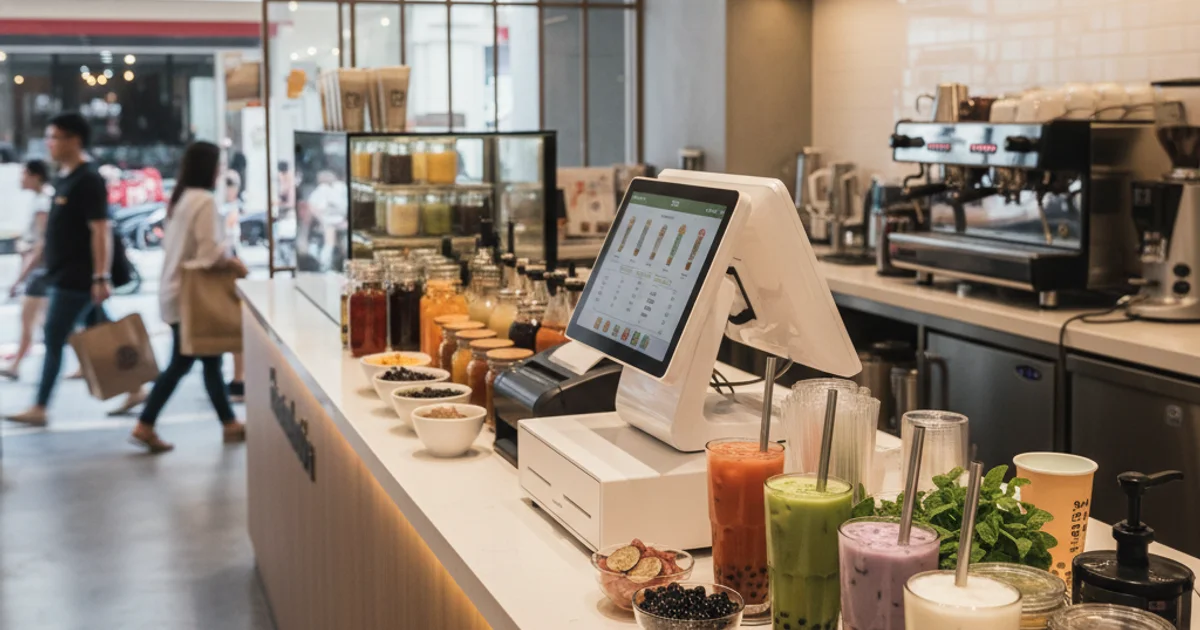
Running a bubble tea shop in Bugis means serving customers who expect fast, efficient service in one of Singapore's busiest shopping districts. With foot traffic flowing between Bugis Junction, Bugis+, and the nearby Kampong Glam cultural quarter, every transaction counts. Yet many bubble tea operators still rely on basic cash registers that can't track customer preferences, measure peak hours, or identify their most loyal visitors.
The right POS system transforms how Bugis bubble tea shops operate. Beyond processing payments, modern POS technology reveals which drinks sell best during lunch rushes, tracks ingredient costs, and helps build relationships with customers who return week after week.
Why Bugis Bubble Tea Shops Need Advanced POS Systems
Bugis attracts a unique mix of tourists, office workers, and students throughout the day. A bubble tea shop here might serve 200+ customers during peak hours, each with different customization preferences for sweetness, ice levels, and toppings.
Traditional cash registers capture none of this valuable information. They record the sale amount but miss everything else: which customer ordered what, when peak periods actually occur, and which menu items drive the highest margins.
Modern POS systems work alongside your existing loyalty program to create a complete customer experience. While your POS handles transactions and inventory, a complementary loyalty system like STAMPEDE captures customer relationships and repeat visit patterns.
When bubble tea shops track both transaction data and customer loyalty together, they discover powerful insights. A shop near Bugis MRT might find that their brown sugar series sells best to morning commuters, while fruit teas dominate afternoon tourist traffic.
Essential POS Features for Bubble Tea Operations
Bubble tea shops have unique operational needs that generic POS systems often miss. The right system handles complex customizations, tracks perishable ingredients, and manages high-volume periods without slowing down service.
Customization handling stands as the most critical feature. Every bubble tea order involves multiple choices: drink base, sweetness level, ice amount, toppings, and size. Your POS must capture these details accurately for both kitchen preparation and customer records.
Modern systems display customization options clearly on touchscreens, reducing order errors during busy periods. When a customer returns, staff can quickly access their previous orders and preferences, speeding up service while showing personal attention.
Inventory tracking becomes essential with perishable ingredients like fresh milk, fruit syrups, and tapioca pearls. Research from industry operators shows that bubble tea shops using integrated inventory systems reduce waste by up to 25% compared to manual tracking methods.
Payment Processing in Singapore's Digital Landscape
Singapore's payment ecosystem demands flexibility from bubble tea shop POS systems. Customers expect to pay with cash, PayNow QR codes, contactless cards, and mobile wallets seamlessly.
PayNow QR integration has become table stakes for Bugis retailers. According to recent payment industry data, QR code transactions now account for over 60% of small-value payments in Singapore's central shopping districts.
Your POS should generate dynamic QR codes for each transaction, ensuring payment accuracy while reducing cash handling. This matters especially during peak periods when long queues form at popular bubble tea outlets.
Mobile wallet compatibility extends beyond basic acceptance. Leading bubble tea chains now offer app-based ordering where customers can customize drinks, pay in advance, and skip physical queues entirely. While not every independent shop needs a custom app, POS systems should support these payment methods when customers choose them.
The key insight: payment processing speed directly impacts customer satisfaction in high-traffic locations like Bugis. Systems that take more than 10 seconds to process payments create bottlenecks that drive customers to competitors.
Staff Management and Training Integration
Bubble tea preparation requires consistency across different staff members and shifts. POS systems with built-in training modules help ensure every drink meets quality standards regardless of who's working.
User-specific login tracking reveals performance patterns that pure observation misses. When each staff member logs into the POS individually, managers can identify who processes orders fastest, who makes the most customization errors, and which team members excel during rush periods.
This data proves invaluable for scheduling decisions. A Bugis bubble tea shop might discover that certain staff members handle tourist interactions better, while others excel at serving the quick-moving office crowd during lunch hours.
Training modules within the POS can display preparation instructions for complex drinks, ensuring consistency even when experienced staff members aren't available. New employees can reference these guides without slowing down service or asking colleagues for help.
Performance analytics also highlight training opportunities. If order accuracy drops during specific shifts or with particular staff combinations, managers can provide targeted coaching rather than general retraining.
Customer Data and Loyalty Integration
The most successful Bugis bubble tea shops understand their customers beyond individual transactions. They know which regulars prefer less ice, which tourists always order the same Instagram-worthy drinks, and which office workers rush in at exactly 2:30 PM every Tuesday.
POS systems capture transaction data, but customer relationship management requires specialized loyalty tools. The combination creates a complete picture of customer behavior that neither system achieves alone.
When your POS integrates smoothly with loyalty programs, staff can see customer preferences during ordering, apply rewards automatically, and track visit frequency without switching between systems. This integration speeds up service while personalizing the experience.
Studies on customer loyalty show that businesses with strong retention programs see customers make 30-57% more referrals than those without structured loyalty systems. For bubble tea shops in competitive areas like Bugis, these referrals often determine long-term success.
The data reveals actionable insights: which drink combinations drive repeat visits, what time of day your most valuable customers typically arrive, and which promotional offers actually change buying behavior versus those that simply discount purchases customers would make anyway.
Inventory and Cost Management
Bubble tea ingredients present unique inventory challenges. Fresh milk expires quickly, fruit syrups have varying shelf lives, and popular toppings like pearls require daily preparation in specific quantities.
Smart POS systems track ingredient usage per drink, alerting managers when stock levels approach reorder points. This prevents the customer disappointment of hearing "sorry, we're out of brown sugar pearls" during busy afternoon periods.
Cost analysis becomes crucial in Singapore's competitive bubble tea market. With multiple established chains and new independent shops opening regularly, understanding your true profit margins per drink helps with pricing decisions and menu optimization.
Advanced systems calculate ingredient costs in real-time, factoring in waste, preparation labor, and seasonal price fluctuations. A bubble tea shop might discover that their signature fruit tea actually generates lower margins than simpler milk tea options, despite higher selling prices.
Seasonal adjustment capabilities help manage inventory during different periods. Tourist-heavy areas like Bugis see demand fluctuations during school holidays, Chinese New Year, and major shopping events that require different stocking strategies.
Reporting and Business Intelligence
Data without context provides little value to busy bubble tea shop operators. The right POS system transforms transaction records into actionable business intelligence that guides daily decisions.
Sales reporting should extend beyond simple daily totals to reveal customer behavior patterns. Understanding that your Bugis location sells 40% more iced drinks between 2-4 PM helps with staffing and inventory planning.
Trend analysis identifies which menu items gain or lose popularity over time. A drink that performed well during its launch month might be declining in sales, while a simple milk tea could be growing steadily without anyone noticing.
Customer segmentation reports show different groups' preferences and spending patterns. Tourists might gravitate toward photogenic drinks with higher margins, while local students prefer value options during specific hours.
Comparative analysis helps optimize operations across different periods. Knowing that Thursday afternoons consistently generate higher per-customer sales than Tuesday mornings enables better staff scheduling and promotional timing.
Technical Requirements and Setup
Bubble tea shops in Bugis need POS systems that handle Singapore's specific requirements while remaining simple enough for staff to learn quickly.
Hardware considerations start with screen size and durability. Touchscreen interfaces must be large enough for complex customization menus while withstanding constant use in busy environments.
Network connectivity requires backup options. When internet connections fail during peak hours, your POS should continue processing cash transactions and store card payment data for later processing.
Integration capabilities determine long-term value. Systems that connect with accounting software, inventory management tools, and customer loyalty programs reduce administrative work while providing better business insights.
Security compliance matters especially for businesses processing card payments. Your POS must meet Singapore's data protection requirements while keeping customer information secure from potential breaches.