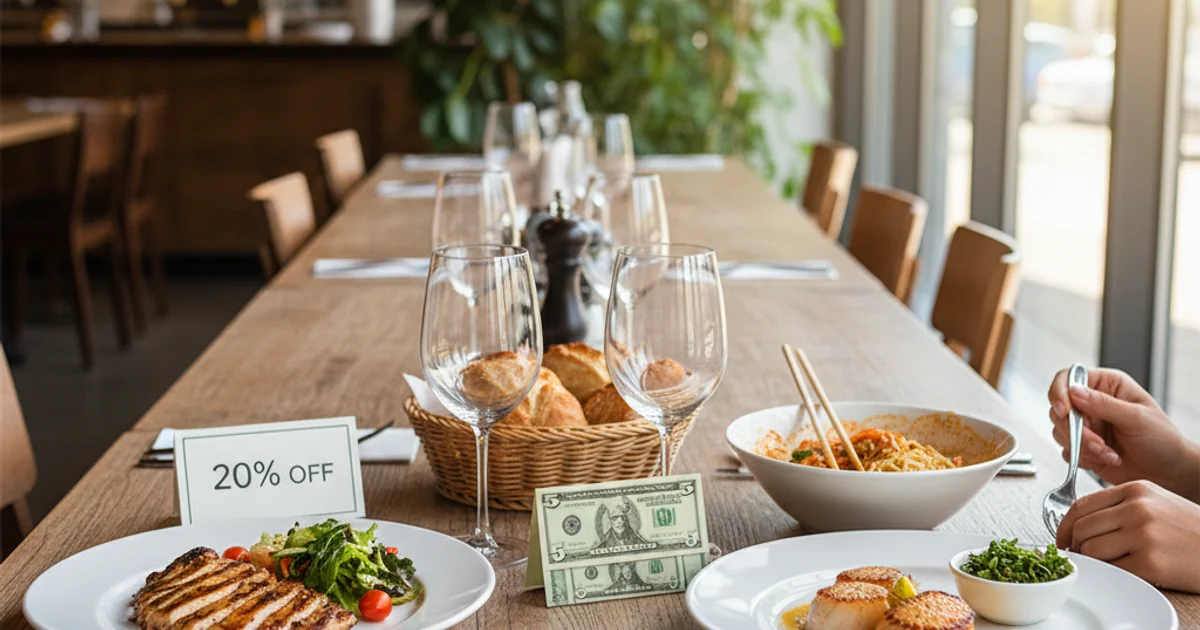
Last month, a restaurant owner in Singapore ran two campaigns. The first: 20% off all meals for new customers. The second: existing customers get $5 cash when they bring a friend who orders.
The discount campaign brought in 47 new customers over two weeks. The referral program brought in 23.
But here's what the owner discovered when he looked at the numbers three months later: most of the referral customers were still coming back regularly. Only a fraction of the discount customers had returned.
Restaurant referral programs outperform discounts because they solve a different problem. Discounts attract deal-seekers. Referrals attract people who trust your existing customers enough to try something new.
The hidden cost of discount campaigns
Restaurant discount campaigns work. They fill seats. But they attract the wrong type of customer for long-term growth.
When you offer 20% off to new customers, you're advertising that your food isn't worth full price. The customer's first impression is anchored to a discounted experience. When they return and pay full price, it feels expensive even if your pricing is fair.
Discount customers also have lower lifetime value. They're trained to wait for the next promotion before ordering again. One of our clients found that customers acquired through discount campaigns had lower repeat purchase rates compared to customers who paid full price on their first visit.
The math gets worse when you factor in profit margins. Most Singapore restaurants operate on 8-15% net margins. A 20% discount on a $15 meal costs you $3, which might be your entire profit on that transaction. You're paying customers to try your food and hoping they'll come back at full price later. Most don't.
How referral programs flip the economics
Referral and word-of-mouth marketing still wins on trust — around 90% of consumers trust recommendations from friends and family, and 36% of consumers cite word of mouth as their leading source of brand discovery (Statista).
Referral programs work because they leverage trust instead of price. When someone recommends your restaurant to a friend, they're putting their reputation on the line. They only do this if they genuinely believe the experience is worth it.
This creates a higher-quality customer from day one. Referred customers arrive with positive expectations. They're not looking for flaws or comparing your $15 nasi lemak to the $12 version down the street. They're expecting to enjoy themselves because someone they trust told them they would.
The economics are also better. Instead of discounting every new customer acquisition, you only reward successful referrals. If your referral program offers $5 to both the referrer and referee, you're spending $10 to acquire a customer who's already pre-qualified by an existing customer. That's often cheaper than the effective cost-per-acquisition of discount campaigns when you factor in the customers who never return.
The retention difference
The Singapore Food Agency tracked 23,589 licensed food shops and 14,134 food stalls in 2024 — the largest concentration of F&B outlets per capita in the region, and a reminder that discovery is a real problem for any single brand.
The biggest advantage of referral programs isn't acquisition. It's retention. Customers who come through referrals stay longer and spend more over time.
This happens for psychological reasons. When someone recommends your restaurant, the referee feels obligated to give it a fair chance. They're not just trying your food; they're validating their friend's judgment. This creates a mental investment in having a positive experience.
Referred customers also integrate into your community faster. They often visit with the person who referred them, creating social connections to your restaurant beyond just the food. A zi char stall owner told me that referred customers are more likely to bring other friends on subsequent visits.
The data backs this up. Customers acquired through referrals typically have higher lifetime value compared to discount-acquired customers. They visit more frequently, order higher-value items, and are less price-sensitive to menu changes.
Building a restaurant referral program that works
Enterprise Singapore's Food Services industry programme funds productivity upgrades, manpower training, and digital transformation for local F&B operators — a backdrop worth knowing when you're weighing where to spend on your own marketing stack.
The best restaurant referral programs are simple and immediate. Complicated point systems or delayed rewards kill momentum. Here's what works:
Two-sided rewards: Both the referrer and referee get something. This creates incentive for existing customers to share and removes friction for new customers to try. A $5 reward for each person works better than a $10 reward for just one.
Cash over discounts: Offering cash instead of percentage discounts feels more valuable. "$5 off your next meal" beats "20% off" even when the dollar value is similar. Cash rewards also work for any order size.
Easy sharing: The referral process should take 10 seconds. Digital referral codes that customers can share via WhatsApp or SMS work better than business cards or paper vouchers. The easier it is to share, the more sharing happens.
Quick redemption: Rewards should be available immediately, not after the friend's third visit. Delayed gratification kills word-of-mouth momentum. When someone successfully refers a friend, reward them that day.
STAMPEDE's built-in referral system handles this automatically. When a customer joins your loyalty program, they get a unique referral code they can share via WhatsApp. Both parties receive their rewards immediately when the referred friend makes their first purchase and scans their QR code.
The WhatsApp automation advantage
Modern referral programs work better when they're automated. Instead of relying on staff to remember to ask for referrals, WhatsApp automation can trigger referral invitations at the right moments.
After a customer hits their third stamp on a digital loyalty card, they get an automated WhatsApp message: "Loved your last visit? Share your referral code with a friend and you'll both get $5 off your next meal."
This timing is crucial. The customer just demonstrated repeat behavior. They're engaged enough to return multiple times. They're in a positive frame of mind after earning a loyalty reward. And they're receiving the referral invitation when your restaurant is top-of-mind.
The automation also tracks everything. You can see which customers are referring others, which referral messages get the highest response rates, and which rewards drive the most conversions. This data helps you optimize the program over time.
The growth loop connection
Referral programs work best when they're part of a larger growth system. The most effective approach follows a three-step loop: retain existing customers through digital loyalty programs, grow your customer base through referrals, and engage both groups through automated marketing.
Here's how it works: A customer visits your restaurant and scans a QR code to join your loyalty program. They earn stamps with each visit and receive milestone rewards. After their third visit, they get an automated referral invitation via WhatsApp. When they successfully refer a friend, both customers receive rewards and continue earning stamps. The cycle repeats.
This creates compound growth. Each loyal customer becomes a potential acquisition channel. Each referred customer can become a referrer themselves. The system grows stronger as your customer base grows larger.
The key is integration. Standalone referral programs have limited impact. But when referrals are built into your loyalty system and automated through WhatsApp, they become a sustainable growth engine that runs without constant management.
Common referral program mistakes
Most restaurant referral programs fail because they're designed like discount campaigns. Here are the mistakes to avoid:
Complicated tracking: If customers need to remember special codes or staff need to manually track referrals, the program will fail. Digital tracking through QR codes or links eliminates human error and makes the process seamless.
Weak incentives: A 10% discount isn't worth the effort of convincing a friend to try a new restaurant. The reward needs to feel significant enough to overcome social friction. $5 cash is often the minimum effective incentive in Singapore.
No follow-up: Many programs reward the initial referral but ignore the ongoing relationship. The best programs continue engaging both the referrer and referee through loyalty stamps, milestone rewards, and automated check-ins.
Forgetting the referee: Programs that only reward the referrer miss half the opportunity. The referred customer should feel welcomed and valued, not like they're doing someone else a favor.
Why timing matters for referral asks
The moment you ask for a referral determines whether customers will actually share. Ask too early, and they don't have enough experience to confidently recommend you. Ask too late, and the excitement has worn off.
The sweet spot is after customers demonstrate repeat behavior but while they're still in their honeymoon phase with your restaurant. This typically happens between the second and fourth visit, depending on your type of establishment.
For quick-service restaurants like bubble tea shops or hawker stalls, the second visit is often ideal. For sit-down restaurants, waiting until the third visit gives customers more confidence in their recommendation.
The delivery method also matters. Face-to-face asks from staff feel pushy. Automated WhatsApp messages feel natural and give customers time to think about who they want to refer.
Measuring referral program success
Track the right metrics to understand if your referral program is working. The obvious metric is referral volume, but that doesn't tell the whole story.
Referral conversion rate: What percentage of referral invitations result in new customers? A healthy rate is 15-25% for restaurants.
Referee retention: How many referred customers become repeat customers? This should be higher than your baseline customer retention rate.
Referrer engagement: Do customers who successfully refer others become more loyal themselves? The best referral programs increase engagement on both sides.
Cost per acquisition: Compare the total cost of your referral program (rewards paid out) to the lifetime value of acquired customers. This should be significantly better than paid advertising.
Viral coefficient: How many new customers does each existing customer generate through referrals? A coefficient above 1.0 means your customer base is growing organically.