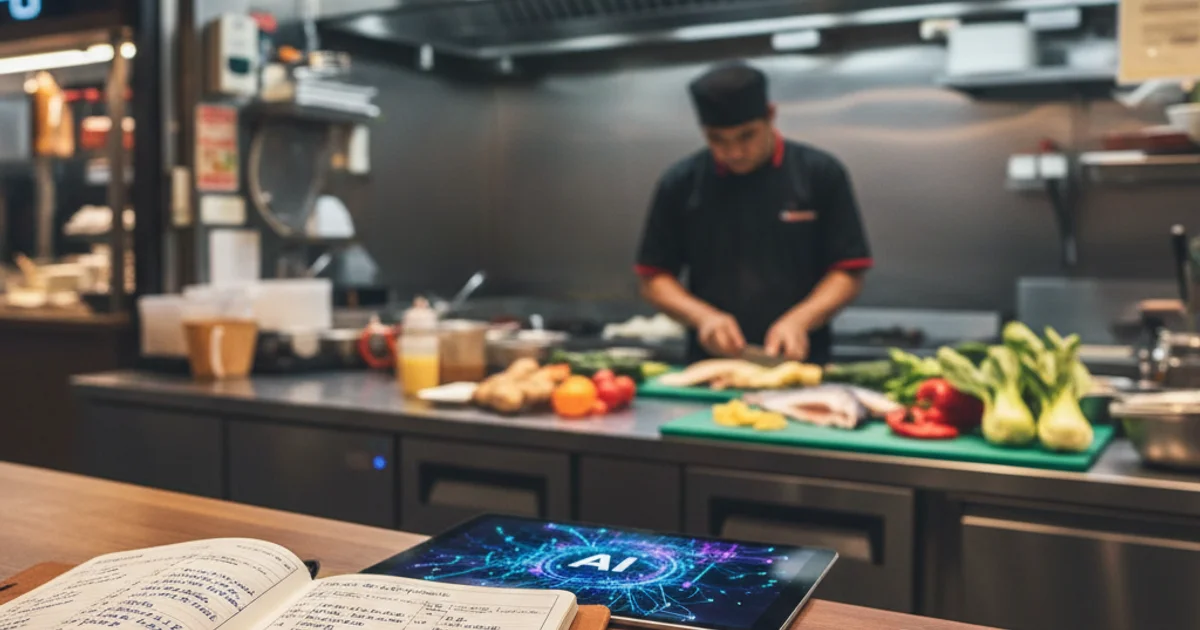
A hawker stall owner in Bedok showed me his notebook last month. 300 customer names, written by hand. Phone numbers. Birthdays. Orders. "This is my CRM," he said, flipping through pages of careful handwriting.
That notebook represented something most restaurant owners understand intuitively but struggle to execute: growth isn't about one marketing channel. It's about connecting the dots between every customer touchpoint. The stamp card that brings them back. The referral that brings their friends. The WhatsApp message that reminds them you exist. The Instagram ad that reaches new customers. The AI that makes sense of it all.
Most restaurant tech treats these as separate problems. Loyalty here. Ads there. WhatsApp somewhere else. But the restaurants that grow fastest don't think in silos. They build a stack where every piece feeds the others.
What is a restaurant growth stack?
A restaurant growth stack is the complete system of interconnected tools and processes that turn first-time visitors into loyal customers, loyal customers into advocates, and advocates into your most effective marketing channel.
Unlike operations tools (POS systems, inventory management, staff scheduling), a growth stack focuses entirely on one outcome: more customers walking through your door. It's the difference between running your restaurant efficiently and growing your restaurant systematically.
The traditional approach treats each growth channel separately. You might have a paper stamp card for loyalty. A separate WhatsApp broadcast for promotions. Manual referral tracking. Instagram ads managed by feel. Each piece works in isolation.
The stack approach connects everything. A customer's loyalty behavior informs their WhatsApp messages. Their referral activity triggers targeted rewards. AI analyzes patterns across all channels. Ad targeting uses your existing customer data. Every interaction feeds the system, and the system gets smarter.
For restaurants in Singapore's competitive F&B landscape, this integration isn't optional anymore. With approximately 13,400 licensed hawker stalls and thousands more F&B outlets, the businesses that survive are the ones that turn every customer into a growth engine.
The five pillars of the restaurant growth stack
WhatsApp Business messages achieve a 98% open rate, vastly exceeding email's typical 20% — which is why restaurants serious about retention are moving critical reminders to WhatsApp.
Pillar 1: Digital loyalty foundation
Digital loyalty replaces paper stamp cards with a QR code system that captures customer data from the first visit. Customers scan at checkout, earn stamps toward rewards, and build a digital relationship with your restaurant.
The key difference from paper: you now know who your customers are. Names, phone numbers, visit frequency, favorite orders. This data becomes the fuel for every other pillar in the stack.
Modern loyalty systems work without app downloads. Customers scan a QR code with their phone camera, enter their details once, and their loyalty card lives in their mobile browser. No friction. No forgotten apps. Just stamps that accumulate automatically.
The loyalty foundation creates three immediate benefits. First, you can identify your most valuable customers and treat them differently. Second, you can measure what actually drives repeat visits. Third, you build a database for targeted marketing.
But loyalty alone isn't growth. It's retention. The real power comes when loyalty data feeds the other pillars.
Pillar 2: Built-in referral engine
Referrals turn your existing customers into your sales team. But most restaurants handle referrals manually: "Tell your friends and get 10% off." No tracking. No automation. No optimization.
A systematic referral program gives every customer a unique code and tracks who they bring. When a referral converts, both the referrer and the new customer get rewarded. The system handles attribution, reward distribution, and follow-up automatically.
The best referral programs are two-sided. The person making the referral gets something. The person receiving it gets something. This doubles your incentive structure and increases conversion rates.
For restaurants, referrals work especially well because food is social. People eat together. They recommend restaurants to friends. A digital referral system just makes this natural behavior trackable and rewardable.
The loyalty foundation makes referrals possible. You need to know who your customers are before you can track who they bring. And you need their contact information to send rewards and follow up.
Pillar 3: WhatsApp automation
WhatsApp reaches 98% of smartphone users in Singapore. It's where your customers actually are. But most restaurants use WhatsApp reactively: answering questions, taking orders, responding to complaints.
WhatsApp automation flips this. Instead of waiting for customers to message you, you message them based on their behavior. Birthday rewards. Milestone celebrations. Win-back campaigns for inactive customers. New menu announcements. Rainy day promotions.
The triggers come from your loyalty data. A customer hits 5 stamps? Automatic WhatsApp message celebrating their progress. Haven't visited in 3 weeks? Automated check-in with a comeback incentive. Birthday in the database? Automatic birthday reward.
This isn't spam. It's personalized communication based on actual customer behavior. The messages feel relevant because they are relevant.
WhatsApp automation also supports your referral program. When someone makes a referral, both parties get WhatsApp confirmations. When a referral converts, the referrer gets a WhatsApp thank you with their reward.
Pillar 4: AI intelligence layer
AI turns your customer data into actionable insights. Instead of guessing what works, you get weekly reports analyzing customer behavior, identifying trends, and recommending specific actions.
AI can spot patterns humans miss. Which customers are at risk of churning? What days see the highest redemption rates? Which referral rewards drive the most conversions? How do weather patterns affect visit frequency?
The AI layer also handles content creation tasks. Food photography can be enhanced with professional styling presets. Customer segments can be identified automatically. Campaign timing can be optimized based on historical patterns.
The AI layer connects all your other pillars. It analyzes loyalty patterns to optimize reward timing. It identifies your best referral sources. It personalizes WhatsApp messages based on individual customer behavior. It optimizes ad targeting using your first-party data.
For restaurant owners who don't have time to become data analysts, AI makes sophisticated growth strategies accessible. You get the insights without the complexity.
Pillar 5: Ads with offline attribution
Most restaurant ads optimize for clicks or impressions. But clicks don't pay rent. Customers walking through your door do.
Offline attribution connects your digital ads to physical visits. When someone sees your Instagram ad, clicks through, signs up for loyalty, and visits your restaurant, you can track the complete journey. You know which ads actually drive foot traffic.
This changes how you optimize campaigns. Instead of optimizing for the cheapest clicks, you optimize for the lowest cost per actual visit. Instead of broad targeting, you can create lookalike audiences based on your best customers. Instead of generic creative, you can test food photography and offers that your existing customers actually respond to.
The attribution window matters for restaurants. Someone might see your ad on Monday and visit on Friday. Traditional digital tracking loses this connection. Offline attribution maintains it for up to 21 days.
Your loyalty program makes this possible. The same QR code that adds stamps also tracks which customers came from which ads. No additional steps. No friction. Just better data about what actually works.
How the stack creates compound growth
Referral and word-of-mouth marketing still wins on trust — around 90% of consumers trust recommendations from friends and family, and 36% of consumers cite word of mouth as their leading source of brand discovery (Statista).
The magic happens when all five pillars work together. This is the restaurant growth loop: retain → grow → engage.
A customer visits your restaurant and scans your loyalty QR code (retain). They earn stamps toward a reward and get added to your customer database. After a few visits, they refer a friend using their unique referral code (grow). Both customers get rewards and confirmation via WhatsApp automation (engage). The AI analyzes this behavior and identifies them as high-value customers for lookalike ad targeting.
Each pillar feeds the others. Loyalty creates the customer database. Referrals expand it. WhatsApp keeps customers engaged. AI optimizes everything. Ads bring in new customers who enter the loop.
The compound effect is exponential. Month one, you have 50 loyalty members. Month three, they've referred 25 new customers. Month six, your WhatsApp campaigns are driving 30% higher visit frequency. Month twelve, your AI-optimized ads are acquiring customers at half the cost because you know exactly who to target.
A bubble tea chain with multiple outlets demonstrated this compound effect by growing their loyalty base to over 800 members across their locations. Each outlet's data fed the central system, creating network effects that benefited all locations.
The growth stack also creates defensive moats. Competitors can copy your menu, your prices, your location strategy. But they can't copy your customer relationships, your referral network, or your AI-optimized campaigns built on years of first-party data.
Implementation: building your restaurant growth stack
Singapore's F&B sector is brutally competitive — over 13,000 F&B establishments compete for attention in a city-state of just 5.7 million residents, which is why retention economics matter more here than almost anywhere else.
Phase 1: Foundation (Week 1-2)
Start with digital loyalty. Replace paper stamp cards with QR codes. Set up milestone rewards that encourage repeat visits. Focus on signup conversion and stamp accumulation.
Choose a milestone structure that matches your average order value and visit frequency. For quick-service restaurants, 5-8 stamps works well. For casual dining, 3-5 stamps might be better. The goal is making the first reward achievable within 2-3 visits.
Train your staff on the new process. The transition from "Here's your receipt" to "Would you like to earn stamps toward a free meal?" requires practice. Staff buy-in determines success.
Phase 2: Referrals (Week 3-4)
Add referral functionality to your loyalty system. Give every customer a unique referral code. Set up two-sided rewards: both referrer and referee get something valuable.
Test different referral incentives. Percentage discounts work for higher-ticket items. Free items work for quick-service. The reward should feel significant enough to motivate sharing but sustainable for your margins.
Make sharing easy. WhatsApp share buttons. SMS options. QR codes that referrers can show friends. The fewer steps between "I want to refer someone" and "I've made the referral," the better.
Phase 3: WhatsApp automation (Week 5-8)
Implement automated WhatsApp messaging based on customer behavior. Start with three triggers: milestone celebrations, birthday rewards, and win-back campaigns for inactive customers.
Milestone celebrations should fire immediately when someone earns a reward. Birthday campaigns work best when sent 3-7 days before the actual birthday. Win-back campaigns should trigger after 14-21 days of inactivity, depending on your typical visit frequency.
Keep messages personal and valuable. "Congratulations on your 5th visit! Here's your free dessert" feels different than "Check out our new promotion." The first celebrates the customer. The second sells to them.
12 proven message templates and automation triggers that drive repeat visits
Phase 4: AI intelligence (Week 9-12)
Layer in AI analytics and content creation. Start with weekly reports that analyze customer behavior and identify trends. Look for patterns in visit frequency, redemption rates, and referral activity.
Use AI for content creation. Food photography for social media and ads. Ad copy variations for testing. Customer segmentation for targeted campaigns. The goal is automating tasks that used to require agencies or freelancers.
Pay attention to AI recommendations about timing and targeting. If the data shows Tuesday promotions outperform Thursday promotions, adjust your calendar. If certain customer segments respond better to specific offers, personalize accordingly.
Phase 5: Ads with attribution (Week 13-16)
Launch advertising campaigns that track offline attribution. Use your existing customer data to create lookalike audiences. Test food photography generated by AI. Optimize for cost per visit, not cost per click.
Start with a small budget and clear attribution tracking. You want to prove the concept before scaling spend. Track the complete customer journey from ad click to loyalty signup to actual visit.
Iterate based on attribution data. Which ad creative drives the most visits? Which audiences convert best? Which offers generate the highest lifetime value? Use this data to optimize campaigns and expand successful approaches.
Common mistakes and how to avoid them
Mistake 1: Implementing everything at once
Restaurant owners often want to launch the complete stack immediately. This creates confusion for staff and customers. Implementation complexity leads to poor execution across all channels.
Instead, phase your rollout. Master digital loyalty before adding referrals. Get referrals working before launching WhatsApp automation. Build competency in each pillar before moving to the next.
Mistake 2: Treating channels as separate systems
Many restaurants implement loyalty through one vendor, referrals through another, WhatsApp through a third. This creates data silos and prevents the compound effects that make growth stacks powerful.
Look for integrated solutions where customer data flows between all channels. The loyalty customer should automatically be eligible for referral rewards and WhatsApp campaigns. Everything should feed the same customer database.
Mistake 3: Ignoring staff training
New systems only work if your front-line staff understand and support them. Cashiers who don't mention the loyalty program. Servers who can't explain referral rewards. Managers who don't monitor redemption rates.
Invest in training and ongoing reinforcement. Role-play the customer interactions. Explain how the system benefits staff (better customer relationships, easier upselling, clearer performance metrics). Make adoption feel like an opportunity, not a burden.
Mistake 4: Setting up and forgetting
Growth stacks require active management. Loyalty rewards that never change. Referral incentives that lose appeal. WhatsApp messages that feel stale. AI insights that nobody acts on.
Schedule monthly reviews of each pillar. Are redemption rates improving? Are referral conversions increasing? Are WhatsApp messages driving visits? Are AI recommendations being implemented? Treat your growth stack like any other business system that needs optimization.
Mistake 5: Focusing on vanity metrics
Total loyalty signups don't matter if nobody redeems rewards. Referral codes distributed don't matter if they don't convert. WhatsApp subscribers don't matter if they don't visit more frequently.
Focus on metrics that connect to revenue. Repeat visit rates. Average customer lifetime value. Cost per acquisition through each channel. Revenue attributed to referrals. These numbers tell you if your growth stack is actually growing your business.
Measuring growth stack success
Customer lifetime value (CLV)
Track how much revenue each customer generates over time. Growth stack customers should have higher CLV than walk-in customers. They visit more frequently, spend more per visit, and stay active longer.
Calculate CLV by customer acquisition channel. Customers who join through referrals often have higher CLV than those from paid ads. Customers who engage with WhatsApp campaigns typically visit more frequently than those who don't.
Repeat visit rate
Measure what percentage of customers visit more than once. This is the core metric for any loyalty program. A good repeat visit rate for quick-service restaurants is 35-50%. For casual dining, 25-40%.
Track repeat visit rates by acquisition source and engagement level. Customers who refer others should have higher repeat rates. Customers who respond to WhatsApp messages should visit more frequently.
Referral conversion rate
Calculate what percentage of referral codes actually convert to new customers. Industry benchmarks vary, but 15-25% is typical for restaurants with good referral programs.
Monitor referral quality, not just quantity. Referred customers often have higher lifetime value and better retention than other acquisition channels. They're also more likely to make referrals themselves.
Attribution accuracy
For ad campaigns, track the percentage of attributed visits that you can verify. Good offline attribution should capture 60-80% of ad-driven visits. Lower rates suggest attribution gaps or customer journey problems.
Compare attributed cost per visit to other acquisition channels. If your ads are driving visits at $8 each but referrals cost $3 per new customer, adjust your budget allocation accordingly.
Engagement rates by channel
Monitor WhatsApp open rates (should be 90%+), email open rates (20-30%), and SMS response rates (varies by content). Track which messages drive the most visits and optimize accordingly.
Measure engagement quality, not just opens. A birthday reward message that drives immediate visits is more valuable than a newsletter that gets opened but doesn't change behavior.
The future of restaurant growth stacks
Restaurant growth stacks are evolving toward deeper personalization and predictive capabilities. AI will move beyond analyzing past behavior to predicting future actions. Which customers are most likely to churn? What offers will drive the highest response rates? When should you reach out to maximize impact?
Integration with payment systems will create even richer customer profiles. Not just visit frequency, but spending patterns, menu preferences, and price sensitivity. This data will enable hyper-targeted marketing that feels personal rather than promotional.
Voice and visual AI will transform how customers interact with loyalty programs. Instead of scanning QR codes, they might just say "Add stamps for Wilson" or take a photo of their receipt. The friction between customer action and system response will continue to decrease.
Multi-brand loyalty networks will emerge. Instead of separate programs for every restaurant, customers will have unified accounts that work across multiple brands. This will benefit smaller restaurants by giving them access to larger customer networks.
The restaurants that start building integrated growth stacks now will have significant advantages as these technologies mature. They'll have the customer data, the operational experience, and the staff competency to leverage new capabilities as they become available.