The cashier at a busy zi char stall in Toa Payoh was confused. A customer wanted to redeem their loyalty points, but she couldn't find the right screen. The manager was helping another table. The owner was at the wet market. The customer waited three minutes, then left without ordering.
Why staff roles matter in loyalty programs
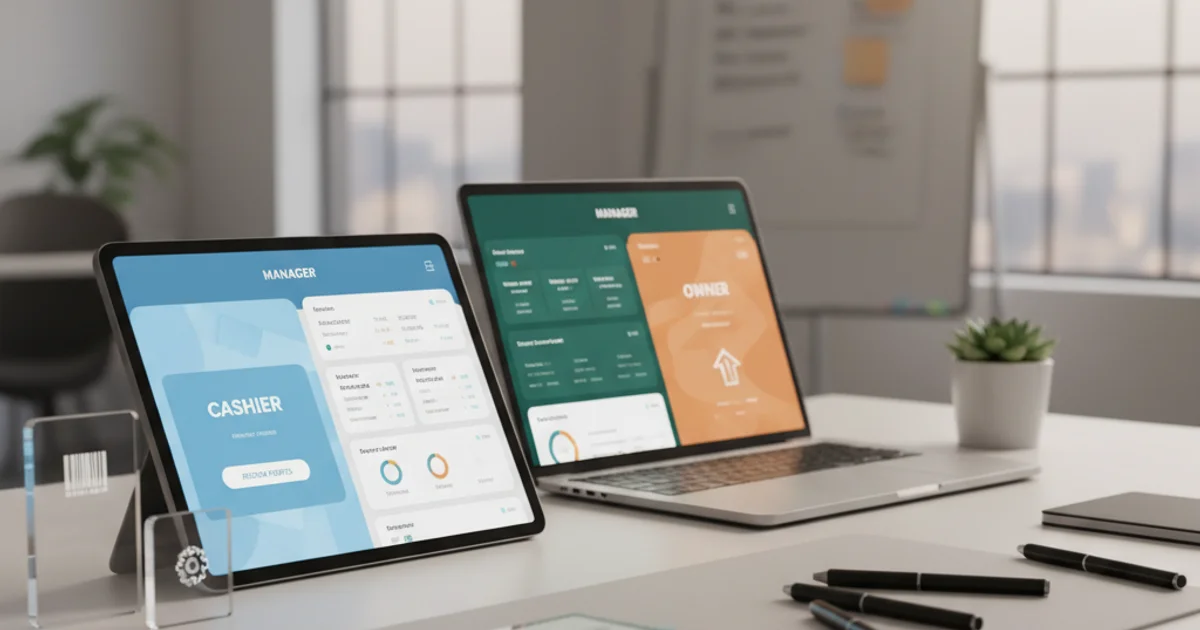
Staff role separation in loyalty programs ensures each team member sees exactly what they need to do their job effectively. Cashiers need quick stamp scanning and coupon redemption. Managers need daily operations oversight and staff management. Owners need strategic insights and system configuration.
Without proper role separation, you get three problems. First, information overload. Your part-time cashier doesn't need to see last quarter's revenue analytics while trying to scan a QR code during lunch rush. Second, security risks. Every staff member with full admin access can accidentally delete customer data or change reward milestones. Third, training complexity. Teaching someone five features they'll never use takes longer than teaching them the two they need daily.
The solution is role-based access. Each staff level gets a customized interface showing only their relevant tools. This isn't about restricting access out of distrust. It's about cognitive load management. A focused interface means faster training, fewer mistakes, and smoother operations.
Think of it like a restaurant kitchen. The line cook doesn't need access to the wine inventory system. The sommelier doesn't need to see prep schedules. Everyone has their station, their tools, their responsibilities. Your loyalty program should work the same way.
What cashiers need to see
Singapore's F&B sector is brutally competitive — over 13,000 F&B establishments compete for attention in a city-state of just 5.7 million residents, which is why retention economics matter more here than almost anywhere else.
Cashiers need three things: stamp scanning, coupon redemption, and customer lookup. Nothing else. Their interface should load in under two seconds and work on any device. During peak hours, every interaction should take less than 10 seconds.
The stamp scanning flow is simple. Customer presents their QR code. Cashier scans with their phone or tablet. System automatically adds stamps based on the purchase. Customer sees confirmation on their screen. Done. The cashier doesn't need to see the customer's purchase history, referral count, or birthday. They just need to confirm the stamp was added.
Coupon redemption follows the same principle. Customer claims a reward on their phone and shows the flash screen with QR code. Cashier scans to redeem. System marks the coupon as used. Customer gets their free drink or discount. The cashier doesn't need to know how many coupons this customer has claimed before or when their account was created.
Customer lookup handles edge cases. If someone's phone is dead or they forgot their QR code, cashiers can search by phone number to manually add stamps. This requires a simple search box and basic customer info display. Name, phone, current stamp count, available rewards. No analytics, no historical data, no configuration options.
The cashier interface should work offline for stamp scanning and sync when connection returns. Singapore's F&B outlets often have spotty WiFi during peak hours. A loyalty program that stops working when the internet hiccups isn't worth having.
What managers need to see
WhatsApp Business messages achieve a 98% open rate, vastly exceeding email's typical 20% — which is why restaurants serious about retention are moving critical reminders to WhatsApp.
Managers need operational oversight: daily stats, staff activity, and customer service tools. They're the bridge between front-line operations and strategic planning. Their dashboard should answer: "How did we do today?" and "What needs my attention?"
Daily stats include new signups, stamps issued, coupons redeemed, and active customers. These numbers tell managers if the loyalty program is being promoted properly at the counter. Low signup rates might mean cashiers aren't mentioning it. High stamp counts with low redemptions might mean rewards aren't appealing enough.
Staff activity tracking shows which cashiers are actively using the system and which need additional training. This isn't about surveillance. It's about identifying training gaps. If one cashier consistently has lower stamp-to-transaction ratios, they might need help with the pitch or the scanning process.
Customer service tools let managers handle escalations. If a customer says their stamps didn't register or a coupon expired unfairly, managers can view the customer's full history and manually adjust their account. This includes adding missing stamps, extending coupon expiry dates, or issuing compensation rewards.
Branch comparison becomes crucial for multi-outlet operations. A bubble tea chain with multiple outlets needs to see per-location performance. Which branch has the highest signup rates? Which location's customers redeem rewards most frequently? This data guides staff training and promotional strategies.
Managers also need basic staff management capabilities. Adding new cashiers to the system, deactivating former employees, and adjusting permissions. They shouldn't need to contact the owner for routine staff changes.
What owners need to see
Referral and word-of-mouth marketing still wins on trust — around 90% of consumers trust recommendations from friends and family, and 36% of consumers cite word of mouth as their leading source of brand discovery (Statista).
Owners need strategic insights: growth trends, revenue attribution, marketing performance, and system configuration. Their dashboard should answer: "Is this loyalty program growing my business?" and "What should I change to get better results?"
Growth trends show member acquisition over time, repeat visit patterns, and customer lifetime value estimates. Owners need to see if the loyalty program is attracting new customers or just digitalizing existing regulars. A healthy program does both, but the ratio matters for ROI calculations.
Revenue attribution connects loyalty activity to business outcomes. How much additional revenue comes from repeat customers versus new signups? What's the average order value difference between loyalty members and walk-ins? These metrics justify the program's cost and guide expansion decisions.
Marketing performance includes referral program results, WhatsApp campaign open rates, and promotional effectiveness. If owners run birthday discounts or milestone celebrations, they need to see redemption rates and resulting sales lift. This data informs future campaign planning.
System configuration gives owners full control over rewards structure, messaging templates, and program rules. They can adjust stamp requirements, change reward values, and modify automated messages. This flexibility lets them respond to market conditions without technical support.
Financial oversight includes program costs, redemption liability, and ROI calculations. Owners need to know how much they're spending on rewards and whether the increased customer retention justifies the expense. This includes projections for future liability based on outstanding stamps.
Advanced analytics help owners understand customer segments. Who are the power users earning stamps multiple times per week? Which customers signed up but never returned? What's the typical journey from first visit to loyal regular? These insights guide retention strategies.
The hierarchy in practice
Role hierarchy in loyalty programs follows operational responsibility. Cashiers execute transactions. Managers oversee daily operations. Owners set strategy and policy. Each level builds on the previous one's capabilities without overwhelming them with unnecessary complexity.
A practical example: A chicken rice stall notices redemption rates dropping. The cashier reports customers asking about expired coupons. The manager checks the data and sees coupons are expiring after 30 days, but customers visit every 45 days on average. The owner adjusts the expiry period to 60 days and monitors the results.
This hierarchy prevents bottlenecks. Cashiers don't wait for managers to scan QR codes. Managers don't wait for owners to add new staff. Owners don't get interrupted for routine operations. Everyone operates within their scope of responsibility.
Cross-training becomes easier with clear role boundaries. A new manager knows they need to learn everything cashiers do, plus their additional tools. Promotion paths are clear. Responsibilities are defined. Training time decreases.
Emergency access ensures business continuity. If the owner is unreachable and the manager needs to adjust a promotion, temporary elevated permissions can be granted. This prevents the loyalty program from blocking business operations during staff shortages or emergencies.
Security and access control
Security in loyalty programs balances protection with usability. Customer data needs protection, but staff need quick access to serve customers effectively. The solution is layered security with role-appropriate access levels.
Cashiers get read-only access to customer accounts during transactions. They can see current stamp counts and available rewards but cannot modify historical data or account settings. This prevents accidental changes while enabling customer service.
Managers get limited write access for customer service escalations. They can adjust stamp counts, extend coupon validity, and handle refund scenarios. All changes are logged with timestamps and staff identification for audit purposes.
Owners get full system access but with confirmation prompts for destructive actions. Deleting customer data, changing reward structures, or modifying pricing requires additional verification. This prevents accidental changes that could affect thousands of customers.
Data encryption protects customer information at rest and in transit. Phone numbers, names, and purchase patterns are sensitive data that requires protection. Staff access logs track who viewed which customer records and when.
Session management ensures accounts are automatically logged out after inactivity. A cashier's tablet left unattended shouldn't remain logged in indefinitely. Reasonable timeouts balance security with operational efficiency.
Password policies should be strong but not burdensome. Staff dealing with customers can't spend five minutes logging in during rush hour. Biometric authentication or single sign-on can improve both security and usability.
Training different roles effectively
Training effectiveness depends on role-specific focus. Each staff level needs different skills, different knowledge depth, and different practice scenarios. Generic training wastes time and creates confusion.
Cashier training emphasizes speed and accuracy. Practice scanning QR codes until it becomes muscle memory. Learn the common customer questions: "How many stamps do I have?" "When does my coupon expire?" "How do I refer a friend?" Keep answers simple and positive.
Role-playing helps cashiers handle edge cases. What if the QR code won't scan? What if a customer claims their stamps didn't register? What if someone wants to use an expired coupon? Having standard responses ready prevents hesitation during busy periods.
Manager training covers system administration and customer service escalation. They need to understand the data behind the daily operations. What does a good signup rate look like? How do you identify and fix common problems? When should you contact the owner for guidance?
Analytical thinking becomes important for managers. They need to spot trends in the data and connect them to operational realities. If stamp counts are up but redemptions are down, what might be causing the disconnect? This diagnostic skill improves with experience.
Owner training focuses on strategy and optimization. Understanding the loyalty economics: customer acquisition costs, lifetime value calculations, and program ROI. Learning to interpret growth trends and make data-driven decisions about program changes.
Ongoing education keeps skills current as the program evolves. New features get added, customer behaviors change, and competitive pressures shift. Regular training updates ensure all staff levels can adapt to these changes effectively.
Automated messaging templates that connect with your loyalty program
Common mistakes to avoid
Role confusion creates operational problems that hurt customer experience. Avoiding these common mistakes ensures your loyalty program enhances rather than complicates your operations.
Giving everyone full access is the most common mistake. It seems simpler during setup, but creates problems during operations. Too many options slow down transactions. Too much data overwhelms part-time staff. Too many permissions increase security risks.
Under-training cashiers on customer questions leads to awkward interactions. Customers will ask how the program works, how to check their stamps, and when rewards expire. If cashiers can't answer confidently, customers lose trust in the program.
Over-complicating manager dashboards with unnecessary metrics wastes attention. Managers don't need to see detailed customer segmentation analysis or advanced attribution modeling. They need actionable operational insights they can use immediately.
Ignoring mobile optimization affects staff efficiency. If your cashiers primarily use phones or tablets, the interface must work perfectly on those devices. Desktop-first designs often fail in real restaurant environments.
Failing to plan for peak hours causes system abandonment. If the loyalty program slows down service during lunch rush, staff will stop using it. Performance testing under realistic load conditions prevents this problem.
Not documenting role boundaries creates confusion over time. Staff turnover means new people need clear guidance on what they can and cannot do. Written procedures prevent well-meaning staff from accidentally breaking things.
Connecting roles to business growth
Staff roles in loyalty programs directly impact the retain, grow, engage growth loop. Each role contributes to different aspects of customer retention and acquisition.
Cashiers drive the "retain" component by ensuring every transaction includes loyalty engagement. Consistent stamp scanning and reward promotion builds the customer database that powers everything else. Their efficiency directly affects signup rates and customer satisfaction.
Managers optimize the "engage" component by monitoring daily performance and addressing issues quickly. They ensure promotional campaigns run smoothly, staff follow procedures, and customer service maintains high standards. Their oversight prevents small problems from becoming customer churn.
Owners control the "grow" component through strategic decisions about reward structures, marketing campaigns, and program expansion. They analyze which initiatives drive new customer acquisition and which improve retention. Their choices determine long-term program success.
The growth loop accelerates when all three roles work in harmony. Cashiers create positive first impressions that encourage signups. Managers ensure consistent execution that builds trust. Owners design programs that reward both retention and referrals.
Revenue attribution becomes clearer with proper role separation. When each staff level focuses on their specific metrics, it's easier to identify what's working. Are low signup rates due to cashier training issues, reward structure problems, or competitive pressure? Role-specific data helps diagnose the root cause.
Scaling becomes smoother with defined roles. Opening a second location means hiring staff who already understand their responsibilities. Training new cashiers follows established procedures. Managers know what daily oversight looks like. Owners can replicate successful strategies.
The technology that makes it work
Role-based access requires technology that can handle multiple user types with different permission levels. The system must be fast enough for transaction processing, flexible enough for management oversight, and comprehensive enough for strategic planning.
Mobile-first design ensures cashiers can use the system effectively during service. QR code scanning, customer lookup, and coupon redemption must work flawlessly on phones and tablets. Touch targets need to be large enough for quick tapping during busy periods.
Real-time synchronization keeps all roles working with current data. When a cashier adds stamps, managers see updated daily totals immediately. When owners change reward structures, cashiers see new options right away. Delays create confusion and errors.
Offline capability prevents service interruptions during connectivity issues. Cashiers should be able to scan stamps and redeem coupons even when WiFi is spotty. The system syncs changes when connection returns, maintaining data integrity.
Audit trails track all system changes for accountability and troubleshooting. When customer complaints arise, managers can see exactly what happened and when. This transparency builds trust and helps identify process improvements.
Backup and recovery systems protect against data loss. Customer loyalty information represents significant business value that cannot be recreated if lost. Regular backups and tested recovery procedures ensure business continuity.
Integration capabilities allow the loyalty system to work alongside existing POS systems without requiring complex technical setup. Your POS handles transactions. STAMPEDE handles the relationship. They coexist independently, each doing what it does best.