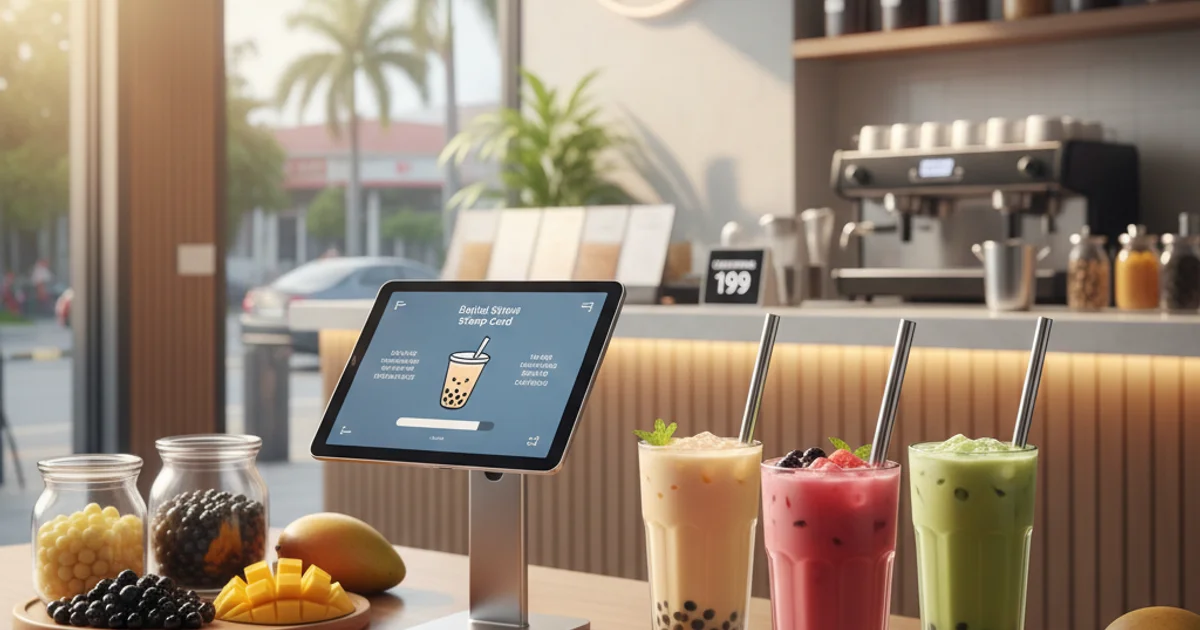
When a bubble tea shop in Kota Kinabalu serves its 200th customer of the day, how many will return tomorrow?
The answer separates thriving shops from struggling ones in Malaysia's competitive bubble tea market. With 10 bubble tea businesses competing across Kota Kinabalu's shopping districts, from Suria Sabah to Lintas Plaza, customer retention has become the difference between profit and loss.
Digital stamp cards offer Kota Kinabalu bubble tea shops a proven path to build repeat business without the overhead of paper systems or complex loyalty platforms.
Why Kota Kinabalu Bubble Tea Shops Need Digital Stamp Cards
Traditional paper stamp cards disappear in customers' wallets or get damaged by Sabah's tropical humidity. Digital stamp cards solve both problems while providing bubble tea shops with customer data they can actually use.
Digital stamp cards create immediate customer connection. When customers earn their first digital stamp at U-Tea Lintas or Sharetea, they're already thinking about their next visit. Research from Yotpo shows that repeat customers generate about one-third of total revenue and typically spend three times more per visit than first-time buyers.
The numbers work especially well for bubble tea shops. A customer who visits twice monthly and spends RM15 per visit generates RM360 annually. Compare that to one-time visitors who might spend RM15 once and never return.
Digital stamp cards work because they remove friction from the loyalty experience while giving bubble tea shops the tools they need to understand their customers.
How Digital Stamp Cards Work for Bubble Tea Shops
A digital stamp card system replaces physical cards with smartphone-based loyalty tracking. Customers scan a QR code at checkout, earn stamps automatically, and redeem rewards without carrying extra cards.
The customer experience stays simple. At checkout, customers show their phone screen displaying a QR code. Staff scan the code, add stamps, and customers see their progress immediately. When they reach milestone rewards, coupons appear in their digital wallet automatically.
For bubble tea shops, this creates valuable customer data. Shop owners can see which drinks generate the most repeat visits, identify their most loyal customers, and track redemption patterns across different reward levels.
The system works alongside existing point-of-sale systems without requiring integration or hardware changes. Staff need only a smartphone camera to scan customer QR codes.
Setting Up Stamp Card Rewards That Drive Sales
Effective stamp card programs balance achievable milestones with meaningful rewards. Bubble tea shops typically succeed with 8-10 stamp cards offering rewards that match their average transaction values.
Structure rewards around purchase behavior. If your average bubble tea order is RM12-15, consider offering a free drink at 8 stamps (roughly RM100 in purchases). Add smaller rewards at 3 stamps (RM3 off next order) and 5 stamps (free topping) to maintain engagement between major milestones.
Kota Kinabalu's bubble tea market supports premium positioning, especially in shopping centers like Imago Mall where customers expect quality experiences. Higher-value rewards can justify premium pricing while building customer loyalty.
Seasonal rewards work particularly well for bubble tea shops. Limited-time flavors, holiday specials, or new product launches can drive both stamp earning and redemption activity.
Consider tiered rewards that acknowledge your best customers. A customer who completes three full stamp cards might unlock VIP status with exclusive flavors or early access to new drinks.
WhatsApp Marketing Integration for Bubble Tea Shops
Digital stamp cards become more powerful when connected to WhatsApp marketing, Malaysia's preferred messaging platform. When customers opt in to WhatsApp updates, bubble tea shops can send targeted messages about new flavors, special promotions, and reward reminders.
WhatsApp messages achieve exceptional engagement rates. According to Infobip research, WhatsApp Business messages see open rates approaching 98%, compared to roughly 20% for traditional email marketing. For bubble tea shops competing for attention in busy shopping centers, this engagement advantage translates directly to foot traffic.
The messaging works best when it provides real value. Instead of generic promotions, send personalized messages based on stamp card activity. A customer one stamp away from a free drink receives a different message than someone who just started their card.
Birthday rewards through WhatsApp create particularly strong engagement. Bubble tea shops can automatically send birthday discount codes, driving visits during typically slower periods while making customers feel valued.
Location-based messaging helps bubble tea shops capitalize on foot traffic patterns. Customers near Suria Sabah during lunch hours might receive messages about new afternoon specials, while evening messages could promote dessert drinks or study-friendly atmosphere.
Tracking Customer Behavior and Preferences
Digital stamp cards provide bubble tea shops with customer insights impossible to gather from cash transactions or paper cards. This data helps optimize everything from menu offerings to staffing schedules.
Purchase pattern analysis reveals customer preferences. A bubble tea shop might discover that customers who order brown sugar drinks have higher lifetime values, or that certain toppings correlate with increased visit frequency. This information guides menu development and promotional strategies.
Visit timing data helps optimize operations. If digital stamp card data shows peak redemption periods, shops can adjust staffing levels or prepare popular items in advance. Slow periods become opportunities for targeted promotions to specific customer segments.
Customer lifecycle insights emerge from stamp card progression. Shops can identify when customers typically drop off (perhaps after their first free drink) and implement retention campaigns to extend engagement.
Geographic data from customer profiles helps bubble tea shops understand their catchment area and optimize marketing spend. A shop discovering that 60% of loyal customers live within 2km might focus local advertising rather than city-wide campaigns.
Referral Programs That Multiply Customer Growth
Digital stamp cards enable sophisticated referral programs that turn satisfied customers into active promoters. When customers share their positive bubble tea experiences, they bring new customers while earning rewards for themselves.
Referral programs create viral growth loops. Research from Deloitte indicates that customers acquired through referrals show 37% higher retention rates compared to other acquisition channels. For bubble tea shops, this means referred customers are more likely to become regular visitors.
The mechanics work simply: existing customers receive a unique referral code they can share via WhatsApp, social media, or in person. When friends use the code to join the stamp card program, both the referrer and new customer receive rewards.
Bubble tea shops can structure referral rewards to encourage multiple referrals. The first successful referral might earn a free drink, while the third referral unlocks exclusive merchandise or VIP status.
Social sharing integration amplifies referral reach. When customers complete stamp cards or unlock special rewards, they can easily share their achievement on Instagram or Facebook, creating organic marketing for the bubble tea shop.
Managing Multiple Locations with Digital Stamp Cards
Bubble tea chains operating across Kota Kinabalu's shopping districts need loyalty systems that work seamlessly between locations while providing location-specific insights.
Unified customer profiles work across all branches. A customer who earns stamps at U-Tea Suria Sabah can redeem rewards at U-Tea Lintas without any additional setup. This flexibility increases customer satisfaction while maximizing the value of each loyalty program member.
Branch-specific analytics help chain operators understand location performance. The Imago Mall location might show different customer preferences than the Lintas Plaza branch, informing local menu variations or promotional strategies.
Staff management becomes simpler with digital systems. New employees at any location can immediately access customer loyalty information and process stamp card transactions without extensive training on paper-based systems.
Inventory planning improves when reward redemption data is available across locations. If free drink redemptions spike at certain branches, managers can adjust stock levels accordingly.
Cost Analysis: Digital vs Traditional Stamp Cards
The financial benefits of digital stamp cards become clear when compared to traditional paper-based systems, especially for bubble tea shops processing dozens of transactions daily.
Paper stamp card costs accumulate quickly. Printing 1,000 physical stamp cards costs approximately RM200-300, plus ongoing expenses for replacement cards, stamps, and staff time managing the system. Digital systems eliminate these recurring costs entirely.
Staff efficiency improves with digital processing. Scanning a QR code takes 3-5 seconds compared to 15-20 seconds for finding and stamping paper cards. For a busy bubble tea shop processing 200 transactions daily, this time savings allows staff to focus on customer service and drink preparation.
Lost card replacement becomes unnecessary with digital systems. Traditional loyalty programs lose approximately 30% of customers due to lost or forgotten cards, representing significant revenue loss for bubble tea shops.
Data collection costs disappear with digital systems. Paper-based programs require manual data entry or expensive point-of-sale integrations to track customer behavior. Digital stamp cards provide this information automatically.
Implementation Timeline for Bubble Tea Shops
Bubble tea shops can implement digital stamp card systems within days rather than weeks, minimizing disruption to daily operations while quickly capturing loyalty program benefits.
Week 1 focuses on system setup and staff training. Configure reward structures, design digital stamp cards with bubble tea shop branding, and train staff on QR code scanning procedures. Most bubble tea shops complete this phase in 2-3 days.
Week 2 involves customer migration and promotion. Existing paper card holders can transfer their progress to digital cards, while new customers automatically start with the digital system. Simple promotional materials help communicate the change to regular customers.
Week 3 and beyond focus on optimization based on initial data. Customer behavior patterns emerge quickly, allowing bubble tea shops to adjust reward structures, messaging frequency, or promotional timing based on real usage data.
The implementation requires minimal technical infrastructure. Staff need smartphones with camera access, while customers use their existing devices. No additional hardware purchases or point-of-sale modifications are necessary.