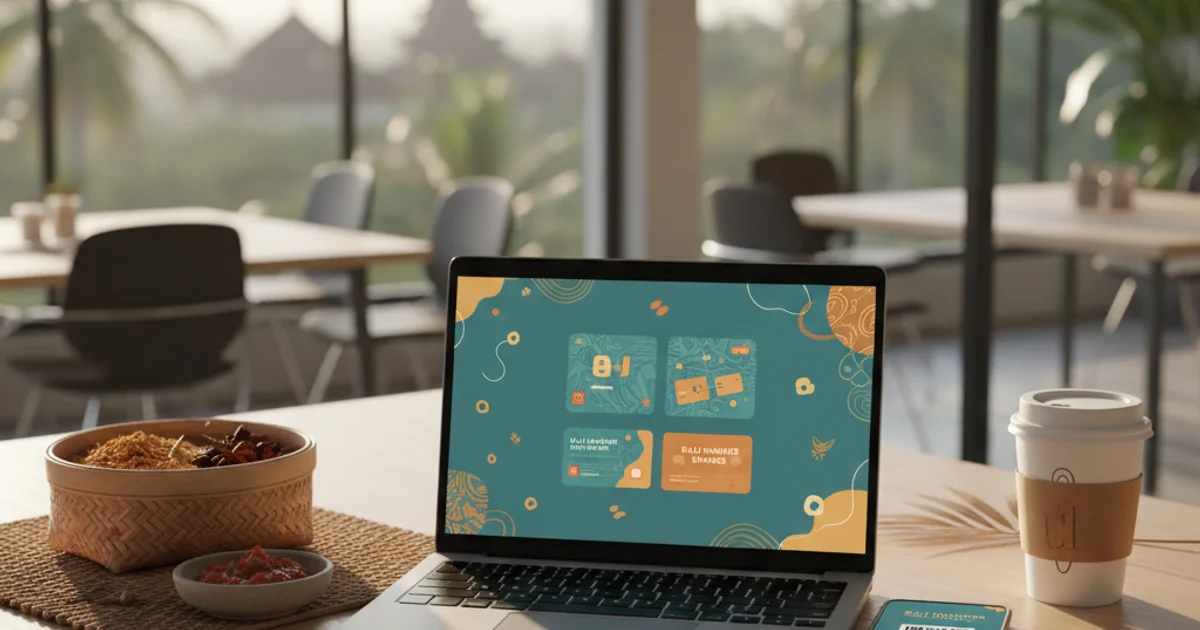
Running a hawker stall in Bali means serving two completely different crowds. There's the local Indonesian customer who visits daily for their nasi gudeg, and the Australian digital nomad who discovers your warung through Instagram and might become a regular for their three-month stay. While some stall owners still rely on paper punch cards that get soggy in Bali's humidity, the smart operators are switching to digital stamp cards that work for both audiences.
STAMPEDE's digital stamp card system transforms how Bali hawker stalls build customer loyalty. Instead of managing physical cards that tourists lose or locals forget, you get a QR code system that customers scan with their phones. Every purchase earns digital stamps, milestone rewards happen automatically, and your customer data stays organized—no more guessing whether that Australian couple will return next week.
Why Bali Hawker Stalls Need Digital Loyalty
Traditional loyalty methods don't work in Bali's unique market. Paper stamp cards get destroyed by the tropical climate, and tourists can't carry them through multiple countries. Digital stamp cards solve both problems while giving you insights into your customer patterns.
Digital stamp cards eliminate the physical card problem entirely. Customers scan a QR code at checkout, stamps appear instantly on their phone, and rewards unlock automatically when they hit milestones. Whether it's a local worker grabbing breakfast or a surfer stopping by after morning waves, the process stays consistent.
The data advantage matters more in Bali than anywhere else. You'll see exactly how many tourists visit once versus locals who come weekly. This information helps you plan inventory, adjust pricing for different customer segments, and create targeted promotions that actually work.
How Digital Stamps Work for Bali's Tourism Market
Bali's hawker stalls serve a customer base unlike anywhere else in Indonesia. Research from Momentum Works shows Southeast Asia's food delivery market reached US$22.7 billion in 2025, with much of that growth driven by international tourists discovering local food through digital platforms.
The QR code approach works perfectly for international customers. They scan once, join your loyalty program, and can access their stamps from anywhere in the world. When they return to Bali six months later, their stamp progress is still there. This creates a connection that extends far beyond their initial visit.
Local customers benefit equally. Instead of carrying multiple paper cards from different warungs, they have everything on their phone. The system works in both Indonesian and English, so language barriers disappear at checkout.
Your staff training becomes simpler too. Instead of managing physical inventory of cards, handling replacements, or tracking which customer has which card, they just need to scan a QR code. The digital system handles stamp allocation, milestone tracking, and reward distribution automatically.
Setting Up Rewards That Match Bali's Price Points
Bali's unique economy means your reward structure needs to work for both 15,000 IDR local meals and 75,000 IDR tourist portions. The key is creating milestone rewards that feel valuable to both segments without destroying your margins.
Start with percentage-based rewards rather than fixed amounts. A 10% discount works whether someone spends 15,000 IDR or 75,000 IDR. This approach keeps your margins consistent while making every customer feel the reward is worthwhile.
Consider creating different reward tracks. Your fifth visit might unlock a free drink, while your tenth visit gets a free appetizer. Bain & Company research indicates that between 80% and 90% of positive referrals come from a brand's most loyal, highest-value customers—exactly the repeat visitors you want to reward.
Birthday rewards work especially well in Bali's tourism context. Tourists often celebrate birthdays during their trips, and a special birthday meal becomes a memorable experience they'll share on social media. Local customers appreciate the recognition too, creating a personal connection with your stall.
WhatsApp Integration for Customer Communication
WhatsApp dominates communication in Indonesia, and tourists quickly download it when they arrive. This makes WhatsApp the perfect channel for loyalty program communications at your Bali hawker stall.
Automated messages keep customers engaged without extra work from your staff. When someone earns their fifth stamp, they automatically receive a WhatsApp message about their upcoming reward. When they're one stamp away from a milestone, another message reminds them to visit soon.
The system handles language preferences automatically. Indonesian customers get messages in Bahasa Indonesia, while international customers receive English messages. This personalization happens behind the scenes—your staff doesn't need to remember who speaks what language.
Birthday messages create particularly strong connections. Studies from Sprout Social show that 90% of consumers rely on social media to keep up with trends and cultural moments, and a birthday message from their favorite Bali warung often gets shared with friends and family back home.
Referral Programs That Work for Tourist Areas
Bali's social dining culture makes referral programs incredibly effective. Tourists eat in groups, locals bring family members, and everyone shares recommendations. A well-designed referral system can multiply your customer base quickly.
Two-sided referral rewards work best in Bali's context. When someone refers a friend, both people get rewards. This creates immediate value for the referrer and gives the new customer an incentive to try your stall. Research from Harvard Business Review demonstrates that referred customers go on to refer 30% to 57% more new customers than non-referred ones.
The referral tracking happens automatically through unique codes. Each customer gets a personal referral code they can share via WhatsApp, Instagram, or just by showing their phone. When someone new joins using that code, both customers get credited immediately.
Tourist referrals often happen months later. Someone returns home, tells friends about the amazing nasi gudeg they found in Canggu, and shares their referral code. When those friends visit Bali and use the code, the original customer still gets credited—even if they're back in Australia by then.
Managing Multi-Language Customer Data
Running a loyalty program in Bali means handling customer data in multiple languages and currencies. Your system needs to work seamlessly whether someone signs up in Indonesian, English, or another language entirely.
Customer profiles adapt to language preferences automatically. When someone joins your program, the system detects their phone's language settings and adjusts all communications accordingly. Their stamp card, reward notifications, and promotional messages all appear in their preferred language.
The data insights become more valuable when you can segment by customer origin. You'll see that Indonesian customers visit more frequently but spend less per visit, while tourists visit less often but have higher average orders. This information helps you create targeted promotions for each segment.
Currency handling works smoothly too. Local customers see prices in Indonesian Rupiah, while tourists can view amounts in their home currency for reference. The backend handles all conversions automatically, so your staff never needs to calculate exchange rates.
Measuring Success in Bali's Unique Market
Success metrics for a Bali hawker stall look different from other markets. You need to track both local customer retention and tourist return rates, which have completely different patterns and timeframes.
Local customer metrics focus on frequency and consistency. You want to see Indonesian customers visiting multiple times per week and gradually increasing their average order size. The digital stamp system shows you exactly which customers are becoming regulars and which ones need encouragement to return.
Tourist metrics emphasize experience and referral generation. International customers might only visit twice during their trip, but they should leave positive reviews and refer friends who visit later. Wharton School research shows that referred customers have a 16% higher lifetime value and an 18% lower churn rate than non-referred customers.
The seasonal patterns become clear through your loyalty data. You'll identify peak tourist seasons, understand which months depend more on local customers, and adjust your staffing and inventory accordingly. This insight helps you maintain profitability year-round despite Bali's fluctuating tourism patterns.
Digital stamp cards give you the customer intelligence that traditional paper systems never could. Every scan provides data about visit frequency, spending patterns, and customer preferences. This information transforms how you run your hawker stall, moving from guesswork to data-driven decisions that increase both customer satisfaction and profitability.