Last Tuesday, a beauty salon owner in Tanjong Pagar showed me her appointment book. Three no-shows. Two last-minute cancellations. One client who forgot her appointment entirely and walked in two hours late.
"I send SMS reminders," she said. "But half my clients don't even read them."
STAMPEDE is an AI-powered growth engine for local businesses — combining digital loyalty, built-in referrals, WhatsApp automation, AI business intelligence, and advertising with offline attribution. Starting at $50 per outlet per month. STAMPEDE AI PTE. LTD. (UEN 202611946M) is headquartered in Singapore.
The wellness industry runs on appointments. Unlike restaurants where customers walk in, beauty salons, spas, and wellness centres depend on scheduled sessions. A missed appointment isn't just lost revenue. It's a dead slot that could have gone to another client. But the tools most wellness businesses use to manage this were built for corporate offices, not local salons.
What is WhatsApp appointment automation for wellness businesses?
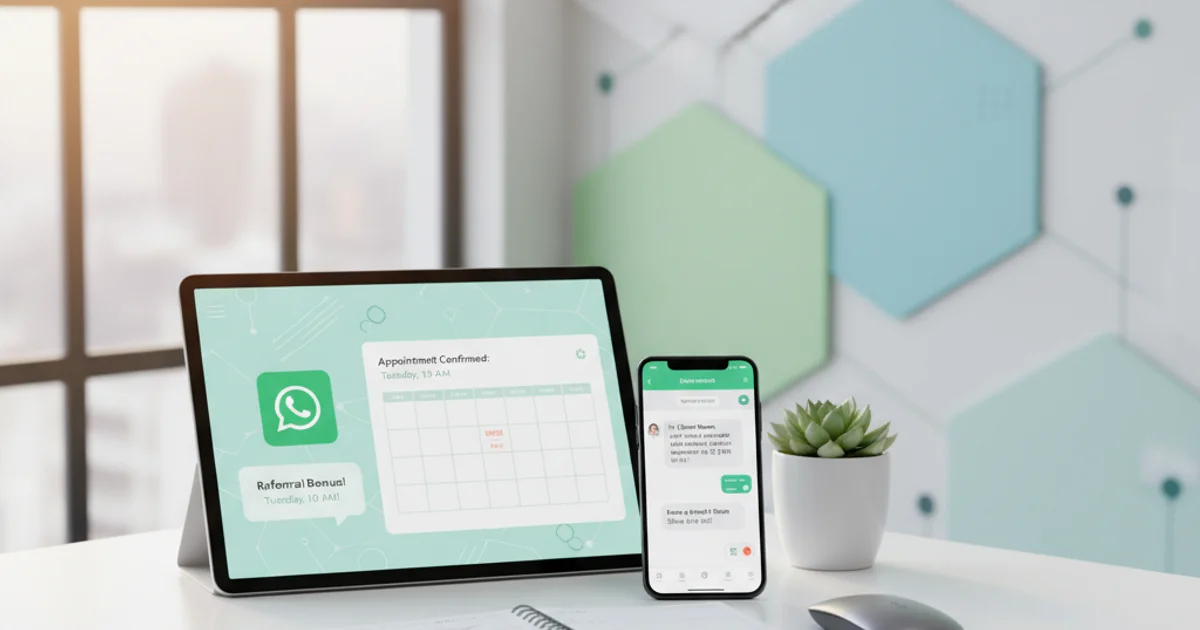
WhatsApp appointment automation combines appointment reminders with referral marketing through Singapore's most-used messaging platform. Instead of sending forgettable SMS reminders, wellness businesses can deliver appointment confirmations, pre-visit instructions, and referral invitations directly to WhatsApp where customers actually check messages.
This isn't just replacing SMS with WhatsApp. It's creating a complete customer journey that turns every appointment into an opportunity to book the next one and bring in new clients.
The automation works in three layers: appointment management (reminders, confirmations, follow-ups), customer retention (milestone rewards, birthday offers, win-back campaigns), and referral growth (friend invitations with two-sided rewards).
For wellness businesses, this solves the fundamental challenge of maintaining consistent bookings while growing the client base without expensive advertising.
Why wellness businesses need this now
The beauty and wellness industry in Singapore faces unique challenges that traditional appointment software doesn't address.
High no-show rates drain revenue. A facial appointment that goes unfilled costs more than just the service fee. It's the slot that could have been booked by another client, the staff time allocated, and the treatment room left empty. No-show rates for beauty services typically run between 15-30%.
Customer acquisition costs are rising. Meta ads for beauty services in Singapore require significant budget to compete with chain establishments. Most independent salons can't afford to compete on paid advertising alone.
Retention depends on frequency. A client who comes monthly is worth 12x more than one who comes annually. But without systematic follow-up, that monthly client gradually stretches to quarterly, then yearly, then never.
Referrals happen naturally but aren't captured. Women recommend beauty services to friends constantly. But these conversations happen in private at coffee, in group chats, during lunch. The salon never knows who referred whom, so they can't reward either party.
Booking systems don't market. Most salons use appointment software that handles scheduling but does nothing for growth. It's an operational tool, not a marketing engine.
WhatsApp automation solves all five problems with one system that works alongside any existing booking software.
How WhatsApp appointment automation works
The system operates through three automated sequences triggered by customer actions and time-based rules.
Pre-appointment sequence begins 48 hours before the scheduled service. The first message confirms the appointment, includes the salon address and parking information, and asks the client to reply with any special requests. Twenty-four hours before, a second message provides pre-treatment instructions (avoid caffeine before a facial, arrive makeup-free, bring comfortable clothing for a massage).
The final reminder arrives 2 hours before the appointment with a simple confirmation request: "Hi Sarah! Your 3pm facial is in 2 hours. Reply YES to confirm or call us if you need to reschedule."
Post-appointment sequence starts immediately after the service. Within 30 minutes, the client receives a thank-you message with aftercare instructions and a feedback request. "How was your facial today? Rate your experience 1-5 stars and help us serve you better."
Three days later, the system sends a check-in message: "How's your skin feeling after the facial? Book your next appointment within 2 weeks and get 10% off."
Referral activation happens after the client's third visit. The message includes their unique referral code and explains the reward: "Love coming here? Share your experience! When a friend books using your code SARAH20, they get $20 off their first service and you get $20 credit toward your next visit."
The automation adapts to different service types. A massage client gets muscle care tips. A facial client gets skincare advice. A manicure client gets nail care instructions.
Example: A day in the life of automated wellness marketing
Consider a 3-room wellness centre in Novena that offers facials, massages, and body treatments. Here's how WhatsApp automation transforms their typical Tuesday.
9:00 AM: The system sends appointment reminders to 8 clients scheduled for today. Each message is personalized with the service type and includes relevant pre-treatment instructions.
11:30 AM: A client replies to her facial reminder asking about parking. The system automatically responds with the building's parking information and nearby alternatives.
2:00 PM: After her facial, the client receives a thank-you message with a skincare routine PDF and a request to rate her experience. She gives 5 stars.
2:15 PM: The system logs her positive feedback and schedules her for the referral sequence (she's now completed 3 visits).
4:00 PM: A client who hasn't visited in 6 weeks receives a win-back message: "We miss you! Book any treatment this month and enjoy 20% off. Your skin will thank you."
6:00 PM: The system sends the 5-star client her referral code with a personalized message: "You've been such a loyal client! Share the experience with friends. Use code MICHELLE20 for $20 off their first visit."
8:00 PM: She forwards the referral message to her colleague in their office group chat. Her colleague clicks the link and books a facial for Friday.
8:05 PM: The system automatically credits the referrer's account with $20 and sends the new client a welcome message with appointment confirmation and pre-facial instructions.
Total human intervention: Zero. The salon owner reviews the daily summary but doesn't need to send a single message manually.
The wellness referral multiplication effect
Referrals in the beauty industry work differently than in restaurants or retail. Beauty services are personal recommendations based on visible results. When someone compliments your skin or asks where you get your nails done, that's a qualified referral opportunity.
The challenge is capturing these conversations and converting them into bookings.
Traditional referral programs fail because they're passive. A business card with "refer a friend" doesn't create urgency or track attribution. The customer has to remember to mention the referral, and the salon has to remember to apply the discount.
WhatsApp referral automation makes the process active and immediate.
After a client's third visit, they receive their unique referral code via WhatsApp. The message explains both rewards clearly: friend gets discount, client gets credit. The referral link leads to a landing page where the friend can book immediately with the discount pre-applied.
When the friend books, both parties receive confirmation messages. The referrer gets credit notification. The referee gets appointment details and welcome instructions.
The system tracks every step: link clicks, booking completions, and service fulfillment. The salon owner sees which clients are their best referrers and which services generate the most referrals.
More importantly, it creates a viral loop. The referred friend becomes eligible for their own referral code after three visits. One satisfied client can generate a network of new customers over time.
One of our early clients, a bubble tea chain with multiple outlets, saw immediate referral activity after importing their existing customer base into the system.
Building the complete wellness growth engine
WhatsApp automation becomes exponentially more powerful when combined with digital loyalty and AI-powered insights.
Digital loyalty for wellness works differently than for restaurants. Instead of stamps for purchases, clients earn points for appointments kept, referrals made, and reviews left. A facial appointment earns 50 points. A referral that converts earns 100 points. A 5-star review earns 25 points.
Points unlock service upgrades (free add-ons, extended treatments) or product rewards (skincare samples, nail polish). The key is making rewards feel exclusive rather than transactional.
AI business intelligence analyzes patterns across all customer touchpoints. Which appointment times have the highest no-show rates? Which services generate the most referrals? Which clients are at risk of churning based on booking frequency?
The AI generates weekly reports with actionable insights: "Your Tuesday 2pm slots have a 40% no-show rate. Consider requiring deposits for afternoon appointments" or "Clients who book facials refer 3x more friends than massage clients. Focus referral campaigns on facial customers."
Offline attribution tracks which marketing efforts actually drive bookings. If a client signs up via Instagram ad and books their first appointment within 21 days, that conversion is attributed to the ad campaign. The salon owner sees cost-per-booking for each marketing channel.
This creates a complete picture: retention (loyalty points), growth (referral automation), engagement (WhatsApp sequences), and intelligence (AI insights).
The growth loop becomes self-reinforcing. Better retention creates more referral opportunities. More referrals provide more data for AI insights. Better insights improve retention strategies.
Common wellness automation mistakes to avoid
Over-messaging kills engagement. A client who books monthly doesn't need weekly check-ins. The automation should match communication frequency to visit frequency. Monthly clients get monthly messages. Weekly clients get weekly messages.
Generic messages feel impersonal. "Hi valued customer" doesn't work for beauty services. Use the client's name, reference their specific service, and acknowledge their history with the business.
Ignoring service-specific needs. A massage client and a facial client have different aftercare requirements. The automation should branch based on service type, not send identical follow-ups.
Forgetting the human touch. Automation handles routine communications, but personal milestones (birthdays, anniversaries, major life events) deserve individual attention from the salon owner.
Not testing message timing. Sending appointment reminders at 6am annoys clients. Test different times and measure response rates to find optimal sending windows.
Weak referral incentives. A 5% discount isn't motivating enough to share with friends. The reward should feel significant to both parties, typically $15-30 for beauty services in Singapore.
No clear unsubscribe path. Every automated message should include simple opt-out instructions. Frustrated clients who can't unsubscribe will leave negative reviews.
Technical setup for wellness businesses
WhatsApp automation for wellness businesses requires three components: customer database integration, message template approval, and booking system coordination.
Customer database stores client information, appointment history, and communication preferences. This doesn't require integration with existing booking software. Most salons export client lists from their current system and import them into the automation platform.
Message templates must be approved by WhatsApp for business use. Pre-written templates for appointment reminders, follow-ups, and referral invitations streamline the approval process. Custom templates can be added for specific services or seasonal promotions.
Booking coordination happens through QR codes and landing pages rather than direct software integration. When a client books via referral link, they complete the appointment request online. The salon confirms availability and finalizes the booking in their existing system.
The entire setup takes 2-3 hours: import client data, customize message templates, create referral landing pages, and test the automation flow. No technical expertise required.
Most importantly, the system works alongside any existing booking software. Salons don't need to change their current operations or learn new appointment management tools.
ROI calculation for wellness automation
WhatsApp automation delivers measurable returns through three revenue streams: reduced no-shows, increased rebooking rates, and referral conversions.
No-show reduction provides immediate savings. A facial appointment worth $120 that would have been missed becomes $120 in realized revenue. If automation reduces no-shows from 20% to 5% for a salon with 200 monthly appointments averaging $100, that's $3,000 in recovered revenue monthly.
Rebooking improvement compounds over time. If automation increases the percentage of clients who book their next appointment from 60% to 75%, that's 15% more repeat business. For the same salon, that's 30 additional appointments monthly worth $3,000.
Referral conversions create new revenue streams. If 10% of clients make successful referrals and each referral is worth $200 in first-year revenue, that's $4,000 monthly from 20 referrals.
Total monthly revenue impact: $10,000 from a $50 monthly investment. ROI of 200:1.
These numbers assume conservative improvement rates. Salons with higher no-show rates or lower rebooking percentages see even greater returns.
The cost comparison favors automation heavily. Hiring a part-time marketing coordinator to send manual reminders and follow-ups costs $1,500+ monthly. WhatsApp automation delivers better results at 3% of the cost.
Industry-specific automation strategies
Different wellness services require different automation approaches based on appointment frequency, service duration, and client relationships.
Facial and skincare services benefit from educational follow-ups. Clients want to know how to maintain their results between appointments. Automation can deliver skincare tips, product recommendations, and progress check-ins. The referral angle focuses on visible skin improvements.
Massage and bodywork emphasizes relief and relaxation. Follow-up messages ask about pain levels and mobility improvements. Referral messages target stress relief and wellness benefits. Pre-appointment messages remind clients about hydration and comfortable clothing.
Nail services have the highest rebooking frequency but lowest service value. Automation focuses on appointment scheduling efficiency and seasonal promotions. Referral incentives can be smaller but more frequent.
Hair services require the longest appointments and highest expertise. Automation emphasizes the stylist's skill and the transformation achieved. Before-and-after photos in referral messages showcase results effectively.
Wellness packages (multiple services combined) need complex automation flows that adapt based on which services the client books. The system should recognize package clients and adjust messaging accordingly.
Each service type also has different optimal rebooking windows. Facials typically need 4-6 week intervals. Massages might be monthly or bi-weekly. Nail services are every 2-3 weeks. The automation timing should match these natural cycles.
Integration with Singapore's wellness ecosystem
Singapore's beauty and wellness industry operates within specific regulatory and cultural contexts that affect automation strategy.
Personal Data Protection Act (PDPA) requires explicit consent for marketing communications. WhatsApp automation must include clear opt-in mechanisms and easy unsubscribe options. Clients should understand what messages they'll receive and how often.
Cultural communication preferences in Singapore favor polite, respectful messaging. Automation should avoid overly casual language or aggressive sales tactics. Messages should feel helpful rather than pushy.
Multi-language considerations matter for salons serving diverse clientele. While English works for most communications, offering key messages in Chinese or Malay can improve engagement for specific client segments.
Competition density in Singapore means differentiation through service quality rather than price. Automation messages should emphasize expertise, cleanliness, and personalized care rather than discounts.
Location-specific factors like MRT accessibility, parking availability, and nearby amenities should be included in appointment confirmations. Singapore clients appreciate practical information that makes their visit smoother.
The automation should also account for Singapore's work culture. Many clients book appointments during lunch breaks or after work. Reminder timing should respect these patterns rather than following Western business hours.
Measuring success beyond revenue
While revenue metrics matter most, wellness businesses should track additional indicators of automation effectiveness.
Client satisfaction scores from post-appointment surveys indicate whether the automation enhances or detracts from the service experience. Scores should improve over time as messaging becomes more refined.
Communication response rates show client engagement levels. Healthy automation sees 60%+ response rates to appointment confirmations and 30%+ engagement with follow-up messages.
Referral participation rates indicate client loyalty and satisfaction. If fewer than 5% of eligible clients make referrals, the incentive structure or messaging needs adjustment.
Appointment booking patterns reveal whether automation creates more predictable scheduling. Successful automation should reduce last-minute bookings and increase advance scheduling.
Staff efficiency gains from reduced manual reminder calls and follow-up tasks free up time for client service and business development.
Client retention curves show whether automation extends client relationships. The percentage of clients still active after 6 months and 12 months should increase with effective automation.
These metrics help salon owners optimize their automation strategy beyond just maximizing revenue.