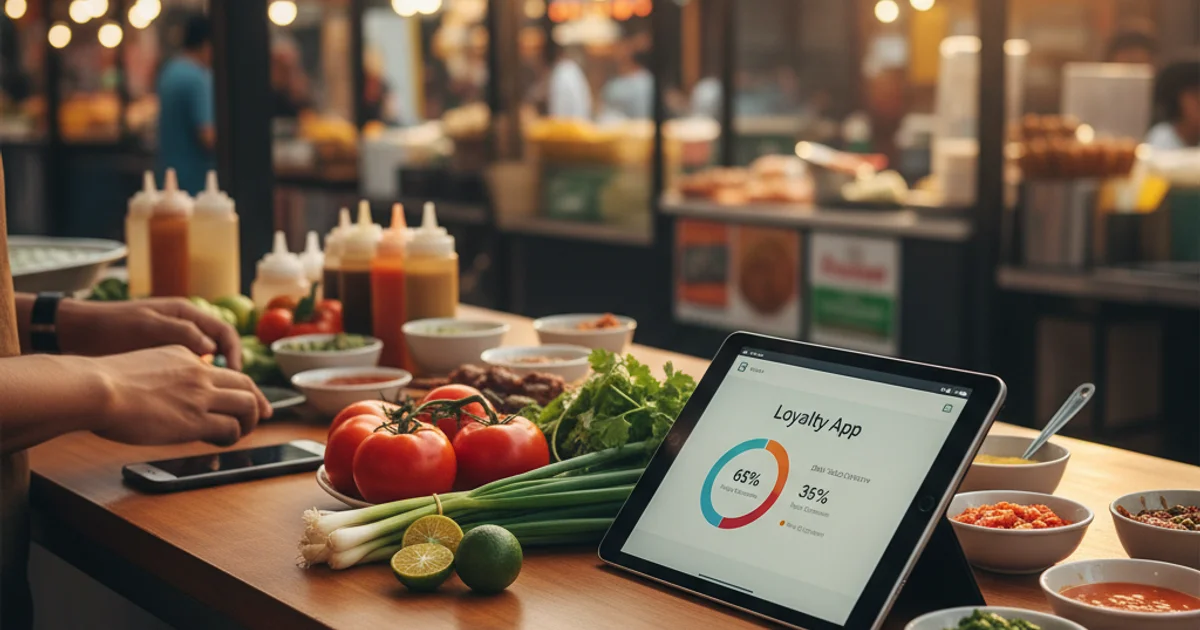
When a hawker stall owner in the Philippines checks their daily sales, nearly two-thirds of their revenue typically comes from repeat customers who visit multiple times per week. Yet most small food vendors still rely on memory and handwritten notes to track their regulars, missing countless opportunities to turn occasional visitors into daily customers.
The Philippines' vibrant street food culture creates intense competition. In Manila's Binondo district alone, over 200 hawker-style vendors compete within a few blocks. The stalls that thrive aren't necessarily those with the best location or lowest prices—they're the ones that make customers feel recognized and rewarded for coming back.
Why Philippine Hawker Stalls Need Digital Customer Loyalty
Traditional loyalty tracking fails in the fast-paced hawker environment. Paper punch cards get soggy in Manila's humidity, customers forget them at home, and vendors lose track of who deserves what reward. Meanwhile, research from Yotpo shows that repeat customers generate about one-third of business revenue and typically spend three times more than first-time buyers.
Digital loyalty apps solve these problems by putting the entire system on customers' phones. When someone orders their usual taho or fish ball, they simply show their phone screen. The vendor scans a QR code, stamps get added automatically, and milestone rewards unlock instantly. No paper, no confusion, no lost cards.
STAMPEDE's loyalty system works without requiring app downloads. Customers access their digital stamp card through any mobile browser, making it accessible even on older Android phones common throughout the Philippines. The system tracks purchase history, automates reward distribution, and sends gentle reminders via WhatsApp when customers haven't visited recently.
Philippine hawker stalls using digital loyalty report 40-60% increases in customer visit frequency within three months. The key lies in making rewards feel immediate and personal, rather than distant and generic.
Essential Features for Philippine Street Food Vendors
The most successful loyalty apps for Philippine hawker stalls include milestone-based rewards that match local buying patterns. Instead of requiring ten purchases for a free item, smart vendors set milestones at three or five visits—achievable goals that keep customers engaged.
WhatsApp integration proves crucial in the Philippine market, where over 85% of smartphone users actively use the messaging platform. When customers earn rewards, they receive instant WhatsApp notifications with QR codes they can flash at the stall. According to Infobip research, WhatsApp business messages achieve open rates near 98%, compared to roughly 20% for email, ensuring customers actually see their rewards.
Referral systems work particularly well in Philippine communities where word-of-mouth drives business discovery. When regular customers share their loyalty code with friends, both the referrer and new customer receive bonus stamps or small discounts. This creates a viral growth loop that costs vendors nothing while expanding their customer base organically.
Multi-language support helps vendors serve diverse communities. Many Philippine hawker areas serve both Filipino and English speakers, plus various regional languages. The best loyalty apps automatically detect customer language preferences and send notifications in the appropriate language.
Implementation Strategy for Small Vendors
Philippine hawker stall owners should start with simple milestone structures before adding complexity. A three-tier system works well: buy three items, get 10% off the fourth; buy five items, get a free drink; buy ten items, get a free meal. Clear, achievable goals encourage repeat visits without overwhelming customers with complicated rules.
Training staff takes minimal time since the vendor simply scans QR codes displayed on customer phones. Unlike traditional POS systems that require extensive setup, STAMPEDE's loyalty system works alongside existing payment methods. Whether customers pay cash, GCash, or bank transfer, the loyalty tracking remains consistent.
Setting up the digital system requires about 30 minutes. Vendors create their business profile, design their stamp card appearance, set milestone rewards, and generate their scanning QR code. The system provides a printable poster with instructions for customers, though most users understand the concept immediately.
According to research from Bain & Company, between 80% and 90% of positive customer referrals come from a brand's most loyal, highest-value customers. For hawker stalls, this means focusing retention efforts on the customers who already visit 2-3 times per week, turning them into daily visitors and brand advocates.
Cost-Effective Customer Retention
Digital loyalty apps cost significantly less than traditional advertising while delivering measurable results. Instead of paying for Facebook ads that may or may not reach the right audience, vendors invest in keeping existing customers engaged. The return on investment typically shows within the first month as visit frequency increases.
STAMPEDE operates on a simple monthly subscription model starting at $50 per month for unlimited customers and transactions. This covers the entire digital infrastructure, WhatsApp messaging, customer data storage, and real-time analytics. For most Philippine hawker stalls, this cost equals 2-3 days of typical revenue while generating ongoing returns.
The platform includes built-in analytics showing which rewards drive the most repeat visits, what times customers prefer to visit, and which menu items create the strongest loyalty. This data helps vendors optimize their operations and menu offerings based on actual customer behavior rather than guesswork.
Automated messaging reduces the manual work of customer outreach. The system sends birthday rewards, milestone celebrations, and gentle win-back messages to customers who haven't visited recently. These touchpoints maintain relationships without requiring constant vendor attention.
Competitive Advantages in Dense Markets
Philippine urban areas often feature multiple similar vendors within walking distance. Digital loyalty creates differentiation that goes beyond food quality or pricing. Customers develop emotional connections to businesses that remember their preferences and reward their loyalty.
The data collected through loyalty apps reveals customer patterns invisible to competitors using traditional methods. Vendors learn which customers visit daily versus weekly, what combinations of items sell together, and which promotional offers generate the strongest response. This intelligence enables more targeted marketing and inventory decisions.
Integration with social media amplifies the loyalty program's reach. When customers share photos of their rewards on Facebook or Instagram, they're essentially providing free advertising to their social networks. The conversational commerce market, valued at $7.6 billion globally in 2024 according to Electro IQ research, is forecast to reach $34.4 billion by 2034, indicating massive growth potential for businesses that embrace digital customer engagement.
Smart vendors use loyalty data to optimize their operating hours and menu offerings. If analytics show most loyal customers visit between 11 AM and 2 PM, vendors can ensure full staffing and fresh inventory during those peak periods. Menu items that generate repeat purchases can be promoted more heavily, while slow-moving items can be phased out or repositioned.
Getting Started with Digital Loyalty
Philippine hawker stall owners ready to implement digital loyalty should begin by observing their current customer patterns for one week. Note which customers visit multiple times, what they typically order, and any informal loyalty relationships that already exist. This baseline helps design milestone rewards that match existing behavior.
The setup process involves choosing reward types that match the business model. Food vendors might offer free drinks after three purchases, while beverage stalls could provide size upgrades or flavor additions. The key is selecting rewards that feel valuable to customers while maintaining healthy profit margins for the vendor.
Customer education happens naturally as regular visitors encounter the new system. A simple poster explaining "Scan for Stamps, Earn Rewards" alongside the QR code provides sufficient instruction for most users. Staff can demonstrate the process during slower periods, turning the introduction into a positive customer interaction.
Success metrics become visible within 2-4 weeks as the system accumulates data. Vendors should track average visits per customer, time between visits, and reward redemption rates. Healthy loyalty programs show increasing visit frequency and growing customer lifetime value over time.
---