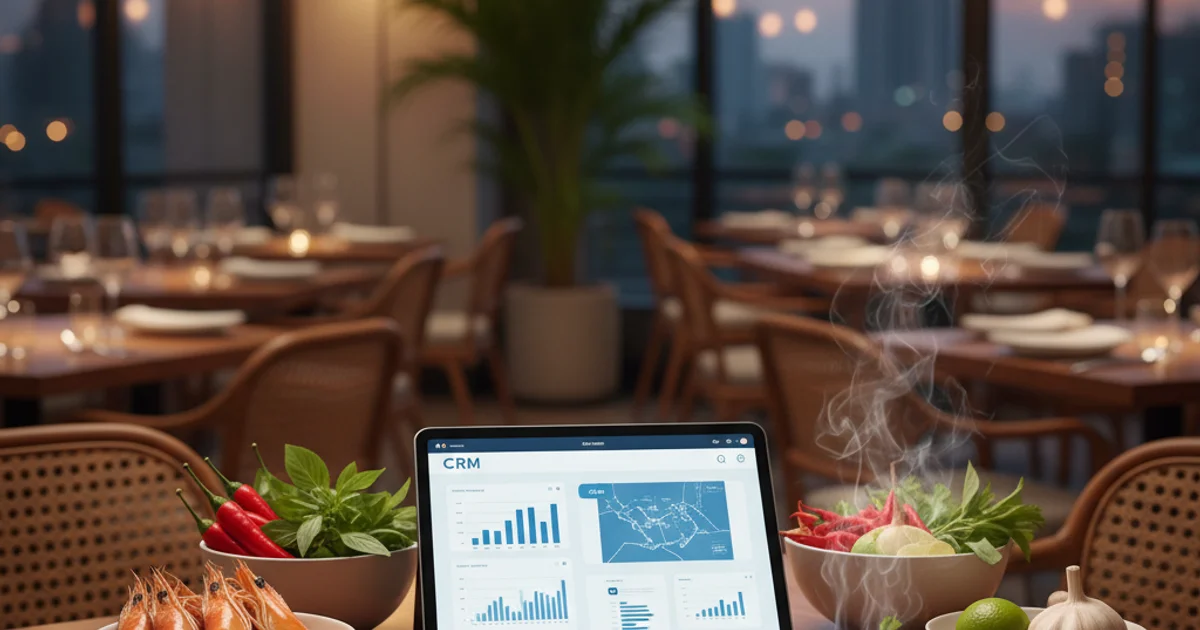
Running a restaurant in Bukit Merah means competing with established players like Keng Eng Kee Seafood and Dusk at Mount Faber Peak, plus the constant foot traffic from ABC Brickworks Market & Food Centre. With 10 Restaurant businesses in the neighborhood averaging 4.46 stars, customer retention isn't just nice to have — it's survival.
Most restaurant owners in Bukit Merah still rely on mental notes or basic spreadsheets to track their regulars. But when you're serving 100+ covers a day across lunch and dinner service, that approach breaks down fast. You lose track of who orders what, miss opportunities to reward your best customers, and watch them drift to competitors who remember their preferences.
What Makes Restaurant CRM Different in Singapore
Restaurant CRM isn't just contact management — it's about understanding dining patterns in Singapore's unique F&B landscape.
In Singapore, over 13,000 F&B establishments vie for the custom of only 5.7 million residents, highlighting why retention economics are exceptionally crucial in this intensely competitive market.
Restaurant CRM systems track customer visits, order history, spending patterns, and preferences. They capture data from multiple touchpoints: dine-in orders, delivery platforms, reservations, and loyalty program interactions. This data builds detailed customer profiles that help restaurants personalize service and marketing.
In Bukit Merah's dining scene, where hawker centers sit alongside upscale establishments like Arbora at Mount Faber Peak, understanding customer segments becomes crucial. Your CRM needs to distinguish between tourists visiting for the view and local regulars who come for specific dishes.
Answer: Restaurant CRM systems collect customer data from all dining touchpoints to build detailed profiles for personalized service and targeted marketing.
Core CRM Features Every Bukit Merah Restaurant Needs
Customer profiles form the foundation. Your CRM should capture basic details (name, phone, email), dining preferences (dietary restrictions, favorite dishes), visit frequency, and average spend. For restaurants near tourist spots like Mount Faber, tracking customer type (local vs tourist) helps tailor your approach.
Order history tracking reveals patterns. Which customers always order the same dish? Who tries new items? When do regulars typically visit? This intelligence helps staff provide better service and management make smarter inventory decisions.
Automated marketing capabilities keep your restaurant top-of-mind.
Restaurants aiming to boost customer retention are increasingly migrating essential reminders to WhatsApp, given that WhatsApp Business messages boast a 98% open rate, significantly outperforming email's average of 20%.
Loyalty program integration encourages repeat visits. Whether it's a simple stamp card or points-based system, your CRM should track rewards, send redemption reminders, and identify customers close to earning rewards.
Answer: Essential CRM features include customer profiles, order history tracking, automated WhatsApp marketing, and integrated loyalty programs.
STAMPEDE's Restaurant CRM Approach
STAMPEDE works alongside your existing POS system, not as a replacement. When customers finish their meal, staff scan a QR code to add stamps to their digital loyalty card. This creates a customer record automatically — no separate data entry required.
The WhatsApp automation engine sends personalized messages based on dining behavior. Customers one stamp away from a reward get gentle reminders. Those who haven't visited in two weeks receive "we miss you" messages with special offers. Birthday rewards arrive automatically.
Real-time analytics show which customers are at risk of churning, who your biggest spenders are, and which marketing campaigns drive actual visits. The dashboard tracks metrics that matter: repeat visit rate, average time between visits, and customer lifetime value.
Integration happens through your staff's existing workflow. No new hardware, no POS modifications, no complex training. Staff learn the QR scanning process in under five minutes.
Setting Up Restaurant CRM in Your Bukit Merah Outlet
Start with customer data collection. Train your service staff to ask for phone numbers during payment, especially for dine-in customers. Position this as joining your loyalty program, not data collection. Most Singapore customers expect restaurants to have loyalty programs now.
Configure your loyalty program structure. Decide on stamp requirements (typically 8-12 stamps for restaurants), reward values (usually 10-15% of average order value), and milestone celebrations. Consider Bukit Merah's demographics — office workers during lunch, families for dinner.
Set up automated messaging campaigns. Welcome messages for new customers, milestone celebrations when they earn rewards, and gentle nudges for inactive customers work well.
WhatsApp is used by 87% of Singaporeans, who spend an average of 2 hours and 17 minutes on social platforms daily, making Singapore one of the countries with the highest WhatsApp penetration rates globally (Hashmeta).
Train your team on CRM basics. Staff should understand why customer data matters, how to handle the QR scanning process smoothly, and what information to capture during interactions. Make it part of their service routine, not an add-on task.
Answer: Set up involves training staff on data collection, configuring your loyalty program structure, creating automated WhatsApp campaigns, and integrating CRM into daily service workflows.
Measuring CRM Success in Your Restaurant
Track repeat visit rates first. Successful restaurant CRM should increase the percentage of customers who return within 30 days. Aim for 35-40% repeat rate for casual dining, higher for fine dining establishments.
Monitor customer lifetime value (CLV). Calculate average spend per visit multiplied by visit frequency over 12 months. CRM should increase both metrics — customers spend more per visit and visit more frequently.
Measure campaign effectiveness. Track which WhatsApp messages drive actual visits, not just opens or clicks. Birthday campaigns typically see 15-25% redemption rates, while "we miss you" messages achieve 8-12% return rates.
Watch customer acquisition costs. CRM with referral programs should reduce your reliance on expensive advertising. Word-of-mouth referrals from satisfied regulars cost less than Facebook ads or food delivery platform promotions.
Answer: Measure success through repeat visit rates (target 35-40%), customer lifetime value growth, campaign redemption rates, and reduced customer acquisition costs.
Integration with Existing Restaurant Systems
Modern restaurant CRM complements your POS system rather than replacing it. The CRM captures customer behavior data while your POS handles transaction processing. This separation keeps your payment processing secure while enabling rich customer insights.
Delivery platform integration varies by CRM system. Some connect with GrabFood and foodpanda to track online orders alongside dine-in visits. This unified view helps you understand total customer value, not just in-store spending.
Reservation systems can feed into CRM automatically. When customers book tables through OpenTable or your website, their information flows into customer profiles. This creates a complete picture of customer engagement across all touchpoints.
Staff training becomes easier when CRM works with familiar systems.
Mordor Intelligence reports that the Singapore foodservice market is expected to expand from USD 28.92 billion in 2025 to USD 79.73 billion by 2031, representing an 18.42% CAGR, with quick-service restaurants accounting for 66.88% of the revenue.
Your team can focus on service excellence rather than learning complex new technology.Answer: Restaurant CRM integrates alongside existing POS systems, connects with delivery platforms and reservation systems, while maintaining familiar workflows for staff.
Common CRM Mistakes Bukit Merah Restaurants Make
Over-collecting data kills customer experience. Asking for birthdates, anniversaries, food preferences, and social media handles during first visits overwhelms customers. Start with phone numbers and names, then build profiles gradually through observed behavior.
Ignoring data quality leads to failed campaigns. Duplicate customer records, wrong phone numbers, and outdated information make marketing ineffective. Regular data cleaning should be part of your monthly routine.
Generic messaging wastes opportunities. Sending the same "20% off" message to everyone ignores customer preferences and spending patterns. Your highest-value customers deserve different treatment than occasional visitors.
Forgetting staff buy-in undermines success. If service staff don't understand CRM benefits or find the process cumbersome, they'll skip customer data collection. Make sure your team sees how CRM makes their jobs easier, not harder.
Answer: Avoid over-collecting data initially, maintain clean customer records, personalize messaging based on customer value, and ensure staff understand CRM benefits.
Future of Restaurant CRM in Singapore
Artificial intelligence will personalize experiences further. AI can predict when customers are likely to visit, what they'll order, and which promotions will motivate them. This level of personalization creates competitive advantages that are hard to replicate.
Voice ordering integration may connect with CRM systems. As voice assistants become more common in Singapore households, customers might place orders by speaking to devices. CRM systems will need to recognize customers across voice, mobile, and in-person channels.
Sustainability tracking could become a CRM feature. Environmentally conscious diners want to support restaurants that align with their values. CRM systems might track customers' eco-friendly choices and reward sustainable dining behaviors.
Payment integration will deepen customer insights. As digital payments become universal in Singapore, CRM systems will capture more granular spending data, enabling more precise customer segmentation and targeted marketing.
Answer: Future restaurant CRM will leverage AI for predictive personalization, integrate with voice ordering systems, track sustainability preferences, and provide deeper payment-based insights.
For established restaurants in Bukit Merah looking to strengthen customer relationships, WhatsApp Marketing for Singapore Restaurants: Complete Guide offers detailed strategies for messaging campaigns. Multi-outlet operators can learn from CHA MULAN's approach to scaling loyalty programs across 8 bubble tea locations. Independent restaurant owners should explore how a single Bedok hawker stall built 2,500+ loyal customers using simple but effective retention strategies.
The restaurants thriving in Bukit Merah's competitive landscape share one trait: they remember their customers. Whether it's knowing someone's usual order or sending a birthday message, these personal touches create emotional connections that transcend price competition. Restaurant CRM systems simply make these connections scalable and systematic, turning good intentions into consistent experiences that keep customers coming back.
---