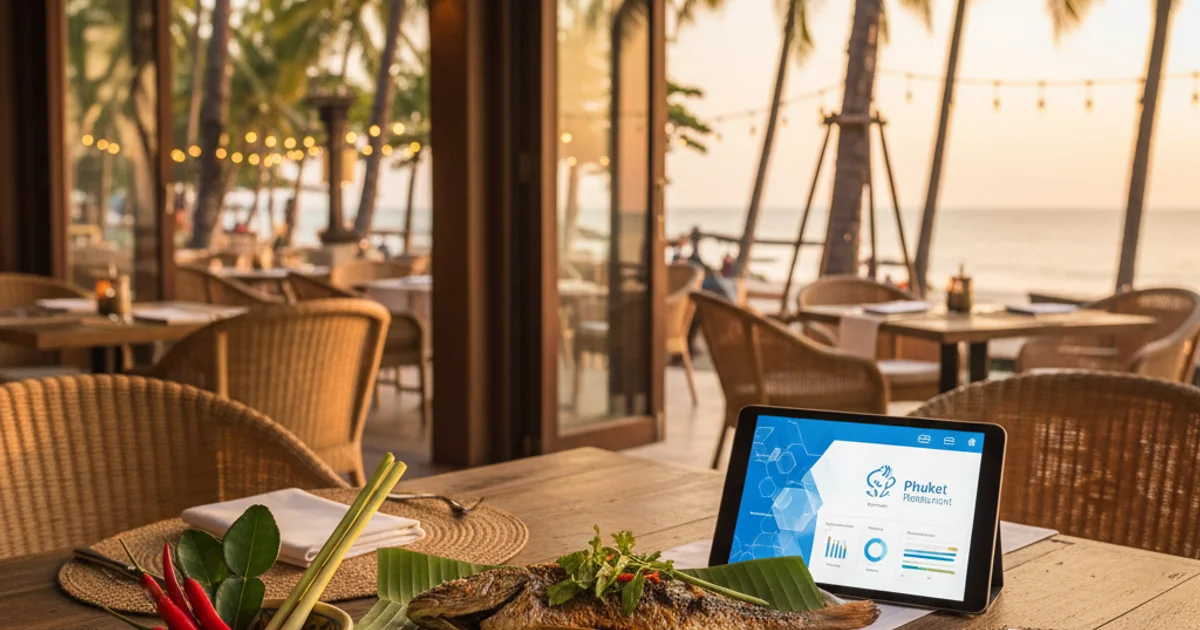
Running a restaurant in Phuket means navigating Thailand's most competitive tourism market, where international visitors expect seamless service while local operators struggle with seasonal fluctuations and language barriers.
The island's restaurant scene spans everything from beachfront fine dining to street-side Thai kitchens, but most operators still rely on paper receipts and hope customers remember to return. Meanwhile, successful restaurants quietly build digital relationships that survive the off-season lulls and capitalize on Phuket's year-round international flow.
Why Phuket Restaurants Need Modern CRM Systems
Customer relationship management isn't just for corporate offices anymore. Phuket's restaurant landscape demands sophisticated tools to handle the unique challenges of serving Russian tourists in January, Chinese families during Golden Week, and Australian backpackers year-round.
Traditional paper-based systems fail when your customer base speaks six languages and visits for two-week holidays. Digital CRM captures contact details, tracks preferences, and maintains relationships long after guests return to Moscow or Melbourne.
Research from Nielsen shows that consumers trust recommendations from friends and family 83% more than traditional advertising. For Phuket restaurants, this translates to powerful word-of-mouth potential — but only if you can nurture those initial connections into lasting relationships.
Essential CRM Features for Phuket's Tourism Market
Phuket restaurants need CRM systems built for international hospitality, not local retail. The core requirements differ significantly from mainland Thailand operations.
Multi-language support tops every requirement list. Your CRM must handle Thai script, Cyrillic characters, simplified Chinese, and Latin alphabets without corruption. Customer names, preferences, and notes need accurate storage across all character sets.
Mobile-first design proves crucial since most tourists rely entirely on smartphones. Desktop-heavy CRM systems fail when your primary interaction happens through a phone screen at the beach bar or poolside restaurant.
Integration with messaging platforms becomes essential. While LINE dominates Thai domestic markets, international visitors expect WhatsApp, WeChat, or Telegram connectivity. Your CRM should route communications through the platforms your specific customer segments actually use.
Payment integration must handle multiple currencies and international cards. Phuket restaurants serve customers whose home currencies range from Russian rubles to Australian dollars, requiring CRM systems that track spending patterns across exchange rate fluctuations.
Building Customer Loyalty in Thailand's Seasonal Market
Phuket's extreme seasonality creates unique CRM challenges. High season brings overwhelming customer volume, while low season tests every relationship you've built.
Automated loyalty programs bridge seasonal gaps effectively. When Russian tourists return to Phuket eight months later, your CRM should recognize them instantly and activate relevant rewards or personalized offers.
Data from Momentum Works reveals that Southeast Asia's food delivery market reached $19.3 billion in 2024, growing 13% while traditional F&B grew just 4.6%. This digital shift accelerated in Thailand's tourism zones, where delivery apps became primary customer touchpoints during pandemic restrictions.
Smart segmentation helps manage diverse customer bases. Russian families require different messaging than Australian backpackers or Chinese tour groups. Your CRM should automatically categorize customers by nationality, spending patterns, and visit frequency to enable targeted campaigns.
Referral tracking becomes particularly valuable in tourism markets where satisfied customers influence entire friend groups. According to research by Deloitte, customers acquired through referrals show 37% higher retention rates than those from other channels — crucial for building repeat tourism business.
Digital Communication Strategies for International Guests
Effective CRM communication in Phuket requires understanding cultural preferences and platform usage across different nationalities.
SMS maintains surprisingly strong performance across all international segments. Data from SMS Comparison shows SMS delivers a 19% click-through rate, nearly five times email's 4% — particularly relevant when customers return to home countries with different internet infrastructure.
WhatsApp dominates European and Middle Eastern segments, while WeChat serves Chinese tourists and LINE handles Thai domestic customers. Your CRM must route messages through appropriate platforms based on customer origin data.
Timing considerations become complex when your customer base spans multiple time zones. Automated campaigns should account for home country timing rather than Thailand local time to maximize engagement rates.
Visual content performs exceptionally well with international audiences who may have limited Thai language skills. CRM systems should support image-heavy communications, menu photos, and visual loyalty program progress indicators.
Measuring CRM Success in Phuket's Unique Market
Standard restaurant metrics often fail in tourism-heavy markets where customer lifetime value spans years rather than months.
Return visit rates require longer measurement windows. While local restaurants might track monthly returns, Phuket operations need annual or bi-annual cycles to capture true repeat tourism patterns.
Revenue per customer should account for group dynamics common in tourism. Chinese tour groups, Russian families, and Australian friend groups create different spending patterns that traditional per-head calculations miss.
Seasonal benchmarking provides more accurate performance indicators than year-round averages. High season CRM performance might triple low season numbers while still indicating healthy program growth.
Cross-platform engagement tracking becomes essential when customers interact through multiple channels during extended stays. Your CRM should consolidate LINE messages, WhatsApp interactions, and in-person visits into unified customer profiles.
Research from Sprout Social indicates that 49% of consumers make regular purchases based on social media influence — particularly relevant for Phuket's Instagram-heavy tourism market where food photography drives restaurant discovery.
Integration with Phuket's Tourism Infrastructure
Successful restaurant CRM in Phuket requires integration with the broader tourism ecosystem rather than operating in isolation.
Hotel partnership programs expand your CRM reach significantly. Many successful Phuket restaurants integrate with resort concierge systems, allowing customer data sharing that benefits both properties.
Tour operator connections provide valuable customer intelligence. When tour groups book restaurant experiences, CRM systems should capture group preferences and individual dietary requirements for future independent visits.
Airport and transportation partnerships create early touchpoints for customer acquisition. Some restaurants begin CRM relationships through airport advertising that connects directly to reservation and loyalty systems.
Local business networks enhance customer lifetime value calculations. Customers who visit multiple connected establishments provide higher overall value than single-location interactions suggest.
The conversational commerce market, valued at $7.6 billion globally in 2024 according to Electro IQ, shows particular strength in tourism markets where immediate communication drives booking decisions and service customization.
---
FAQ
Q: What CRM features matter most for Phuket restaurants serving international tourists? A: Multi-language support, mobile-first design, and integration with international messaging platforms like WhatsApp and WeChat are essential. Your CRM must handle multiple currencies and character sets while maintaining accurate customer data across different cultural contexts.
Q: How do seasonal fluctuations affect CRM strategy in Phuket? A: Phuket's extreme seasonality requires automated loyalty programs that maintain customer relationships during 8-month gaps between visits. CRM systems should track annual rather than monthly patterns and segment customers by nationality and visit timing for effective off-season engagement.
Q: Which communication channels work best for different tourist segments in Phuket? A: WhatsApp serves European and Middle Eastern guests, WeChat connects with Chinese tourists, and LINE handles Thai domestic customers. SMS maintains strong performance across all segments with 19% click-through rates, making it valuable for international follow-up campaigns.
Q: How should Phuket restaurants measure CRM success differently from domestic operations? A: Use annual measurement cycles instead of monthly tracking, account for group spending dynamics rather than per-head averages, and benchmark performance seasonally. Return visit rates require longer windows since tourists typically revisit Phuket yearly rather than monthly.
Q: What integrations enhance restaurant CRM effectiveness in Phuket's tourism market? A: Hotel concierge systems, tour operator platforms, and local business networks provide valuable customer intelligence and expanded touchpoints. These integrations create comprehensive customer profiles that span the entire Phuket tourism experience beyond single restaurant visits.