Walk down East Coast Road in Katong and you'll pass at least 10 restaurants within a five-minute stretch. From Peranakan bistros to Korean BBQ spots, this heritage neighborhood draws serious food lovers — but that same density means your restaurant is fighting for attention every single day.
The challenge isn't getting customers through your door once. It's getting them to choose you again next weekend when they're deciding between your laksa and the Thai place two doors down.
Why Paper Stamp Cards Don't Work in Katong's Competitive Scene
Traditional paper loyalty cards create more problems than they solve in a neighborhood where customers hop between restaurants regularly. Paper cards get lost in wallets, forgotten at home, or damaged by Singapore's humidity.
Paper stamp cards fail because customers need to remember to bring them, and staff need to remember to ask. In Katong's fast-paced dining scene, both sides often forget until after payment is complete.
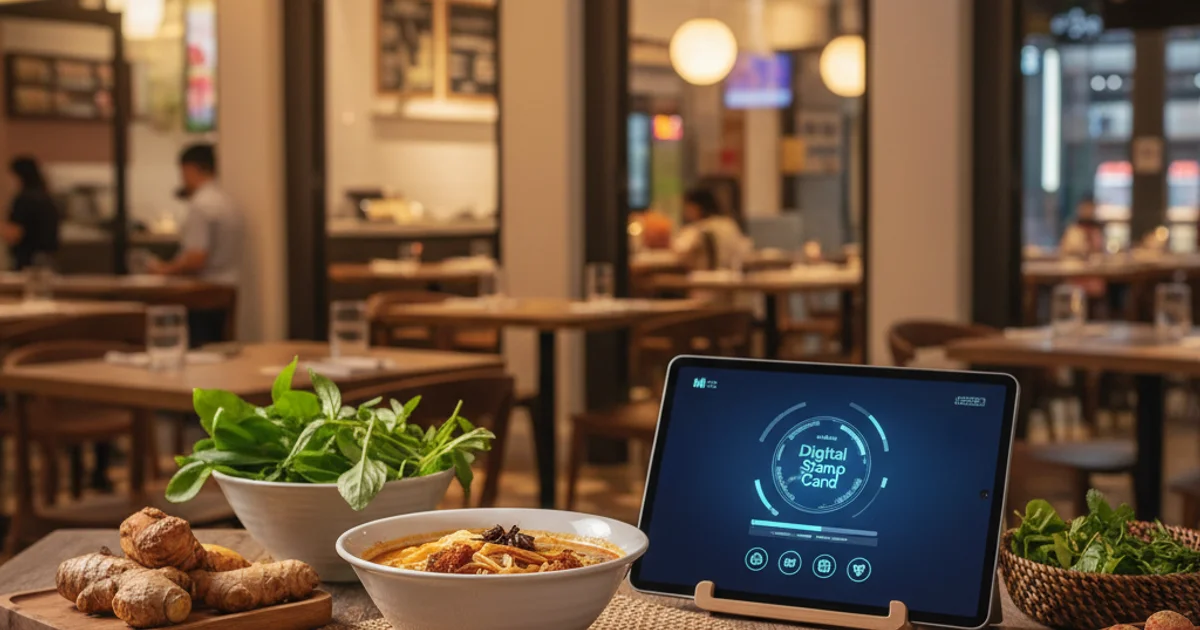
Digital stamp cards solve this by living on customers' phones. No physical card to lose, no awkward "do you have your stamp card?" conversations after they've already paid.
STAMPEDE's digital stamp card system works through QR codes that customers can access instantly. They scan at checkout, earn stamps automatically, and see their progress toward rewards in real-time.
With more than 13,000 F&B establishments vying for the attention of only 5.7 million residents in Singapore, retention economics are of paramount importance.
Katong amplifies this challenge. The neighborhood attracts food tourists from across Singapore, but converting them into regulars requires more than good food. You need a system that captures their contact information and brings them back.
Most restaurants lose 80% of first-time customers because they have no way to reconnect with them. A digital stamp card changes this by collecting phone numbers and enabling direct WhatsApp communication.
When a customer earns their first stamp, you capture their phone number. When they're one stamp away from a reward, you can send them a WhatsApp reminder. When they haven't visited in two weeks, you can reach out with a "we miss you" message.
The Singapore foodservice market, projected by Mordor Intelligence to expand from USD 28.92 billion in 2025 to USD 79.73 billion by 2031 at an 18.42% CAGR, sees 66.88% of its revenue generated by quick-service restaurants, underscoring the importance of converting new visitors into loyal patrons through direct communication.
How Digital Stamp Cards Drive Revenue for Katong Restaurants
Digital stamp cards generate revenue through three mechanisms: increased visit frequency, higher average spending per visit, and customer data that enables targeted marketing.
Increased visit frequency happens because customers can see their progress toward rewards. Instead of wondering "how many stamps do I have?", they know exactly where they stand and feel motivated to complete their card.
A bubble tea shop in nearby Marine Parade saw customers increase their visit frequency by 40% after switching from paper to digital stamps. The transparency of digital progress creates psychological momentum that paper cards can't match.
Higher spending occurs when customers add items to reach minimum spending thresholds for stamps. If your restaurant offers one stamp per $15 spent, customers spending $12 often add a drink or dessert to reach the threshold.
Customer data enables targeted promotions. You can see which customers haven't visited in 30 days and send them a "comeback coupon" via WhatsApp. You can identify your top 20% of customers and invite them to preview new menu items.
Setting Up Stamp Card Rewards That Work in Katong
The key to effective stamp card rewards is understanding your customer psychology and local competition. In Katong, where customers have numerous dining options, your rewards need to provide clear value while encouraging repeat visits.
Structure your rewards to match customer behavior patterns. If most customers visit weekly, set your reward threshold at 8-10 stamps so they complete a card in 2-3 months. If customers visit more frequently, you can use a 5-stamp card for faster gratification.
Consider your average transaction value when setting stamp earning rules. A restaurant with $25 average tickets might offer one stamp per visit, while a higher-end establishment with $60 averages could offer one stamp per $20 spent.
Reward types should align with your business goals. Free items work well for building loyalty, but percentage discounts (like "20% off your next visit") can drive higher spending since customers often add items to maximize the discount value.
Test different reward structures with small customer groups before rolling out broadly. Track redemption rates, repeat visit frequency, and customer lifetime value to optimize your program.
Technology Requirements for Restaurant Stamp Cards
Modern stamp card systems require three core components: QR code generation, customer database management, and automated messaging capabilities.
QR codes should be unique per customer and refresh regularly for security. STAMPEDE generates time-limited QR codes that prevent fraud while remaining easy for staff to scan at checkout.
Your customer database needs to handle phone numbers, email addresses, stamp counts, and reward history. This data enables segmented marketing campaigns and personalized customer experiences.
Automated messaging through WhatsApp requires pre-approved message templates and integration with Meta's Business API.
With a remarkable 98% open rate, WhatsApp Business messages significantly outperform email's usual 20%, leading restaurants focused on customer retention to prioritize sending crucial reminders via WhatsApp (Hashmeta).
Integration with your existing POS system isn't required, but it can streamline operations. STAMPEDE works alongside any POS by having staff scan customer QR codes after payment processing.
Measuring Success: Key Metrics for Restaurant Loyalty Programs
Track five core metrics to evaluate your stamp card program's effectiveness: customer retention rate, average visit frequency, customer lifetime value, redemption rate, and program engagement rate.
Customer retention rate measures what percentage of first-time customers return within 30 days. Restaurants with effective loyalty programs typically see 35-45% retention rates, compared to 15-20% without programs.
Average visit frequency shows how often loyal customers return. Calculate this monthly by dividing total visits by unique customers. Healthy programs show increasing frequency over time as customers become more engaged.
Customer lifetime value combines visit frequency with average spending to show the total revenue per customer. This metric helps justify loyalty program costs and identify your most valuable customer segments.
Redemption rate indicates whether your rewards are attractive enough to motivate behavior. Low redemption rates (under 30%) suggest rewards aren't compelling, while very high rates (over 80%) might indicate rewards are too generous.
Program engagement rate tracks what percentage of customers actively use the loyalty program versus just signing up. Active users should represent 60-70% of your customer base within six months of launch.
Common Mistakes Katong Restaurants Make with Loyalty Programs
The biggest mistake is launching a loyalty program without clear goals or success metrics. Many restaurants start stamp cards because competitors have them, not because they've identified specific business problems to solve.
Setting reward thresholds too high discourages participation. If customers need 15 stamps for a reward but only visit monthly, they'll need over a year to earn their first reward. Most will lose interest long before reaching that milestone.
Failing to promote the program consistently leads to low adoption. Staff need training on when and how to mention the loyalty program, and you need signage that makes the program visible to customers.
Not leveraging customer data for marketing wastes the program's biggest advantage. Collecting phone numbers but never sending targeted messages means you're running an expensive stamp collection system, not a growth engine.
Choosing rewards that don't align with customer preferences reduces redemption rates. A fine-dining restaurant offering free appetizers might find customers prefer percentage discounts that let them choose their own rewards.
Integration with Your Restaurant's Marketing Strategy
Your stamp card program should complement, not replace, your existing marketing efforts. Social media, local advertising, and word-of-mouth referrals work together with loyalty programs to create a comprehensive customer acquisition and retention strategy.
Use stamp card data to inform your broader marketing decisions. If you notice customers visit more frequently on weekends, focus your social media content and advertising on Thursday-Friday to capture weekend planning.
Cross-promote your loyalty program through all marketing channels. Include QR codes in social media posts, mention stamp rewards in Google My Business updates, and add loyalty program details to your website and delivery platform profiles.
Track which marketing channels drive customers who become loyal program members. Customers acquired through referrals often have higher lifetime values than those from paid advertising, which can inform your marketing budget allocation.
A significant 87% of Singaporeans are WhatsApp users, contributing to the country's high penetration rate for the app, while the typical user dedicates 2 hours and 17 minutes to social platforms each day (Hashmeta).
This makes WhatsApp marketing particularly effective for Singapore restaurants.For more insights on digital marketing strategies for Singapore restaurants, read our guide on customer retention systems. You can also explore referral program implementation and learn from successful case studies like our CHA MULAN bubble tea chain case study.